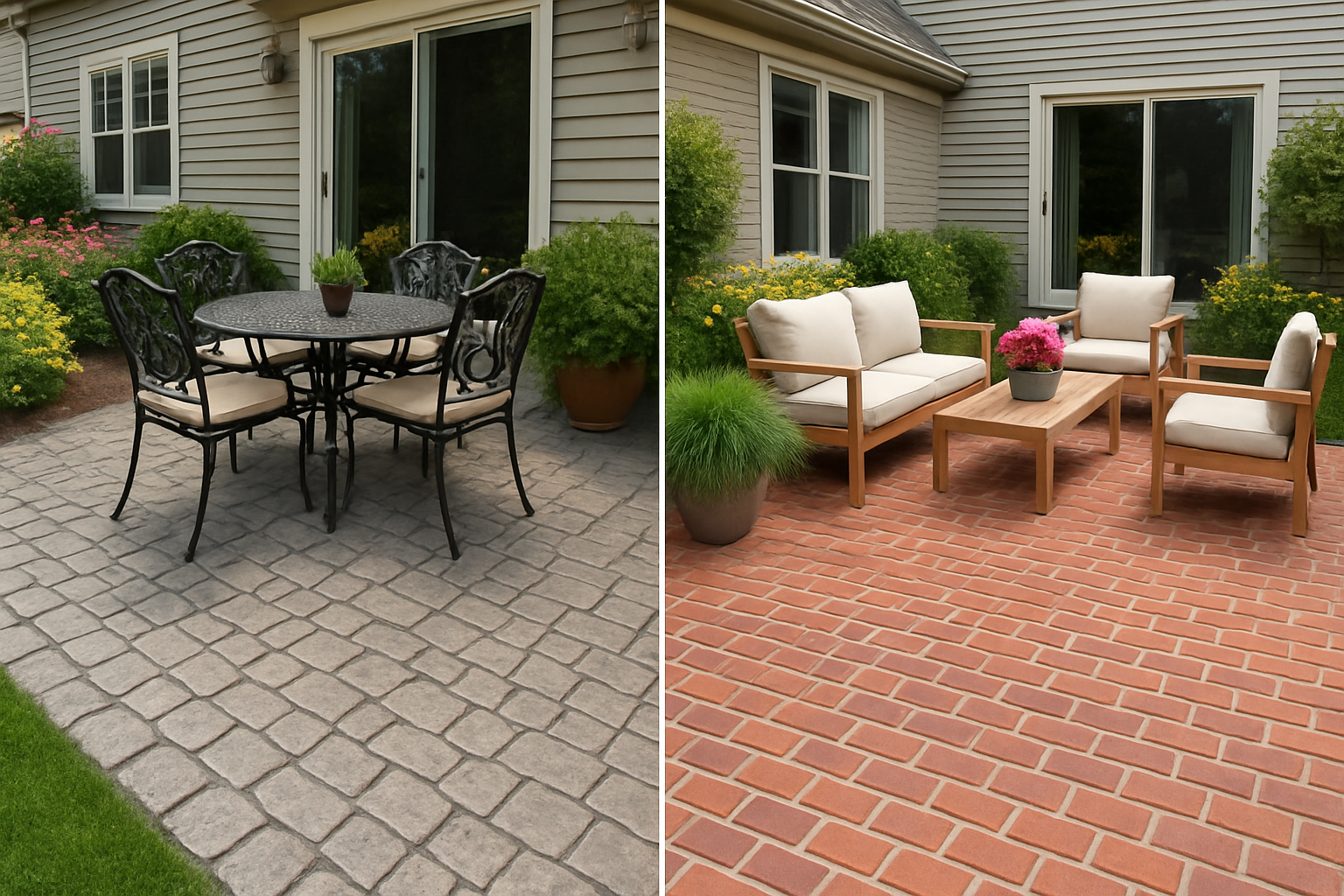
Back in 2007, I pulled up to a job site where a homeowner’s two-year-old stamped concrete patio had cracked into a spider web pattern, and the owner was staring at a $4,500 replacement bill because the original contractor had skipped the expansion joints. That’s when it hit me: the material itself almost never fails—the installation does, and by the time the problem surfaces, the warranty is long expired and the damage is already baked in. Over the years I’ve seen both stamped concrete and pavers fail spectacularly for the exact same reason: people choose based on photos and price tags without understanding what each material demands underneath, how water really moves through soil, and which one actually forgives the mistakes most homeowners make during installation. This guide covers what I wish someone had explained to me before I made my own patio mistakes—the unsexy, honest stuff about prep, drainage, and material behavior that separates a patio that lasts from one that becomes an expensive regret.
Why People Get Tripped Up on Stamped Concrete vs Pavers for a Patio
The honest answer is that both options look incredible in the brochures. Stamped concrete can mimic slate, cobblestone, brick, or flagstone almost perfectly — and it usually costs less upfront than pavers. Pavers, on the other hand, come in a dizzying range of styles, materials, and price points. Neither choice is objectively “better.” But they perform very differently depending on your climate, soil, budget, and how much long-term maintenance you’re actually willing to do. That last part is where most people, including me, are not honest with themselves.
Breaking Down the Real Differences
The Patcher That Stopped Me From Ripping Out Good Stamped Concrete
When you’re deciding between stamped concrete and pavers, surface prep and minor repairs become the difference between a 15-year patio and one that fails in three years. I learned this the hard way — and DAP’s concrete patcher became my secret weapon for catching small problems before they became expensive ones.
What works
- Bonds aggressively to old stamped concrete without needing acid wash or primer in most conditions — critical when you’re prepping before sealing and warranties are on the line
- Sets fast enough that you can patch small cracks and voids in the morning and seal by afternoon, keeping your project timeline realistic
- Takes stamp patterns and stain pretty well once cured, so repair patches don’t leave obvious gray blobs that scream “amateur work”
What doesn’t
- Doesn’t perform well in freezing climates if your substrate has moisture problems — it patches the symptom, not poor drainage underneath
- Shrinks slightly as it cures, so on deep voids you’ll need two coats instead of one, which doubles your labor time
I once nearly abandoned a stamped patio job because the existing surface had more small spalls than I initially saw in sunlight — I almost recommended the homeowner just go with pavers instead. Then I tested DAP on a hidden section, and three hours later I realized I could save the whole project. If you’re comparing options and your existing concrete has good bones, grab a DAP Concrete Patcher and Resurfacer before you decide to demo.
About This Article

Written by Marcus Delvecchio. Marcus Delvecchio isn't a licensed contractor — he's a handyman and DIY outdoor landscaper who got obsessed with driveways, patios and pavers after redoing his own place badly enough to want to understand why. Twenty years later he spends his weekends on his own projects and on side jobs for neighbours and friends around the mid-Atlantic, and writes up what actually worked, mistakes included. More about this site.
Scope and limits. Marcus is a homeowner who got obsessive about driveways, not a licensed contractor. Structural repair, drainage changes, and anything requiring a permit should go to a licensed contractor.
Verify this against a primary source
Specifics change, and your situation may differ from the one described here. These are the authorities worth checking directly:
- Concrete Masonry & Hardscapes Association — segmental paver installation standards
- National Asphalt Pavement Association — asphalt placement and maintenance guidance
- Portland Cement Association — concrete durability and jointing