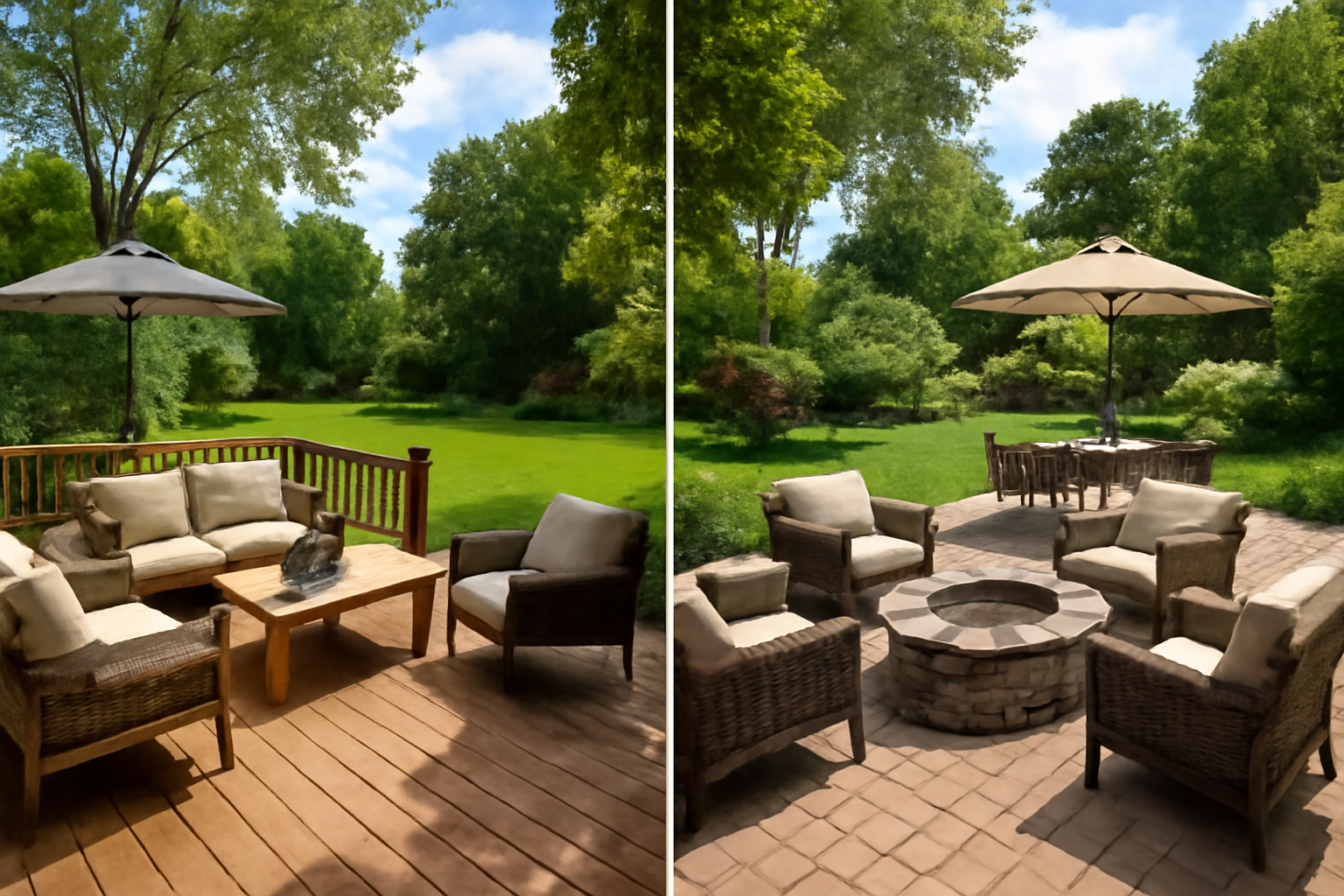
I’ve been on both sides of this decision — and I mean that literally. My backyard has a raised deck off the kitchen and a patio at ground level below it. It took me two separate projects, a few hard lessons, and more weekends than I care to count to figure out which structure belongs where. If you’re trying to decide between a deck vs patio for your own yard, I’m not going to tell you one is universally better than the other. The honest answer is that the right choice depends almost entirely on your specific yard, your budget, how you want to use the space, and how much maintenance you’re willing to commit to over the long haul. Let me walk you through everything I’ve learned so you can make the call that actually fits your situation.
Understanding the Core Differences
Before jumping into material selection, it helps to understand what fundamentally separates decks from patios. A deck is an elevated structure built above ground level, typically constructed from wood, composite, or metal materials. It sits on support posts and requires a solid foundation to handle weight and movement. A patio, by contrast, sits directly on the ground and is usually made from pavers, concrete, stone, or brick laid on a prepared base.
This distinction matters because it affects everything: installation difficulty, maintenance requirements, longevity, and how naturally each option integrates with your landscape. A raised deck works beautifully when you have height differences to navigate or want to create separation from the ground. A patio excels when you’re working with relatively flat terrain and want a permanent, low-maintenance gathering space.
The Sample Pack That Saved Me from a $3,000 Decking Mistake
When you’re deciding between composite decking and concrete pavers, you need to see how materials actually look in your specific light and next to your house color. I learned this the hard way after committing to a deck board color that looked completely different once installed.
What works
- The actual material thickness and grain pattern match real deck boards, so you’re not guessing based on a phone photo
- You can lay samples next to your patio area to see how composite reads against stone or concrete—the contrast matters more than you’d think
- Affordable way to test color shifts between morning shade, afternoon sun, and wet conditions before cutting your first board
What doesn’t
- 0.5″ samples are thinner than actual deck boards, so they won’t perfectly replicate how full-thickness material handles light reflection
- You’ll want multiple packs if you’re comparing color options across both raised and ground-level spaces
I almost ordered an entire pallet of composite decking in a charcoal gray based on indoor lighting alone—something that would have clashed with my existing patio. Grab the ShunHong Outdoor Solid Composite Decking Boards Color Samples Pack 0.5″ and take it outside for a full week before you commit.
Maintenance Reality: Why It Matters More Than You Think
This is where my two structures really taught me a lesson. My deck requires annual staining or sealing to prevent splintering, UV damage, and moisture penetration. Even with composite materials that promise lower maintenance, I still power wash it twice a year and inspect for mold or mildew, especially in shaded areas.
My patio, on the other hand, needs occasional sweeping and a good sealing every 2–3 years depending on the paver material. Once sealed properly, pavers resist staining and weathering far better than any deck I’ve owned. The trade-off is that individual pavers can shift or settle over time, requiring occasional releveling or replacement.
If you’re not willing to commit to regular maintenance, a sealed patio typically wins. If you love the look of natural wood and don’t mind seasonal upkeep, a deck might be worth the extra effort.
Budget Considerations: Installation vs. Long-Term Costs
Upfront installation costs often favor patios—poured concrete or laid pavers are generally less expensive per square foot than building a deck with proper support structure. However, decks can be more forgiving if you have sloped or uneven terrain, since you can adjust the post heights rather than grading and preparing the ground.
Over 15–20 years, costs start to even out. A deck might require board replacement, joist repairs, or structural work that adds up quickly. A patio’s main expense is resealing and occasional paver replacement, which is typically cheaper. If you’re planning to stay in your home long-term, calculate both the initial cost and estimated maintenance expenses before deciding.
When to Choose Each Option
Choose a deck if: You have elevation changes, you want a warm, natural surface underfoot, you enjoy periodic maintenance, or you want to create a defined outdoor room that feels separate from the yard.
Choose a patio if: You want low-maintenance durability, you’re working with flat or gently sloping terrain, you plan to seal the surface properly, or you want a permanent solution that stands up to heavy foot traffic and outdoor furniture.
In my case, having both works because they serve different purposes. My elevated deck is an extension of my kitchen—perfect for morning coffee and grilling. My ground-level patio is where we entertain larger groups and where the kids play. Neither is objectively better; they’re just right for their specific locations and uses.
About This Article

Written by Marcus Delvecchio. Marcus Delvecchio isn't a licensed contractor — he's a handyman and DIY outdoor landscaper who got obsessed with driveways, patios and pavers after redoing his own place badly enough to want to understand why. Twenty years later he spends his weekends on his own projects and on side jobs for neighbours and friends around the mid-Atlantic, and writes up what actually worked, mistakes included. More about this site.
Scope and limits. Marcus is a homeowner who got obsessive about driveways, not a licensed contractor. Structural repair, drainage changes, and anything requiring a permit should go to a licensed contractor.
Verify this against a primary source
Specifics change, and your situation may differ from the one described here. These are the authorities worth checking directly:
- Concrete Masonry & Hardscapes Association — segmental paver installation standards
- National Asphalt Pavement Association — asphalt placement and maintenance guidance
- Portland Cement Association — concrete durability and jointing