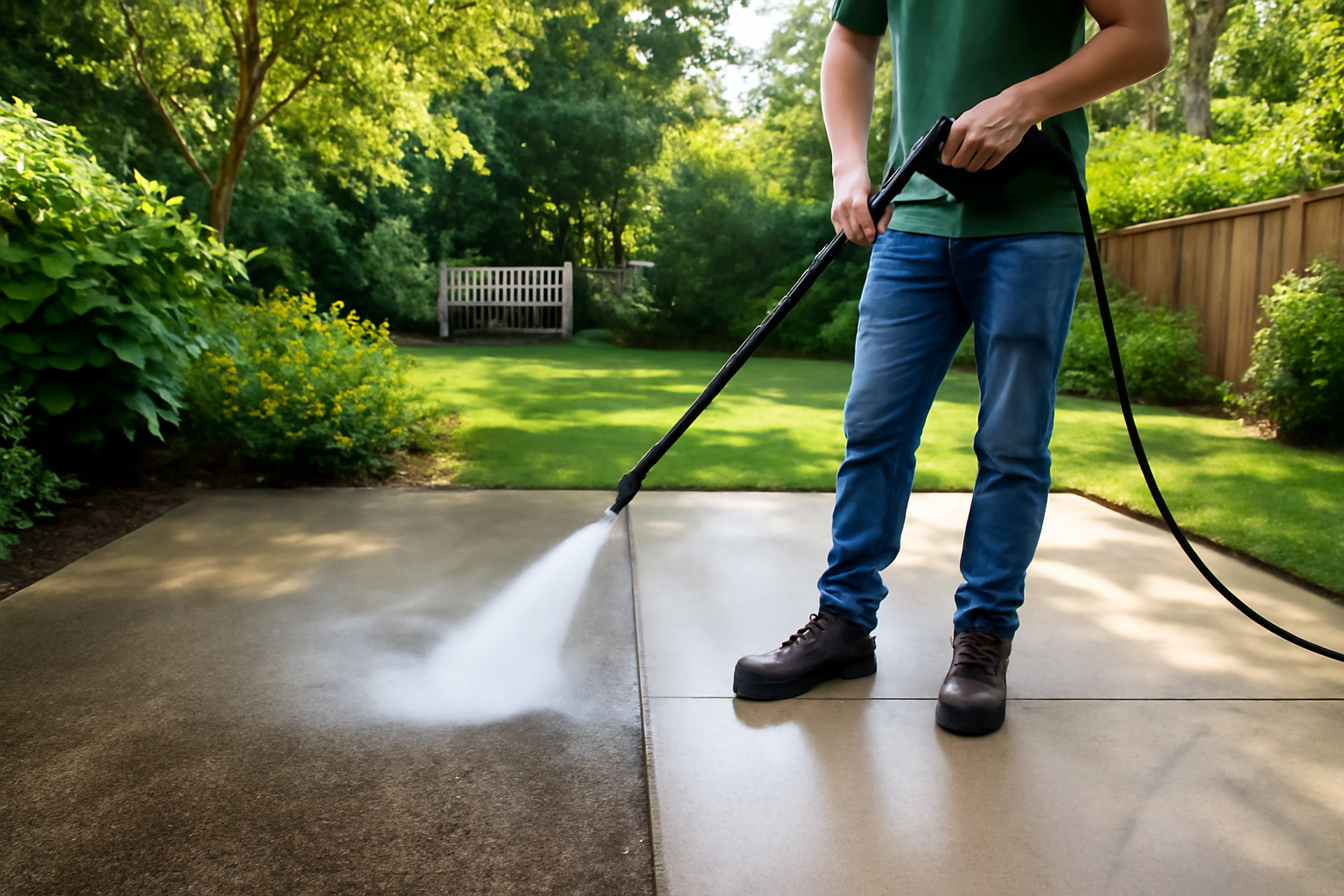
There is no faster way to make a tired, grimy patio look brand new than a good pressure washing session. I’ve seen years of embedded dirt, algae, and staining disappear in an afternoon — and the transformation is genuinely satisfying. But I’ve also watched homeowners blast permanent gouges into pavers, strip joint sand right out of the gaps, and etch ugly stripe marks into concrete that will never fully go away. Knowing how to pressure wash a patio the right way is the difference between a surface that looks restored and one that looks damaged. This guide covers everything I’ve learned through trial, error, and a few expensive mistakes, so you can skip straight to the good results.
The Electric Pressure Washer That Finally Lets You Control Your Trigger Finger
The real enemy of a clean patio isn’t dirt — it’s over-pressure. Gas washers are easy to rent, but they’re also easy to abuse, and that’s where the permanent damage happens. I needed something with enough power to cut through embedded algae and years of grime, but with enough control that I could dial back the PSI when moving across softer stone or between pavers.
What works
- 3100 PSI is genuinely enough to clean concrete and brick without the overkill that destroys paver joints — I can actually see the difference between “dirty” and “clean” instead of just obliterating everything.
- The electric motor is quieter and steadier than gas, which means I can hear the surface and adjust my technique in real time instead of fighting a roaring engine.
- No mixing fuel, no pull cords, and no cleanup ritual — I just plug it in, hit the trigger, and walk away when I’m done. That matters more on a Saturday afternoon than it sounds like it should.
What doesn’t
- You’re tethered to a 25-foot outlet cord (or an extension), so large patios require some cord management and planning that you don’t think about with a gas unit.
- It’s not the fastest option for a truly filthy patio — a 4000+ PSI gas washer will finish the job quicker, but speed is exactly what causes the stripe marks and paver damage I’m trying to avoid.
I had one moment of real doubt standing over a particularly stained section where nothing seemed to budge, wondering if I’d chosen underpowered equipment. Then I slowed my trigger squeeze, kept the nozzle at a lower angle, and let the pressure do its job instead of trying to brute-force it — that’s when the stain finally released, and I realized this washer was teaching me the right technique instead of rewarding bad form. That’s worth picking up a Westinghouse ePX3100v Electric Pressure Washer.
About This Article

Written by Marcus Delvecchio. Marcus Delvecchio isn't a licensed contractor — he's a handyman and DIY outdoor landscaper who got obsessed with driveways, patios and pavers after redoing his own place badly enough to want to understand why. Twenty years later he spends his weekends on his own projects and on side jobs for neighbours and friends around the mid-Atlantic, and writes up what actually worked, mistakes included. More about this site.
Scope and limits. Marcus is a homeowner who got obsessive about driveways, not a licensed contractor. Structural repair, drainage changes, and anything requiring a permit should go to a licensed contractor.
Verify this against a primary source
Specifics change, and your situation may differ from the one described here. These are the authorities worth checking directly:
- Concrete Masonry & Hardscapes Association — segmental paver installation standards
- National Asphalt Pavement Association — asphalt placement and maintenance guidance
- Portland Cement Association — concrete durability and jointing