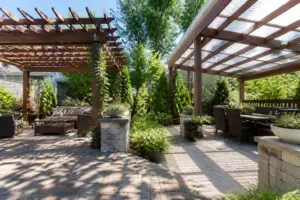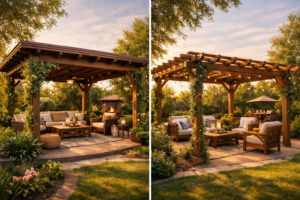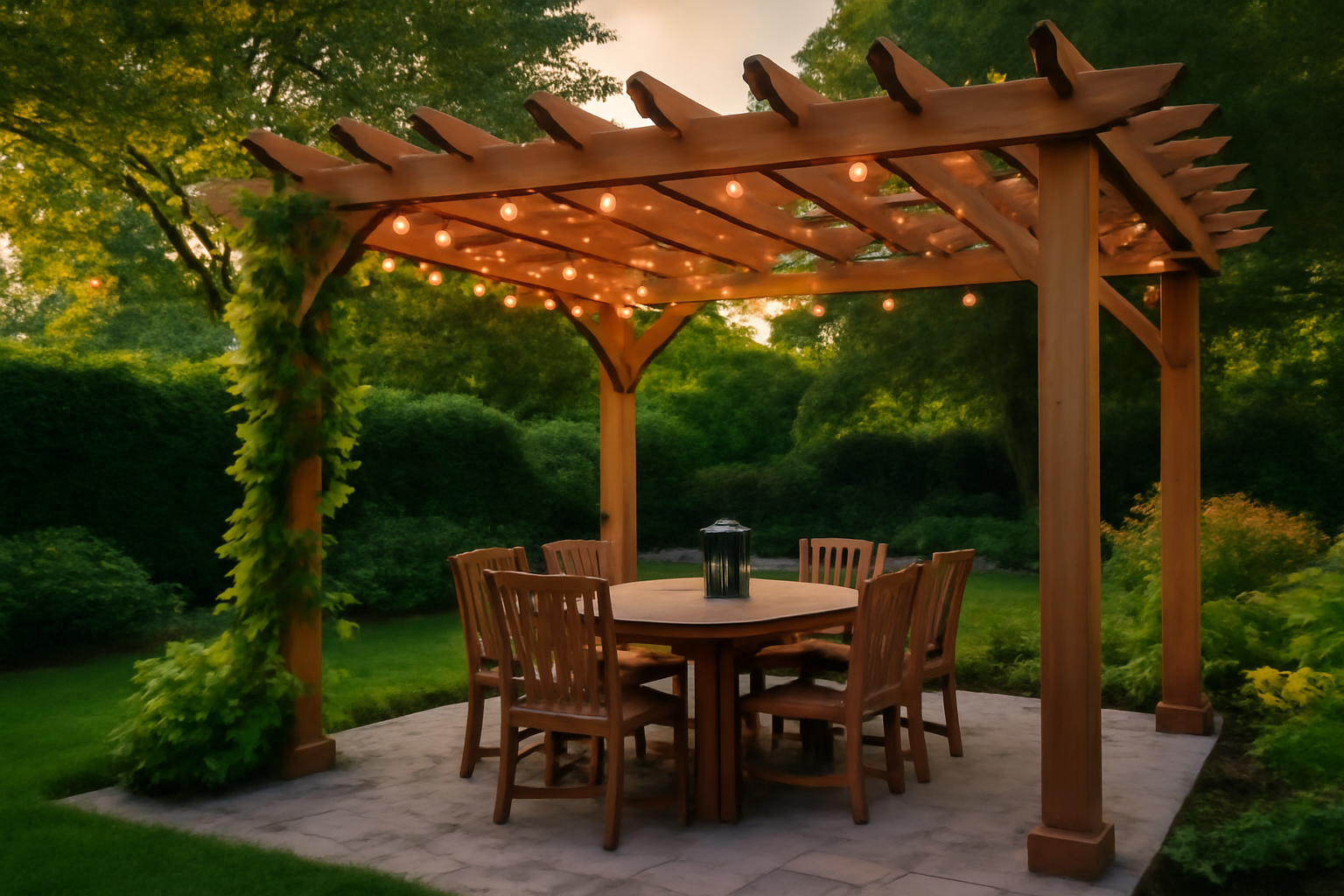
There’s a moment when your backyard stops feeling like a yard and starts feeling like an actual outdoor room. For me, that moment came the day we finished building our pergola. Nothing else I’ve added to this property — not the stone pavers, not the raised garden beds, not even the fire pit — changed the way we use our outdoor space quite like that structure did. A pergola defines a zone. I learned this the hard way when my first pergola started leaning slightly by mid-summer, forcing me to tear apart half the frame and reinforce the corner posts — a lesson that shaped every build afterward. It creates a ceiling without closing you in, frames a view without blocking it, and gives your backyard a sense of intention that open space just doesn’t have. Whether you’re sketching out pergola ideas for the first time or you’ve been circling this project for a couple of seasons, this guide walks you through every decision you’ll face — style, materials, budget, and how to make the thing actually work for your life.
Pergola Styles and Which Suits Your Space
Before you buy a single board or browse a single kit, get clear on what style fits your home’s architecture. A pergola that clashes with your house looks like an afterthought, and the whole point is to make your backyard feel cohesive and intentional.
Traditional
Traditional pergolas feature thick, heavy posts — usually 6×6 or larger — decorative rafter tails, and ornate beam detailing. They’re built for homes with classic architectural character: Craftsman bungalows, colonial-style houses, brick Tudors. The visual weight of a traditional pergola reads as permanent and substantial, which is exactly what those homes need. If your home has crown molding, detailed trim, and shutters, a traditional pergola fits right in.
Modern and Minimalist
Clean lines, thin profiles, and a flat or slatted roof define the modern pergola. No decorative cuts on the rafter ends, no turned posts — just geometry. These work beautifully on contemporary homes, mid-century builds, and anything with a flat or low-slope roofline. If your backyard already features concrete, steel, or large-format pavers, a minimalist pergola will tie the whole space together without visual noise.
Rustic
Rough-hewn timber, live-edge boards, and natural wood with visible grain and texture — that’s the rustic pergola. It belongs in farmhouse settings, cottage gardens, and wooded backyards where the goal is organic warmth rather than polish. Rustic pergola ideas lean heavily on climbing plants, Edison-style string lights, and weathered finishes. This is the style that looks better as it ages.
Attached vs. Freestanding
An attached pergola connects directly to your house, usually anchoring to a ledger board on the exterior wall. It extends your indoor-outdoor flow naturally and can double as a covered transition from a sliding door to the yard. The tradeoff is that it requires more careful flashing and waterproofing where it meets the house. A freestanding backyard pergola, on the other hand, can go anywhere — over a patio, in the middle of the lawn, or at the far end of the garden as a destination point. Freestanding structures are easier to install and don’t carry the risk of water intrusion at the house connection. For most DIYers, freestanding is the simpler and safer starting point.
Pergola Materials Compared
Material choice affects how your pergola looks, how long it lasts, and how much time you spend maintaining it. Here’s an honest breakdown of every major option.
The Cedar Kit That Actually Stayed Square Through Year One
If you’re building your first pergola, you’ll quickly realize that kit quality makes the difference between a structure that settles into your landscape and one that twists, sags, or needs bracing. A solid cedar kit with pre-cut joinery saves you from the amateur mistakes I made on my early builds.
What works
- Cedar wood is rot-resistant and weathers beautifully without constant staining — after two seasons, mine has that silvery-gray patina that actually looks intentional and premium.
- Pre-cut components mean your frame stays square and your lattice roof aligns properly, which matters more than you’d think when you’re trying to position it over a patio or seating area.
- The 12′ x 10′ footprint is big enough to create a real outdoor room without overwhelming a standard residential yard or requiring special foundation work.
What doesn’t
- Assembly takes a full weekend with two people and a power drill — this isn’t a two-hour afternoon project, so clear your schedule and recruit help before you open the first box.
- You’ll still need to concrete anchor the posts properly, which means digging footer holes and mixing concrete — the kit doesn’t solve that part of the work.
I’ll admit, halfway through assembly I second-guessed whether I’d bought enough hardware and whether the frame would actually feel sturdy once weight-tested, but once the lattice roof went on and I stood under it for the first time, every doubt evaporated. If you’re ready to transform your backyard the way mine changed, check out the Backyard Discovery Beaumont 12′ x 10′ Traditional Cedar Wood Pergola Kit with Trellis Roof.
About This Article

Written by Marcus Delvecchio. Marcus Delvecchio isn't a licensed contractor — he's a handyman and DIY outdoor landscaper who got obsessed with driveways, patios and pavers after redoing his own place badly enough to want to understand why. Twenty years later he spends his weekends on his own projects and on side jobs for neighbours and friends around the mid-Atlantic, and writes up what actually worked, mistakes included. More about this site.
Scope and limits. Marcus is a homeowner who got obsessive about driveways, not a licensed contractor. Structural repair, drainage changes, and anything requiring a permit should go to a licensed contractor.
Verify this against a primary source
Specifics change, and your situation may differ from the one described here. These are the authorities worth checking directly:
- Concrete Masonry & Hardscapes Association — segmental paver installation standards
- National Asphalt Pavement Association — asphalt placement and maintenance guidance
- Portland Cement Association — concrete durability and jointing