Last spring, I stood in my empty backyard with a measuring tape, a cup of cold coffee, and absolutely zero clarity on what kind of pergola roof I actually wanted. Open or covered? Partial shade or full protection? I’d spent three months scrolling through Pinterest, reading conflicting advice online, and second-guessing every decision. Sound familiar?
Here’s what I eventually realized: choosing between an open pergola-style roof and a semi-covered pergola roof isn’t just an aesthetic decision. It fundamentally changes how you use your outdoor space, what it costs to build and maintain, and whether you’ll actually enjoy it during the seasons that matter most to you.
In this guide, I’m sharing exactly what I learned by researching both styles, actually building both, and living with the hybrid result. If you’re facing this same decision, these four questions and real-world trade-offs will save you months of debate—and potentially thousands of dollars in do-overs.
What Is an Open Pergola-Style Roof?
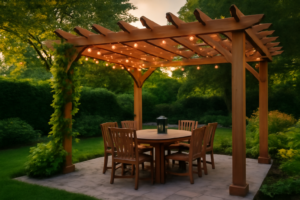
An open pergola-style roof is the classic design: parallel rafters with lattice or open spaces between them. Think Mediterranean courtyards or upscale resort patios. No panels. No fabric. Just wood (or metal) beams arranged to let light and air flow through.
The magic of this style is dappled shade. On a sunny day, you get those gorgeous striped shadows across your patio table. The air circulates freely. Your plants can climb up the structure and create natural cooling through their leaves. For most of the day, you’ll feel breezes that a covered structure would block.
Here’s the honest truth I discovered: an open pergola-style roof does not keep you dry. Not even close. The first time summer rain hit my open rafters, I watched water stream straight down onto my outdoor cushions. Lesson learned fast. If rain protection matters at all, an open design alone won’t cut it.
Open pergolas work best if you’re in a dry climate with predictable weather, or if you only use your outdoor space during guaranteed clear days. They’re also ideal if you want vines—climbing jasmine, clematis, or grapes need that direct sunlight that a pergola-style roof provides without full blocking.
What Is a Semi-Covered Pergola Roof?
A semi-covered pergola roof sits on the spectrum between fully open and fully enclosed. You’ve got options here, and that’s actually the whole appeal. Depending on your climate and budget, you can choose from several solutions.
Polycarbonate panels are the most popular choice for a pergola roof cover. These rigid plastic sheets come in clear, frosted, or tinted versions. They’re transparent enough to let light through, but they block rain and UV rays completely. Another option: shade cloth or shade sails. These fabric covers are removable, affordable, and perfect if you only want seasonal protection.
Then there’s vinyl canopy inserts—strips of plastic or canvas that fit between your rafters—and retractable motorized covers if you want the flexibility to open and close on demand. Each approach has different costs and maintenance demands.
The downside I noticed with semi-covered designs: you lose some of that open-sky feeling. A fully frosted polycarbonate panel isn’t transparent like glass. You won’t get the same airflow as an completely open structure. And certain fabric covers need annual cleaning or replacement. That said, in my experience, these trade-offs are worth it if you actually want to spend time outside during rain or intense sun.
The Four Questions That Made My Decision Easy
Stop scrolling through photos for a moment. Ask yourself these four specific questions. Your honest answers will point you toward the right choice faster than any blog post.
1. How Many Hours of Direct Sun Does Your Space Get?
This matters more than you think. My backyard faces west, which means brutal afternoon sun from roughly 2 to 6 p.m., especially June through August. An open pergola-style roof barely dents that heat. I’d sit under it at 3 p.m. and still feel like I was in a sauna.
If your space gets 6+ hours of direct afternoon sun, semi-covered is nearly mandatory. If you’re on the north side of a building or surrounded by trees (fewer than 4 direct sun hours), an open pergola works fine. Use a compass app on your phone and observe your yard at different times of day. Seriously, spend one afternoon mapping this out.
2. Do You Actually Entertain When It Rains?
Be honest here. In my Pacific Northwest location, it drizzles from October through April. If I wanted my pergola to be functional year-round, I needed rain coverage. However, I have friends in Arizona who never use their outdoor space during the rare rainy days. For them, an open pergola-style roof works perfectly.
Ask yourself: do I want to host dinner on a rainy evening? Will I sit outside during a light drizzle? Your answer determines whether rain protection is essential or completely optional.
3. Do You Want to Grow Climbing Plants?
This is the dealbreaker I didn’t initially consider. I wanted climbing roses and jasmine on my pergola. These plants need at least a few hours of direct sunlight daily. A fully opaque polycarbonate roof would kill that dream. Shade cloth works better for plants, but it’s still not ideal compared to an open pergola-style roof where vines can reach full sun.
If plants are part of your vision, an open or partially open design is non-negotiable.
4. How Much Maintenance Are You Actually Willing to Do?
Open pergolas need minimal maintenance beyond occasional wood staining or power washing. Semi-covered designs demand more attention. Polycarbonate panels collect pollen, leaves, and dust. Shade cloth can mildew in humid climates. Retractable motors need seasonal testing.
Factor this in honestly. I’m willing to hose off panels every few months, but I hate cleaning gutters. This shaped my final choice toward a hybrid approach (more on that below).
My Recommendation by Climate and Use Case
Your climate is the single biggest factor in this decision. Let me break it down by region based on what I’ve learned and what my neighbors have actually experienced.
Pacific Northwest or Other Rainy Climates
Semi-covered is the right call here. Even partial pergola roof cover makes a massive difference. You don’t need full enclosure, but you’ll use your space infinitely more if you have some rain protection. Consider polycarbonate panels over the dining or seating area, leaving one section open for airflow and plants.
Desert Southwest or High Sun Areas
The sun intensity here demands coverage. A semi-covered pergola roof with opaque or tinted polycarbonate drops temperatures noticeably. My sister in Tucson installed a pergola roof cover last year and said it changed her patio from “unusable for nine months” to “usable year-round.” The investment paid off in actual quality of life.
Mild Climates (Southeast, Parts of Midwest)
You’ve got flexibility here. An open pergola-style roof with seasonal shade cloth inserts gives you options. Throw the cloth over in summer. Remove it in spring and fall. This approach costs $300–$600 for quality shade cloth versus $1,200–$2,500 for permanent polycarbonate panels.
What I Used for My Semi-Covered Section
After months of deliberation, I went with partial coverage. For the dining area, I installed the Altovexis Clear Polycarbonate Roofing Sheet, Acrylic Plastic Sheet Pergola Roofing Canopy Cover Outdoor Awning Shelter for Greenhouse Shed Carport (4×32.8ft(1.2x10m)). This product was exactly what I needed.
Here’s why I chose it: the panels are genuinely clear, not milky. Light still comes through beautifully. They’re UV-resistant, so they won’t yellow or degrade in direct sun. The 1.2-millimeter thickness felt sturdy without being overkill. At roughly $150 for a 4×32.8-foot section, the cost-per-square-foot was reasonable.
Installation took me a full weekend with my brother-in-law helping. We ran aluminum rails between the existing rafter beams and secured the Altovexis Clear Polycarbonate Roofing Sheet panels with stainless-steel fasteners. The trickiest part was getting the slope right so water would drain properly. I angled everything at about 10 degrees toward one corner and added a simple aluminum gutter.
Two years later, these panels are still crystal clear. Light rain beads off beautifully. No yellow discoloration. The only maintenance I do is occasional washing with a soft brush and gentle hose water. I considered the Premium Clear Pergola Roof Panels,(49.2ft x3.2ft) Durable Polycarbonate Roofing Sheets as an alternative, but the Altovexis option had better reviews and was easier to find locally if I needed quick replacements.
Can You Have Both? The Hybrid Approach
This is what I actually built, and it’s the best decision I made. Hybrid design gave me the best of both worlds without compromise.
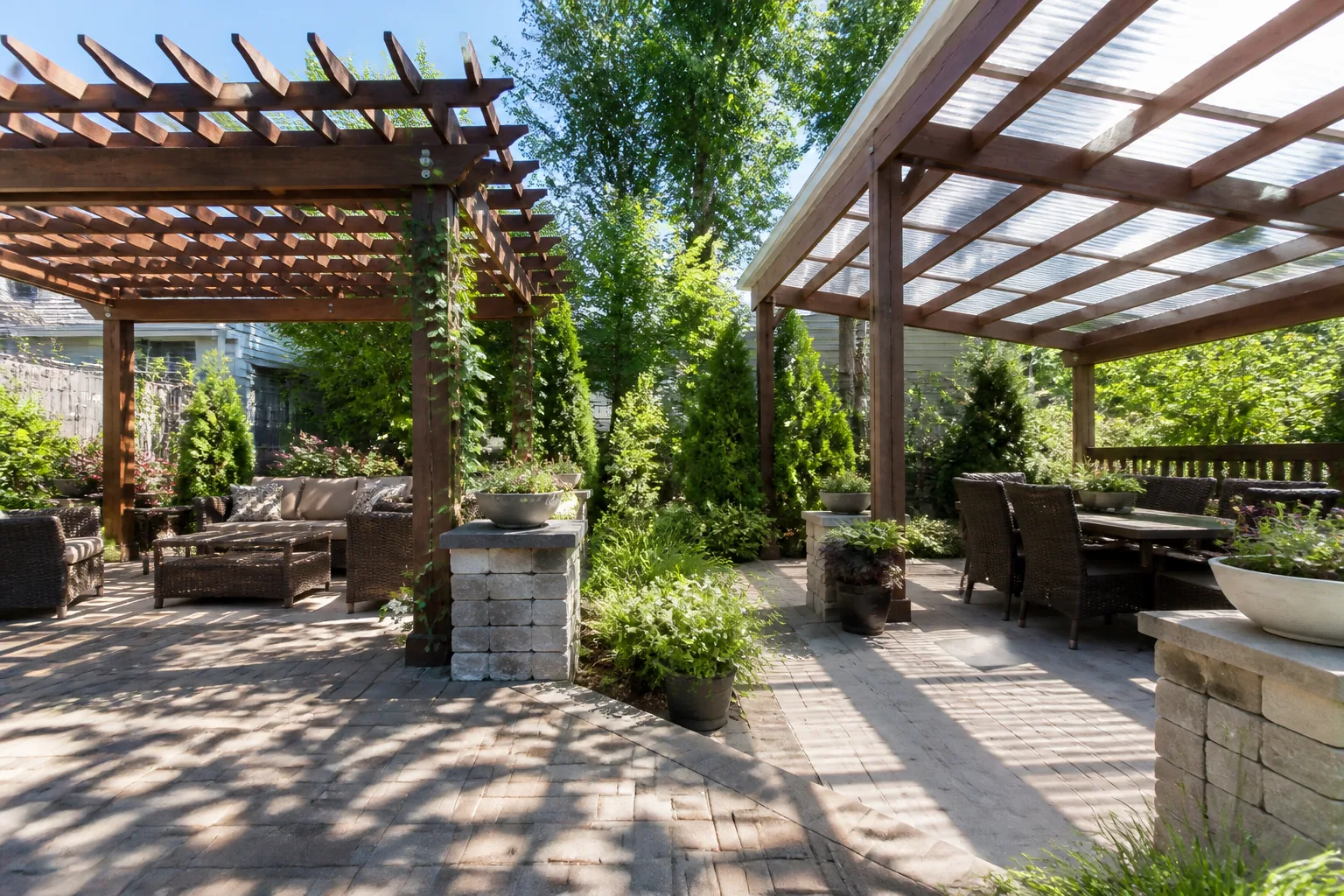
My pergola is 16 feet long. The first 8 feet (dining area) has clear polycarbonate panels overhead. This section stays dry and cool during meals. The second half (garden area with the grill) stays completely open. The open portion lets climbing plants get full sun and creates that gorgeous dappled-shade effect.
The open section gets morning light (6 a.m. to 10 a.m.) and late evening sun, which is perfect for my jasmine vine. It provides soft shade during midday heat without full blocking. When it rains, I can still grill under the covered section and enjoy the smell of the open rain beyond it.
This hybrid approach cost roughly $2,800 total (pergola structure: $1,800; polycarbonate cover: $600; installation and materials: $400). It gives me 365-day usability and the flexibility to entertain or relax no matter the weather. In my experience, this is the sweet spot most homeowners should aim for.
The Final Verdict
Here’s what I wish someone had told me at the start: there is no universally “right” choice between an open pergola-style roof and a semi-covered design. The right choice is the one that matches your specific climate, how you actually spend time outside, and your honest maintenance tolerance.
If you’re in a rainy climate, love entertaining outdoors, or experience intense afternoon sun, go semi-covered. If you’re primarily growing plants, have predictable weather, and use your space seasonally, an open pergola-style roof works perfectly. Better yet, consider the hybrid approach: open where you want plants and airflow, covered where you actually spend time.
Spend one afternoon honestly assessing your space, your climate, and your actual use patterns. That clarity will save you from regret far better than any Pinterest inspiration board.
What works best in your backyard? Share your pergola setup in the comments—I’d love to hear how others solved this decision.
—About This Article

Written by Marcus Delvecchio. Marcus Delvecchio isn't a licensed contractor — he's a handyman and DIY outdoor landscaper who got obsessed with driveways, patios and pavers after redoing his own place badly enough to want to understand why. Twenty years later he spends his weekends on his own projects and on side jobs for neighbours and friends around the mid-Atlantic, and writes up what actually worked, mistakes included. More about this site.
Scope and limits. Marcus is a homeowner who got obsessive about driveways, not a licensed contractor. Structural repair, drainage changes, and anything requiring a permit should go to a licensed contractor.
Verify this against a primary source
Specifics change, and your situation may differ from the one described here. These are the authorities worth checking directly:
- Concrete Masonry & Hardscapes Association — segmental paver installation standards
- National Asphalt Pavement Association — asphalt placement and maintenance guidance
- Portland Cement Association — concrete durability and jointing