The first deck I ever built used plain exterior screws driven straight through the top of every board, and it looked exactly like that sounds: like a pincushion of fastener heads catching every bit of light and drawing the eye to all the wrong places. When I rebuilt that same deck two summers later, I switched to a hidden deck fastener system, and the difference in the finished look was bigger than I expected for what is really just a small hardware change.
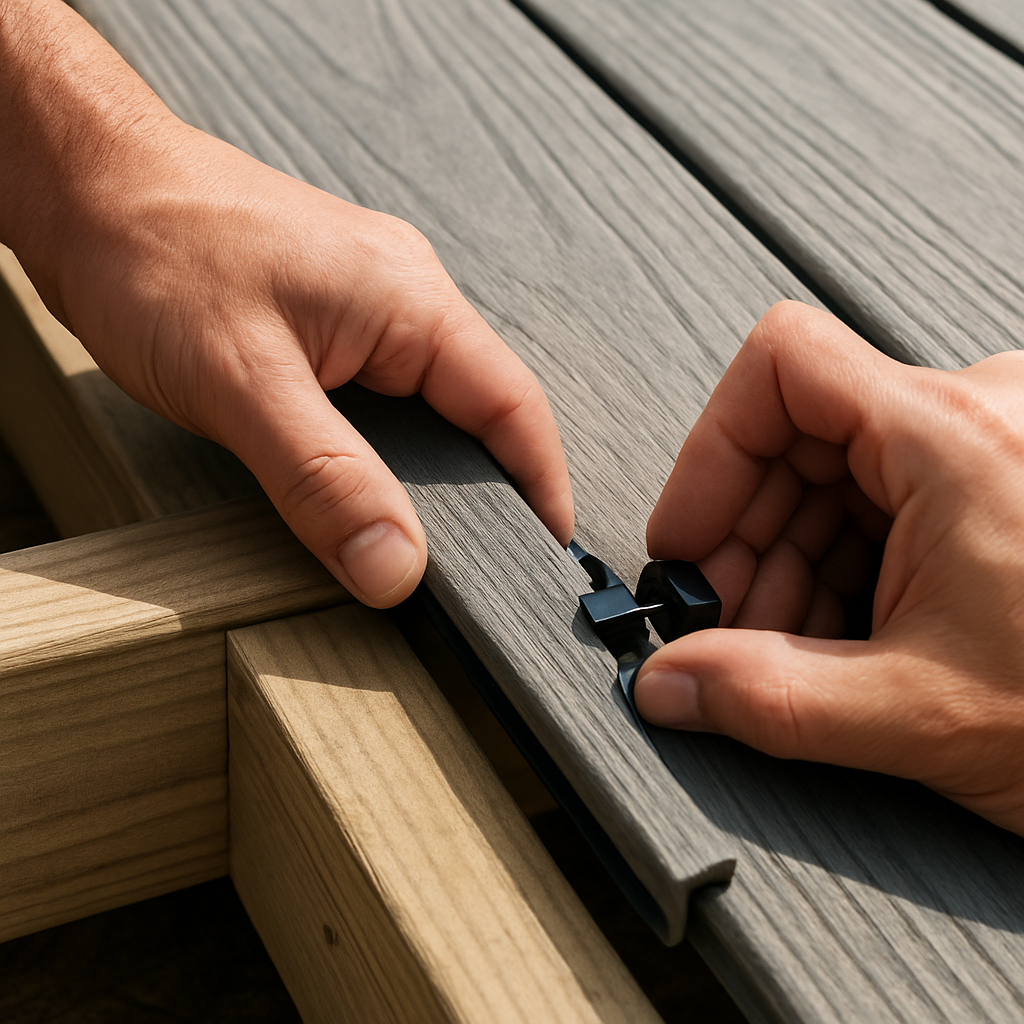
A hidden fastener system—sometimes called a concealed fastening or clip system—uses brackets or clips that attach beneath the deck board instead of driving fasteners through the face. The boards sit on top of these clips, and gravity plus the board’s own weight does most of the holding. No visible screw heads. No rust stains forming around fastener holes. No maintenance nightmare five years down the line.
That said, hidden fastener systems aren’t free, and they’re not faster. They require specific materials, slightly different framing, and a learning curve on installation. But if you care about how your deck actually looks when you’re sitting on it or viewing it from the house, the trade-off is worth the investment.
Why Face-Fastening Looks Bad and Ages Poorly
Let me be honest: face-screwing isn’t wrong, and plenty of decks built that way have outlasted their owners. The structural integrity is fine. But aesthetically and practically, it’s where most DIY decks fail to look professional.
When you drive a 3-inch exterior screw through a deck board, you leave a hole and a visible fastener head. On a composite board, that fastener head oxidizes slightly, creating a dark halo around it. On pressure-treated lumber, the screw head rusts—slowly at first, but visibly enough by year three that your deck starts looking weathered and neglected even if you’ve maintained everything else meticulously.
Beyond appearance, face-fastening also means you’re creating a direct water pathway into the board at every screw location. Moisture wicks down around the fastener, especially in freeze-thaw climates, and that accelerates rot underneath the screw head. The fastener itself then works slightly loose over time as the wood expands and contracts, creating a gap where water pools.
On my first deck, I had visible screw heads every 8 inches across 200 square feet of decking. That’s roughly 350 fastener heads acting as tiny water collectors and aesthetically distracting focal points. When I redesigned it using hidden fasteners, I eliminated all of that in one go.
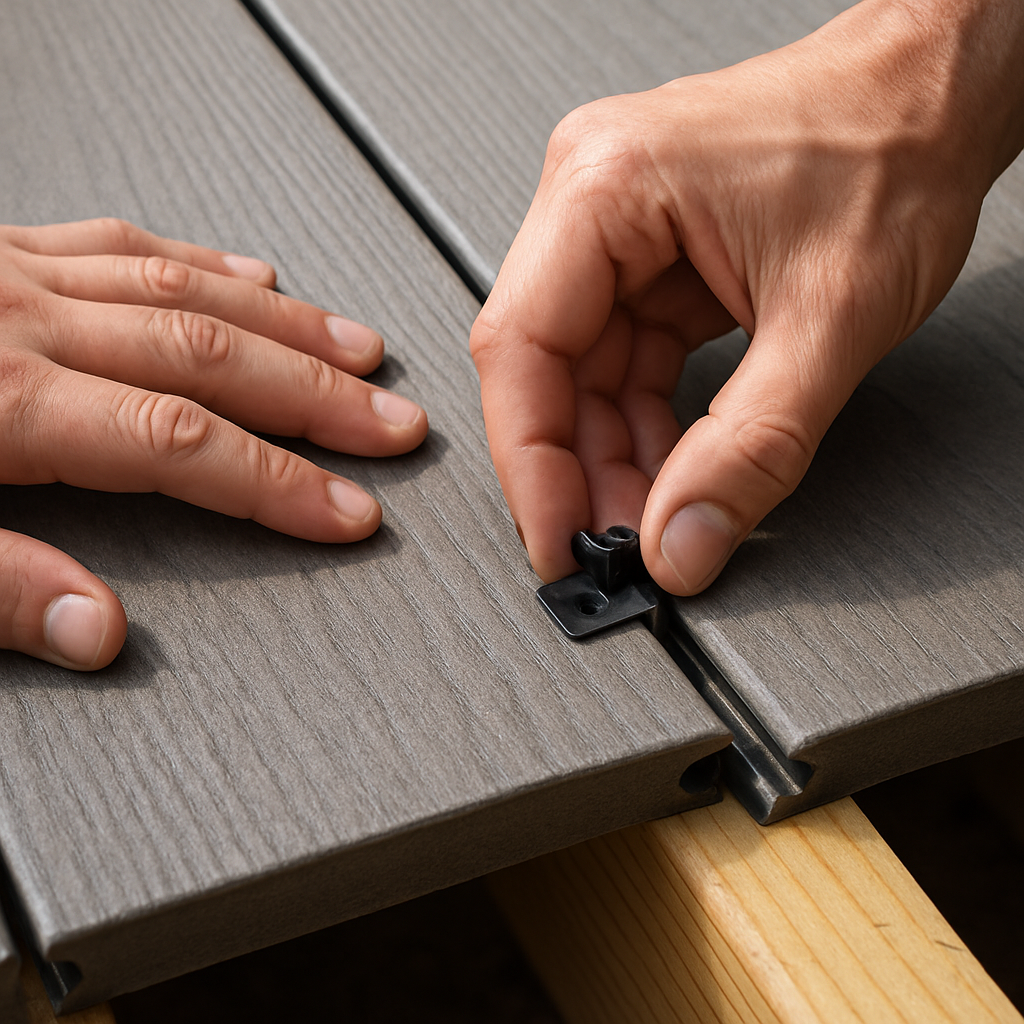
How Hidden Fastener Systems Actually Work
The basic principle is simple: the fasteners sit underneath, and gravity holds the board in place. But the mechanics vary by system type, so let me walk you through the two main categories you’ll encounter when shopping.
Clip-Based Systems
These use small metal or composite clips that screw to the side of your rim joist or ledger board. Deck boards sit on top of the clip, and a small tab on the clip prevents the board from sliding laterally. The board’s weight does the rest.
Clip systems work best with composite boards, which are heavier and stiffer than treated lumber. They’re also more forgiving if you don’t have perfectly parallel joist spacing, because the clip can flex slightly. Installation is straightforward: screw the clip to the joist, drop the board onto it, move to the next one.
Groove-and-Fastener Systems
Some composite decking is milled with a groove running lengthwise on the underside. Fasteners—either screws or specialized clips—insert into that groove and catch a hidden ledge on the board. This method is extremely sleek and doesn’t rely on the clip sticking out from underneath.
The downside: you’re locked into using that specific board type. If you want to replace a single board five years later, you may not be able to match it exactly. In my experience, that’s less of a worry than it sounds, but it’s worth knowing upfront.
The Real Costs and Timeline Impact
Here’s what nobody advertises clearly: hidden fastener systems cost more, both in materials and in labor time. When I quoted my rebuild, hidden fasteners added roughly $400 to $600 in hardware alone for my 200-square-foot deck, depending on board spacing and clip density.
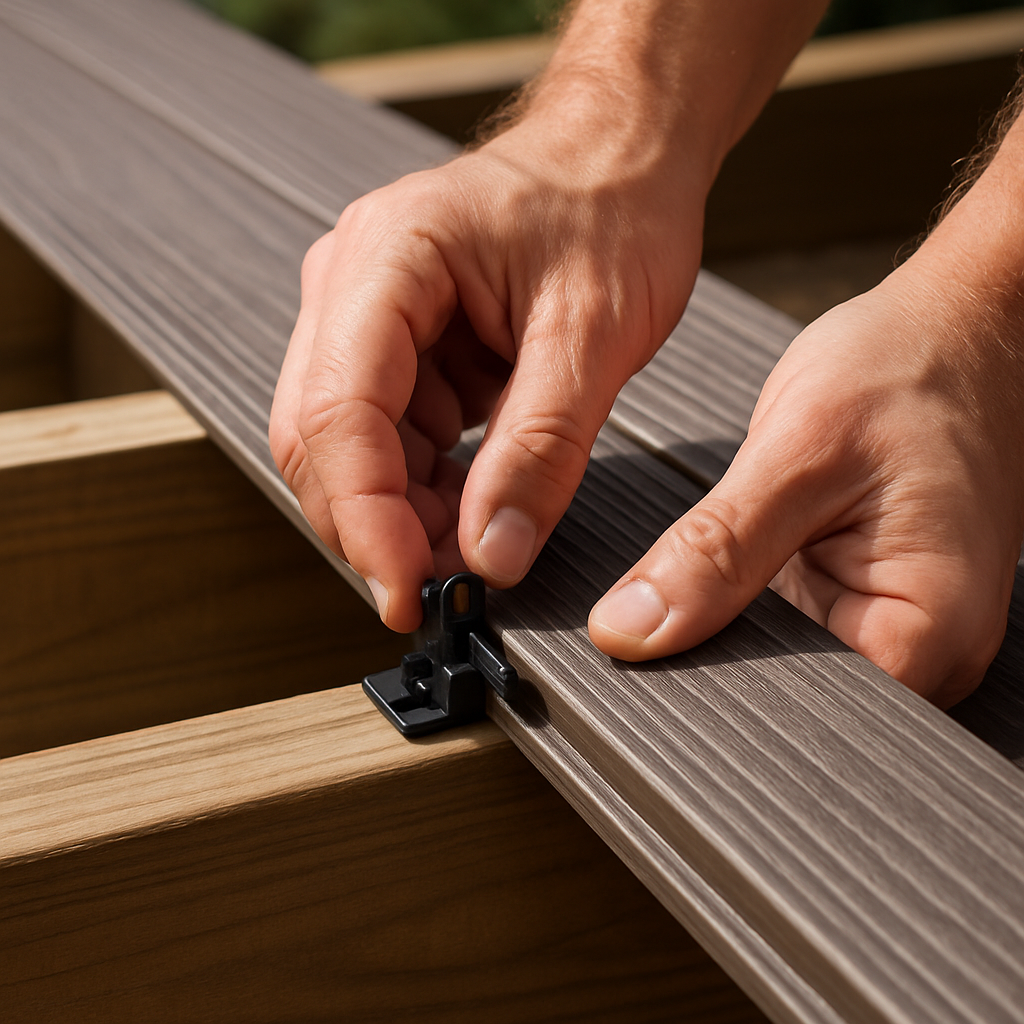
Installation also takes longer. Clip systems require you to predrill and screw each clip to the joist before laying boards. On my deck, that was roughly 45 minutes of prep work before a single board went down. With face-fastening, you just run screws through the board into the joist as you go.
However, the time difference shrinks when you factor in precision. Face-fastening requires you to counterbore pilot holes and sink screws consistently so they don’t stick up or sit too deep. With hidden systems, there’s no visible fastener to worry about, so installation becomes almost meditative—you just clip, drop, move on.
For a typical 16-by-12-foot deck with composite boards and 16-inch joist spacing, expect to spend $800 to $1,200 more on hidden fasteners compared to traditional deck screws. That’s a real number, and it should factor into your decision.
What I Actually Changed When I Rebuilt
My first deck used 16-inch-on-center pressure-treated joists with a treated rim joist and face-fastened treated deck boards. It worked fine structurally, but by year four, the fastener corrosion was visible enough to be annoying.
For the rebuild, I kept the same joist frame but swapped the decking to composite boards with 12-inch joist spacing—yes, I added joists for better support and to allow closer clip placement. That gave me more fastener points per board and a more rigid assembly overall.
I used a clip-based hidden fastener system designed for composite boards, fastening clips to the top of the rim joist and to each intermediate joist. Each board seated onto the clips and was free to expand and contract with temperature and moisture without fasteners interfering.
One honest mistake: I didn’t account for the clip profile when laying out my steps. The clips added about 3/8 inch of height, which meant my step treads sat slightly lower than planned. It’s not noticeable in use, but it was a detail I should have sketched out before ordering materials.
For composite boards specifically, I’d now recommend planning for the clip height in your ledger-to-ground calculations. Do a dry run with a single clip and board before finalizing measurements.
The Trade-Offs You Need to Know
Hidden fastener systems aren’t perfect, and I want to be transparent about the downsides because they matter for certain situations.
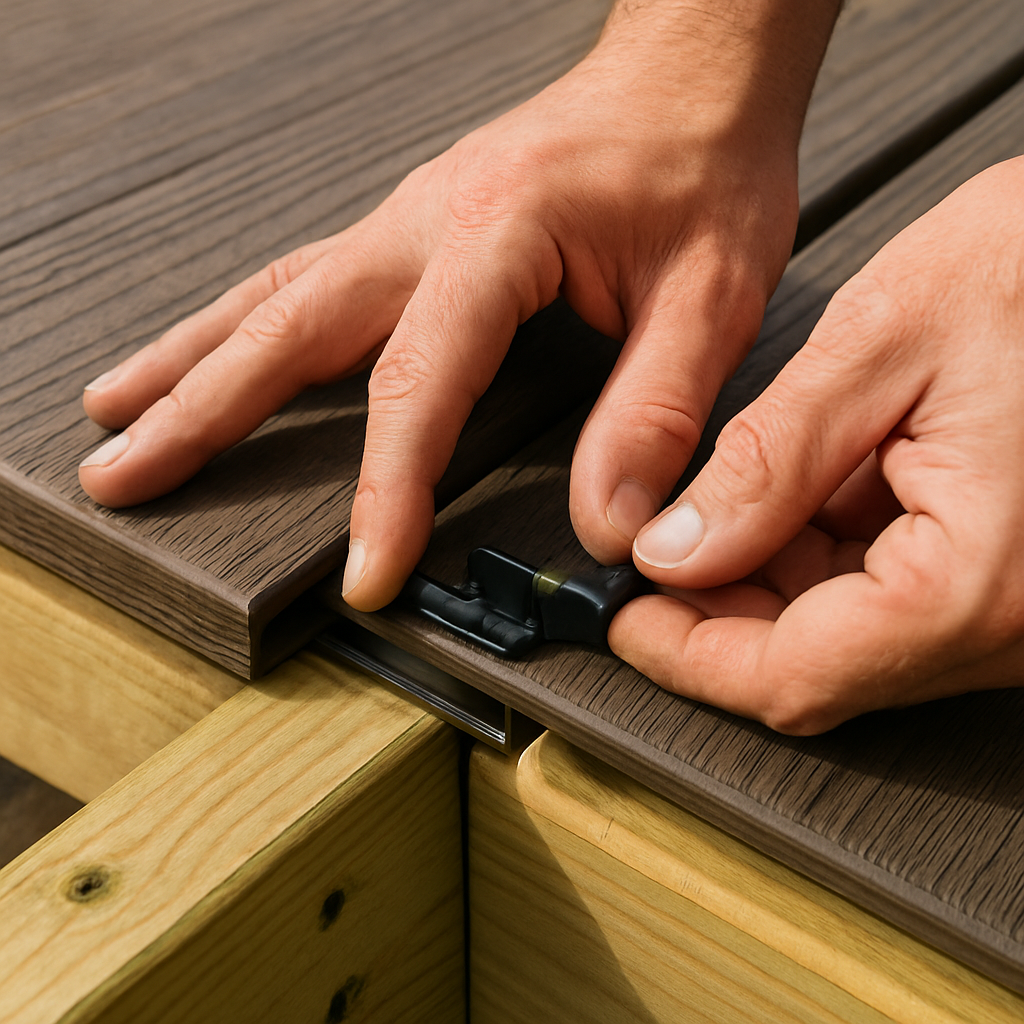
First: replacement becomes slightly more complicated. If a board splits or needs replacing, you can’t just unscrew it and slide a new one in. You have to pry up the old board, remove the clips, and install new clips for the replacement board. It’s not hard, but it’s more involved than pulling out a few screws.
Second: not all decking works with all systems. If you want to use pressure-treated lumber, your options are more limited. Treated boards are slightly less uniform in thickness, and some clip systems don’t accommodate that variation well. Composite boards are the sweet spot for hidden fasteners because they’re milled consistently and weigh enough to stay put.
Third: in extremely hot climates where boards expand significantly, hidden fastener systems can occasionally let boards shift slightly if the clip isn’t tight enough. That said, I’ve never seen this happen in real-world decks—it’s a theoretical concern more than a practical one.
Last: upfront cost is genuinely higher. If you’re building a small platform deck on a tight budget, traditional fastening might make more sense. For anything larger or visible from the main living area, the aesthetic payoff justifies the extra expense.
Final Recommendation: Why I’ll Never Go Back
Five years into my rebuilt deck with hidden fasteners, I have zero rust stains, no visible fastener heads, and no water pooling around screw holes. The boards are weathered evenly, which is exactly what you want from composite decking. When guests ask about the build, the first thing they notice is how clean the decking looks—and that comes almost entirely from hiding the fasteners.
For any deck larger than 150 square feet, composite or premium lumber, and visible from your house: use a hidden deck fastener system. The material cost is real, but the lifespan improvement and aesthetic return make it worth every penny. Your deck will look finished and intentional instead of utilitarian, and it’ll age better because you’re eliminating direct water pathways at fastener points.
Start by measuring your joist spacing and board width, then research which hidden fastener type matches your decking choice. Buy quality clips or fasteners—this is not where you save money—and allow extra time for the initial clip installation. Once you start laying boards, the rhythm becomes natural.
Your future self will thank you every time you walk out onto a deck that looks like you cared about every detail, because you did.
About This Article

Written by Marcus Delvecchio. Marcus Delvecchio isn't a licensed contractor — he's a handyman and DIY outdoor landscaper who got obsessed with driveways, patios and pavers after redoing his own place badly enough to want to understand why. Twenty years later he spends his weekends on his own projects and on side jobs for neighbours and friends around the mid-Atlantic, and writes up what actually worked, mistakes included. More about this site.
Scope and limits. Marcus is a homeowner who got obsessive about driveways, not a licensed contractor. Structural repair, drainage changes, and anything requiring a permit should go to a licensed contractor.
Verify this against a primary source
Specifics change, and your situation may differ from the one described here. These are the authorities worth checking directly:
- Concrete Masonry & Hardscapes Association — segmental paver installation standards
- National Asphalt Pavement Association — asphalt placement and maintenance guidance
- Portland Cement Association — concrete durability and jointing