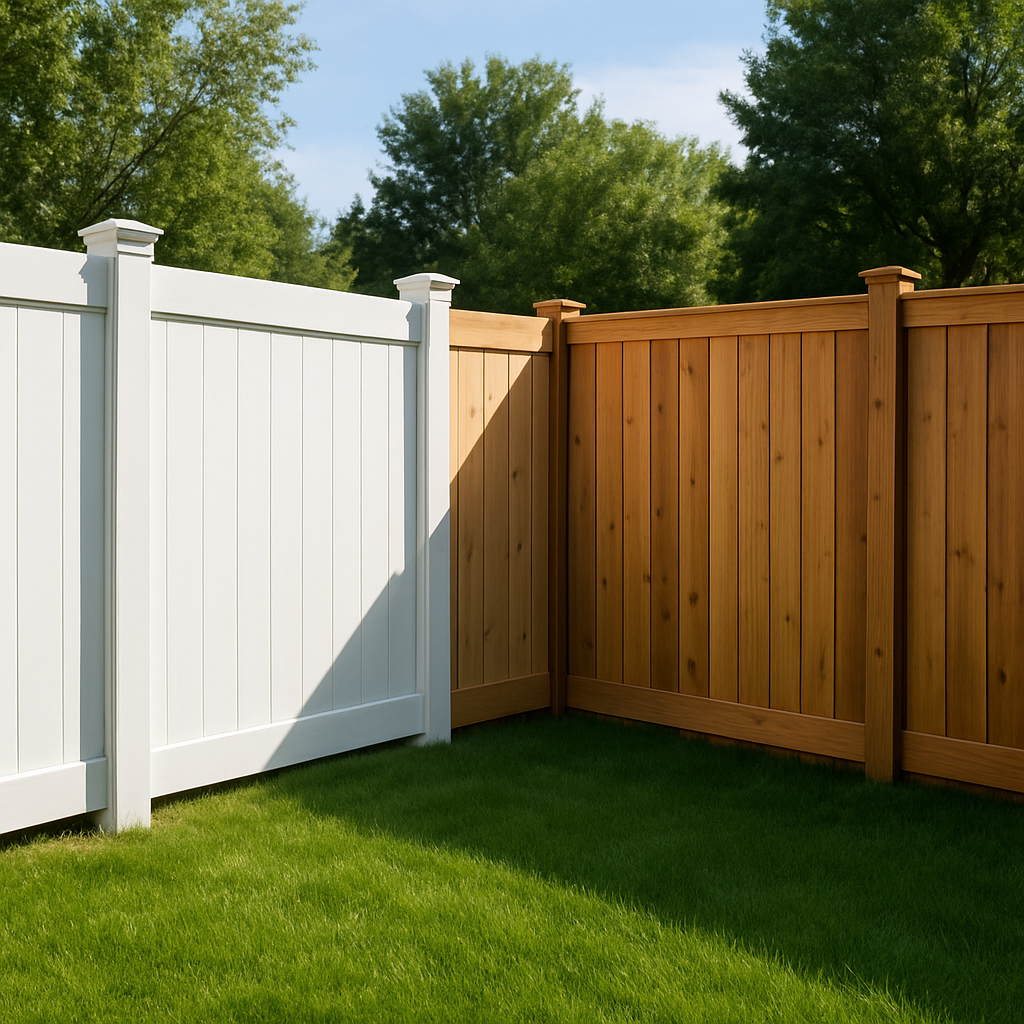
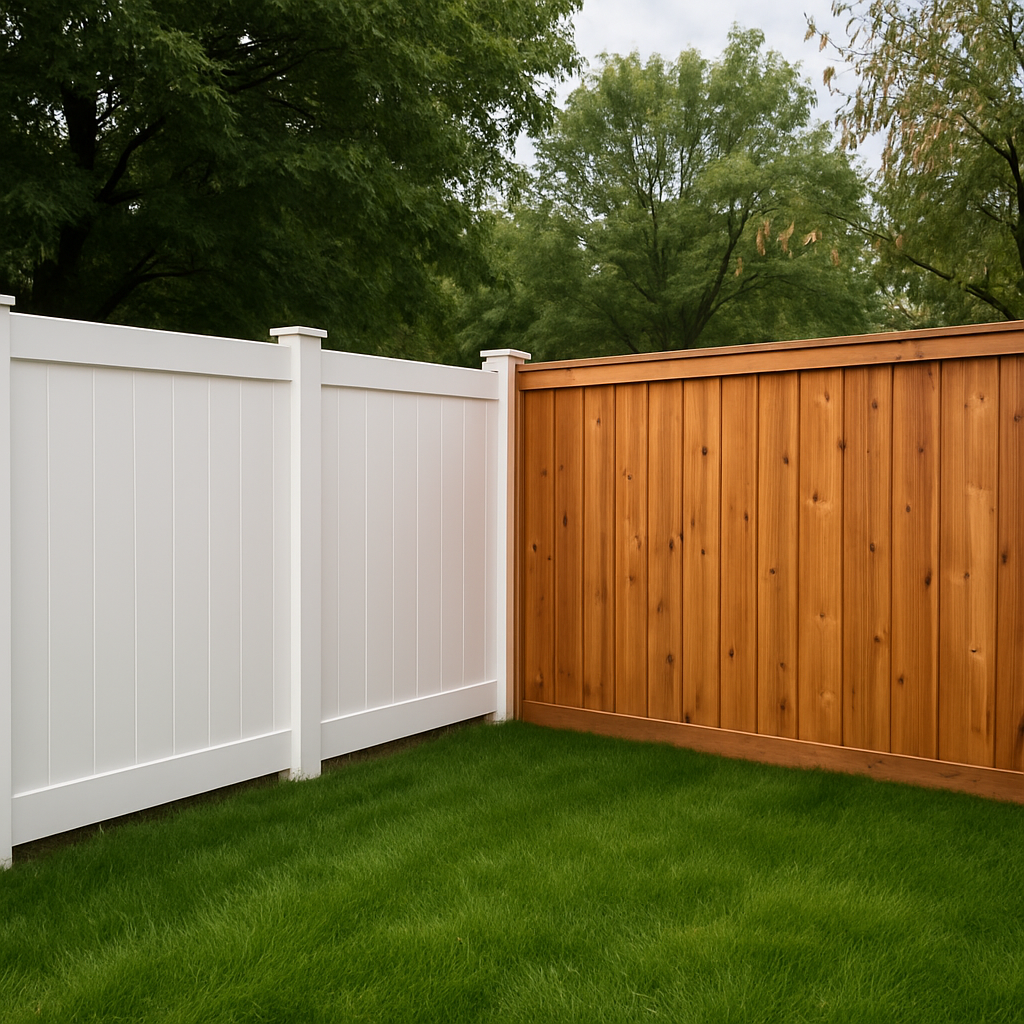
I spent three weeks going back and forth between vinyl and wood before I put in the privacy fence along my back property line, and honestly, every “definitive guide” I found online was written by someone selling one or the other. After living with a vinyl section and a cedar section side by side for over a year now, I can tell you what actually happens after the first season—not what the brochure promises. A vinyl vs wood privacy fence decision comes down to what you’re willing to maintain, how much you want to spend upfront, and what your neighborhood actually looks like in ten years.
Both materials will stand there and do their job. But “doing the job” looks very different depending on which one you chose.
The Cost Trap Nobody Talks About
When I first started pricing out my fence, wood looked like the obvious choice. Standard pressure-treated 6-by-8 privacy panels were running me about $35 to $50 per panel. Cedar was more—closer to $80 to $120—but still less than vinyl seemed to cost initially.
Here’s what changed my math: installation labor. I was planning to do as much as I could myself, which meant digging 45 post holes for a 180-foot run, setting posts in concrete, and hanging panels. That’s doable but brutal work over a solid weekend or two.
Vinyl panels, on the other hand, seemed to run $60 to $150 per panel—higher sticker price. However, the posts don’t need concrete footings the same way. The actual installation time was noticeably shorter. I saved myself a full day of digging, which mattered more to me than I expected.
The real cost question isn’t about year one. It’s about year three, year seven, year twelve. Wood needs staining every two to three years if you want it to look intentional rather than gray and weathered. I didn’t do that. I let my cedar section go natural, which is honest but means accepting a color you might not have chosen at purchase.
Maintenance: What I Actually Do (and Don’t)
My vinyl section requires essentially nothing. No stain, no sealant, no annual inspection for rot. I rinse it with the garden hose maybe twice a year when it looks dull. That’s the entire maintenance routine.
The cedar is more involved. In year one, I did nothing. By year two, I noticed the bottom rails were starting to show soft spots when I pressed them with my thumbnail. I spent a Saturday with a pressure washer—carefully, because too much pressure damages the wood—and the fence looked restored. For about four months.
Here’s what I wish I’d known: “low maintenance” wood is a marketing term. Real low-maintenance wood is stained or sealed yearly. I’ve accepted that my cedar section requires maybe two hours of work every other year to keep it from looking neglected. That’s not terrible, but it’s also not the passive experience vinyl offers.
Vinyl has its own problems, though. In summer heat, the panels expand slightly and can make slight popping sounds if they’re installed too tightly. My neighbor’s vinyl fence did this for the first few weeks after installation. It stopped, but it was genuinely unsettling. Also, if a vinyl panel cracks—and I haven’t had this happen, but I know it can—you often have to replace the entire panel, not just repair a section.
Durability and What “Lasting” Actually Means
Vinyl manufacturers claim 20-to-30-year lifespans. Wood typically gets quoted at 10-to-20 years. These numbers are technically true and also technically useless without context.
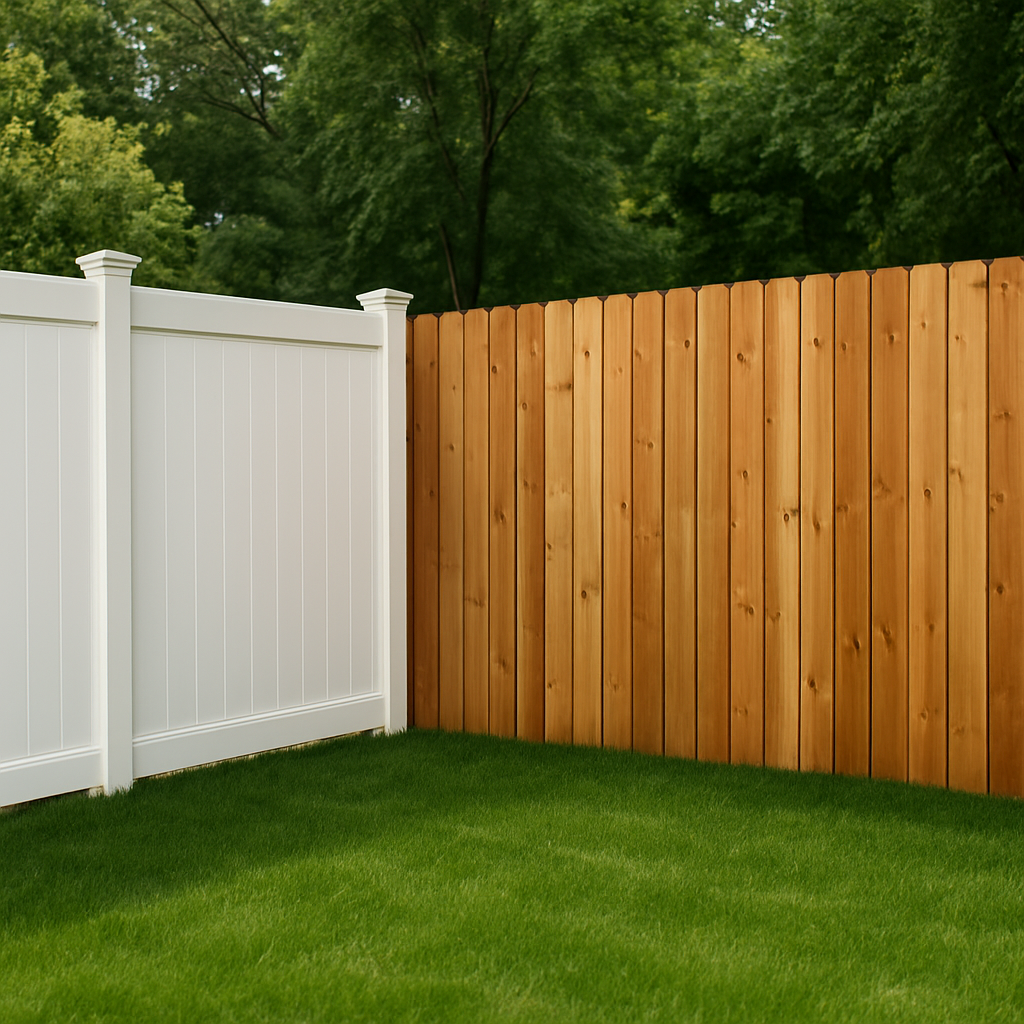
My vinyl section looks identical to how it looked on day one. The cedar looks distinguished—weathered silver rather than honey-brown. Some people pay extra for that aesthetic. I happen to like it, though I know it reads as “unmaintained” to others.
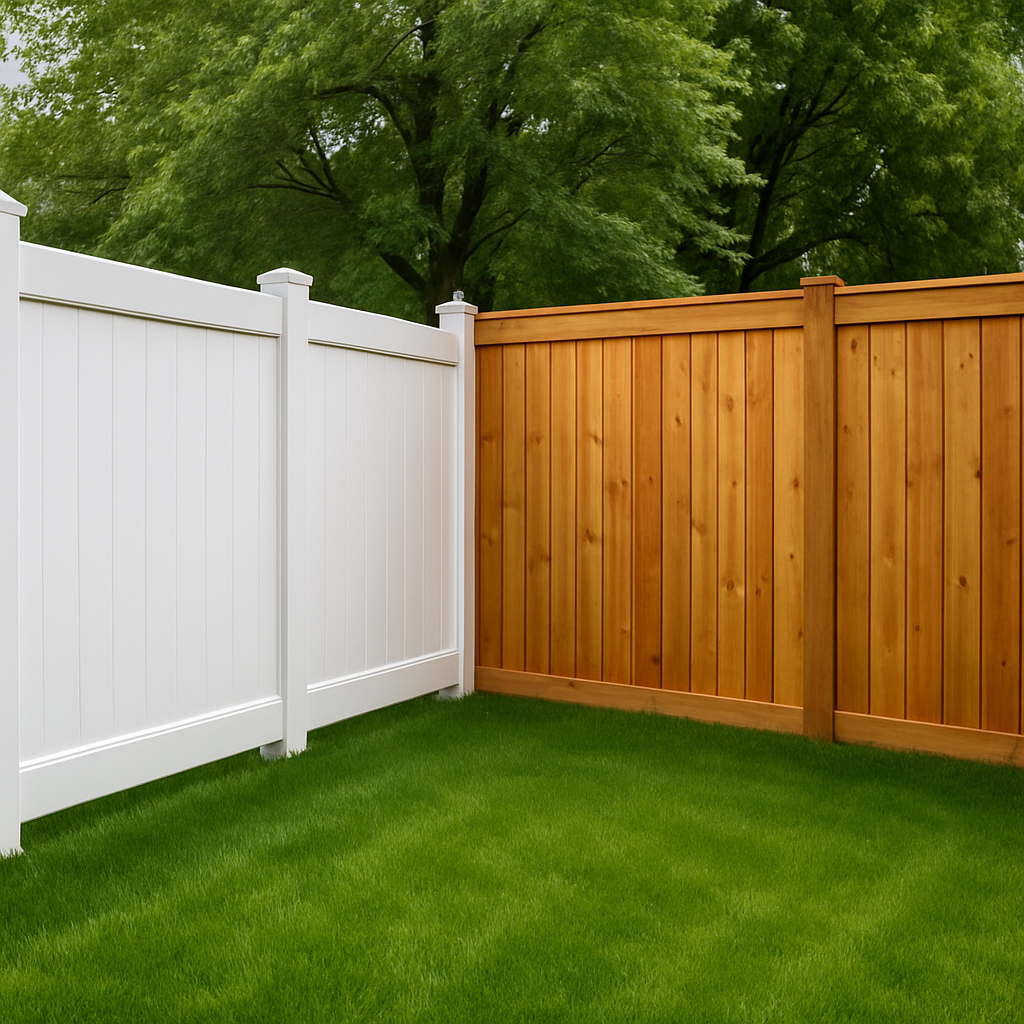
On the other hand, durability isn’t just about color. Two things can damage wood faster than time: ground contact and shade. The bottom 6 inches of my cedar fence, where it touches soil, is significantly softer than the upper sections. The shadiest part of the fence, where I have overhanging trees, shows more weathering than the sunny section. These are predictable problems that stain and sealant address—if you’re willing to do it.
Vinyl doesn’t suffer from ground contact or shade damage. It also doesn’t rot, splinter, or warp. What it does instead: it can become brittle in extreme cold and can fade slightly in intense UV exposure over many years. Also, vinyl isn’t recyclable in most areas, which matters to some people and not at all to others.
The Aesthetic and Neighbor Reality Check
This is where I get honestly conflicted. Vinyl looks new. It always looks new. For some homeowners, that’s exactly the point. For others, it reads as plastic and slightly suburban, which may or may not bother you.
Wood has grain, texture, and character. Cedar specifically smells wonderful for the first year. My fence smelled like a lumber yard, which I genuinely enjoyed. That scent is gone now, and the fence looks like weathered wood, which I also enjoy but in a different way.
Your neighborhood matters here too. In rural areas, wood feels expected. In newer subdivisions, vinyl is more common. Neither is “right,” but your neighbors’ fences will unconsciously influence whether your choice feels harmonious or like you’re making a statement.
The Decision Framework I Wish I’d Used
After a year of living with both, here’s how I’d actually choose now:
- Choose vinyl if: You value zero maintenance and consistent appearance over the next decade. You dislike staining or sealing. You live somewhere very hot or very cold. You want to set it and forget it completely.
- Choose wood if: You’re comfortable doing two-to-three hours of maintenance every two years. You prefer natural materials and don’t mind the weathered look. Your budget is tighter upfront. You want the warmth and character of a natural product.
For me personally? I’m keeping both sections and would do vinyl again for the next fence. The peace of mind is worth the slight cost premium. But I don’t regret my cedar either. It’s beautiful, and the maintenance isn’t onerous—I just had to be honest about actually doing it.
The fence you choose isn’t permanent. You can remove it, replace it, or shift sections later. More importantly, you can now make the choice based on what you actually want to maintain, not on marketing claims or what some contractor told you. That’s worth the three weeks of deliberation.
Have you wrestled with this decision? Tell me in the comments what you chose and why—I’d rather hear from people who’ve actually lived with their fences than from anyone selling them.
About This Article

Written by Marcus Delvecchio. Marcus Delvecchio isn't a licensed contractor — he's a handyman and DIY outdoor landscaper who got obsessed with driveways, patios and pavers after redoing his own place badly enough to want to understand why. Twenty years later he spends his weekends on his own projects and on side jobs for neighbours and friends around the mid-Atlantic, and writes up what actually worked, mistakes included. More about this site.
Scope and limits. Marcus is a homeowner who got obsessive about driveways, not a licensed contractor. Structural repair, drainage changes, and anything requiring a permit should go to a licensed contractor.
Verify this against a primary source
Specifics change, and your situation may differ from the one described here. These are the authorities worth checking directly:
- Concrete Masonry & Hardscapes Association — segmental paver installation standards
- National Asphalt Pavement Association — asphalt placement and maintenance guidance
- Portland Cement Association — concrete durability and jointing