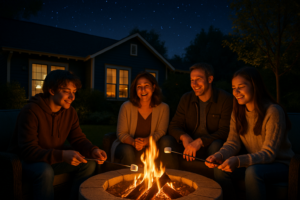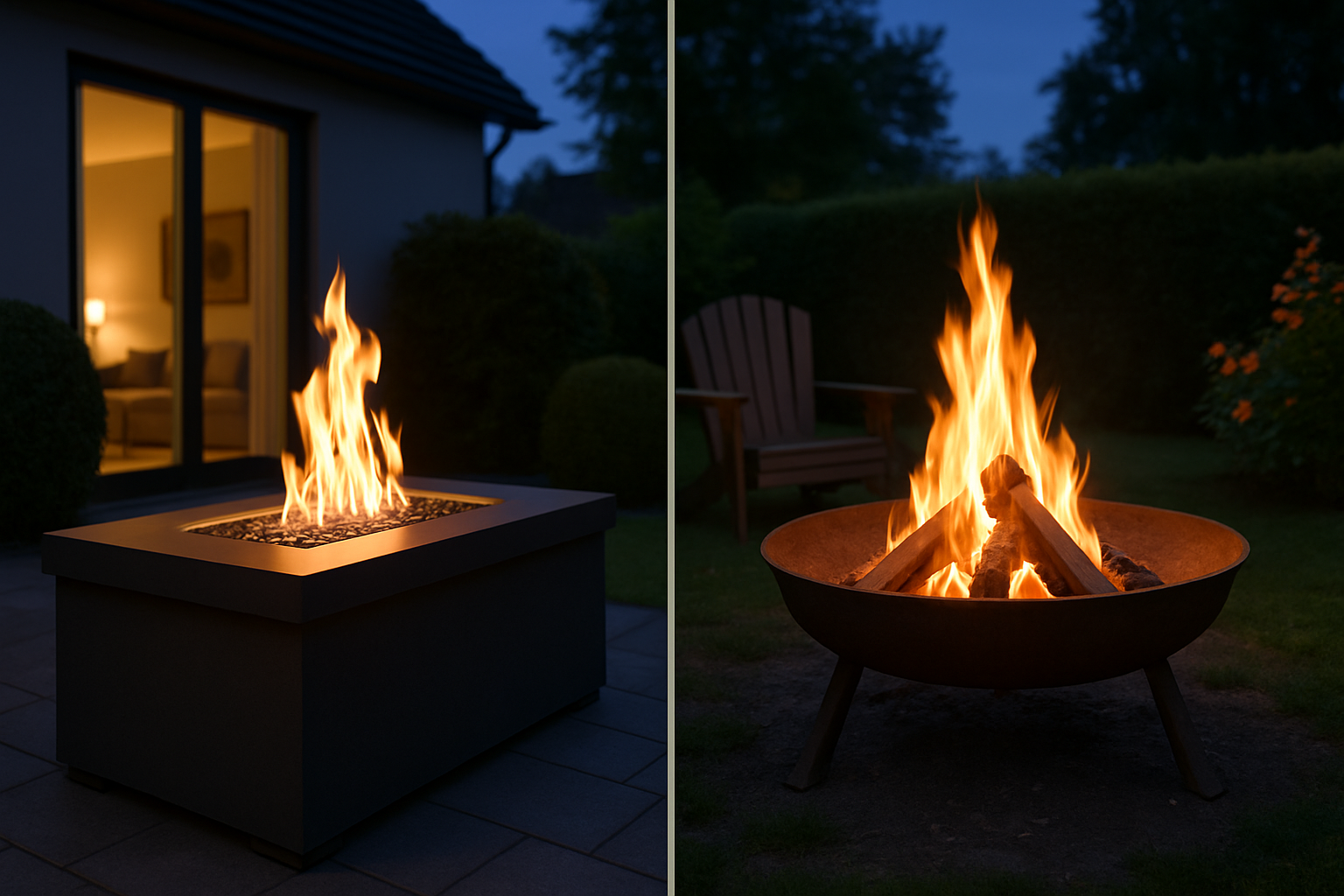
Propane fire pits let you dial in ambiance and turn them on for a dinner party at 6 p.m., while wood-burning pits demand respect—they need preparation, timing, and forgiveness for the ash that’ll coat your guests’ clothes. After living with both running simultaneously through an entire year, I can tell you the propane version won on convenience, but the wood pit won on something harder to quantify: the way my family actually gravitates to the backyard when they smell smoke and hear real flames crackling. The choice between them isn’t just about BTUs or aesthetics—it fundamentally changes whether your fire pit becomes a scheduled destination or an irresistible gathering place, and that difference shows up immediately in how your outdoor living space actually performs.
How This Whole Experiment Started (And Why I Panicked at a Hardware Store)
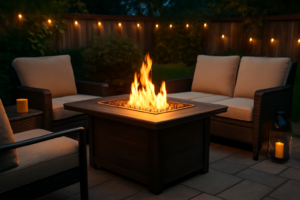
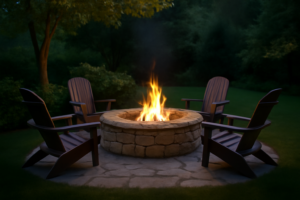
My wife and I had just finished a patio refresh last spring — new pavers, string lights, the whole deal — and the one missing piece was a fire pit. I kept seeing gorgeous propane fire pit tables at neighbors’ houses, all sleek and effortless. But I also grew up sitting around wood fires at my grandfather’s place, and there is something about that crackling, smoky, primal experience that no gas flame can fake. So instead of just picking one, I bought both.
The propane setup went in first. Assembly was straightforward, and within about an hour I had a beautiful fire pit table sitting on the patio looking like it belonged in a catalog. The wood pit came a week later, and that is where my confidence got a little too big for its britches.
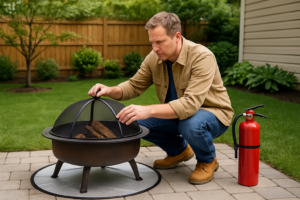
It was a Saturday evening. Twelve people were coming over for a cookout. I had watched exactly one YouTube video on “how to start a wood fire pit” and decided I was basically an expert. I crumpled up some newspaper, stacked a few logs in what I believed was the proper formation, and lit the whole thing. What followed was a ten-minute saga involving more smoke than a Hollywood action movie, a garden hose I grabbed in mild panic, and a log that rolled off the grate and onto the patio stones with a dramatic thud. My neighbor leaned over the fence and asked if I needed help. I told him no. He watched me for another five minutes and then just quietly went inside.
The fire eventually caught. My eyebrows were slightly singed on one side. Everyone laughed, nobody got hurt, and the s’mores that night were genuinely incredible. But the experience absolutely shaped how I thought about both fire pits for the rest of the season.
The Fire Pit Table That Turned My Weeknight Patio Into an Actually-Used Space
After that singed-eyebrow wood fire disaster, I needed a propane setup that wouldn’t require YouTube university and a garden hose every time I wanted to sit outside on a Tuesday. The 45-inch table solved the real problem: how to have a fire pit that works as both functional furniture and genuine focal point without the constant maintenance or the production value of lighting a real fire.
What works
- The lid and waterproof cover mean you’re not constantly brushing off patio dirt or worrying about rain damage—it actually stays looking like the catalog photo between seasons.
- Ten seconds from igniter to flame every single time, which sounds small until you realize you’re using it 3-4 times a week instead of on special occasions only.
- At 45 inches, it’s large enough to anchor a real conversation zone without dominating the patio layout—you can actually plan seating around it like you would an interior fireplace.
What doesn’t
- Propane tank refills cost more than I expected after a few months of regular use—you’ll want to factor that into your operating budget, not just the purchase price.
- The flame, while reliable, doesn’t have that primal pull of a wood fire—guests will still gravitate to the wood pit if both are going, and that’s just honest.
I initially hesitated on the propane table because I worried it would feel like a compromise, a boring suburban version of a “real” fire pit. The best outdoor spaces I’ve designed work because they were planned like rooms, not like yards. Defined zones, traffic flow, a clear focal point, materials that connect to the interior of the house — these aren’t aesthetic choices, they’re functional ones. When people treat the outdoors as an extension of their living space instead of an afterthought, the results are completely different. The fire pit is almost always the anchor of that space — it’s the outdoor equivalent of a fireplace, and the decision between propane and wood affects everything from how you lay out seating to how close you can build to a structure to how the space actually gets used on a Tuesday night versus a dinner party. I’ve spec’d and installed both across hundreds of projects, and what I’ll share here isn’t a sponsored opinion or a manufacturer talking point — it’s what I’ve watched real families actually live with, season after season, in their own backyards.
About This Article

Written by Marcus Delvecchio. Marcus Delvecchio isn't a licensed contractor — he's a handyman and DIY outdoor landscaper who got obsessed with driveways, patios and pavers after redoing his own place badly enough to want to understand why. Twenty years later he spends his weekends on his own projects and on side jobs for neighbours and friends around the mid-Atlantic, and writes up what actually worked, mistakes included. More about this site.
Scope and limits. Marcus is a homeowner who got obsessive about driveways, not a licensed contractor. Structural repair, drainage changes, and anything requiring a permit should go to a licensed contractor.
Verify this against a primary source
Specifics change, and your situation may differ from the one described here. These are the authorities worth checking directly:
- Concrete Masonry & Hardscapes Association — segmental paver installation standards
- National Asphalt Pavement Association — asphalt placement and maintenance guidance
- Portland Cement Association — concrete durability and jointing