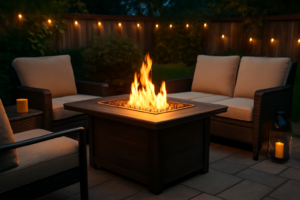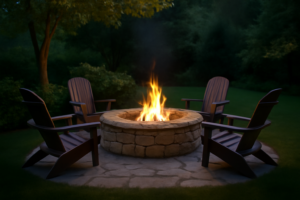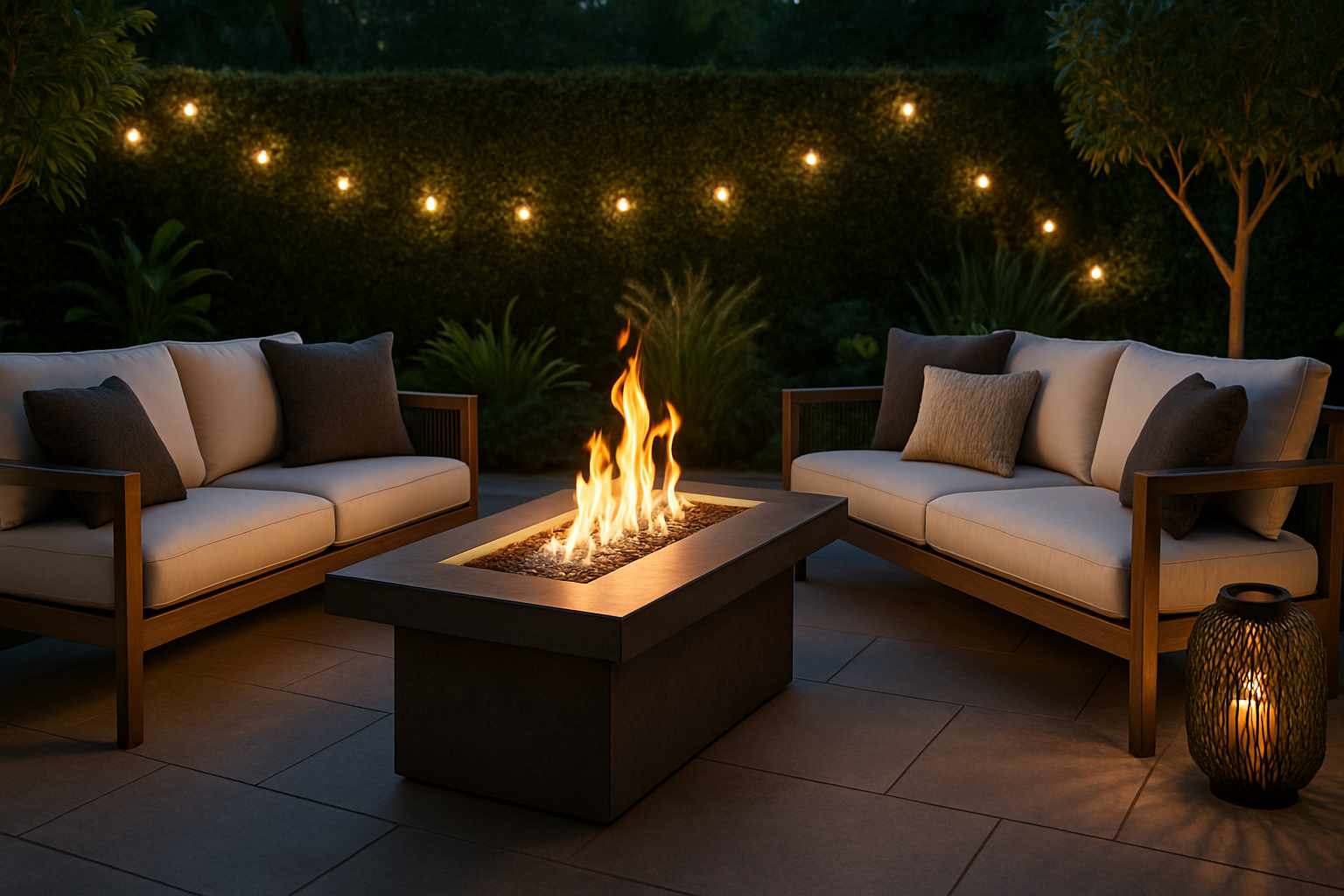
It wasn’t until 2019, after watching a neighbor’s brand-new fire pit table sink unevenly into their composite deck, that I realized how many people treat these installations like furniture instead of structures. The table looked flawless in the photos they’d shown me before delivery—gleaming surface, professional finish, the whole package—but nobody had thought about weight distribution, substrate integrity, or whether that deck could actually handle what was sitting on top of it. That’s when I started keeping a mental checklist for fire pit tables the same way I do for every other outdoor build: checking clearances, vetting materials, tracing gas lines, and most importantly, making sure the foundation beneath can do its job. What follows is that exact checklist, because a beautiful setup that fails is far worse than one that never gets installed at all.
Before the umbrella incident, our back patio was what I generously called “a work in progress” and what our neighbors probably called “that sad concrete slab.” We had a plastic table, four mismatched chairs, and a string of lights that had been half-burned out since 2021. It was bleak. I had big dreams and a modest budget, and I was convinced that a fire pit table was the missing piece. I was right about that part. I was wrong about almost everything else along the way.
The Great Umbrella Incident (And What I Learned From It)
Here’s what happened: I borrowed a portable fire pit from my sister, set it up under our large patio umbrella because it was drizzling and I didn’t want to get wet, and lit it up. The umbrella was roughly 24 inches above the flame. I thought, “That seems fine.” Reader, it was not fine. Within about three minutes, the decorative fringe along the umbrella’s edge started curling and releasing a smell that I can only describe as “synthetic regret.”
No one was hurt. The umbrella was only slightly melted at the edges. My pride, however, was fully destroyed. But that disaster sent me down a research rabbit hole that completely changed how I approached our patio transformation — and ultimately led me to discover propane fire pit tables, which are genuinely one of the smartest upgrades you can make to an outdoor space.
Why a Fire Pit Table Is the Outdoor Upgrade You Actually Need
After my umbrella debacle, I started doing serious research. What I found is that propane fire pit tables are a completely different beast from the freestanding fire bowls I’d been messing around with. They’re designed to be safe, functional, and beautiful all at once — and they come with features that make the whole experience so much more enjoyable.
Here’s what I learned about choosing the right one:
- BTU Output Matters: Look for at least 50,000 BTUs if you want real warmth on cool evenings. Anything under 40,000 can feel underwhelming once the temperature drops.
- Size It Right: Measure your patio before buying. A 43-inch table works well for smaller patios, while 51-inch models feel better suited for larger seating areas with room to spread out.
- Look for a Lid: A lid lets your fire pit table double as actual table space when the fire’s off — huge bonus for small patios.
- Wind Guards Are a Game-Changer: Glass wind guards protect the flame and look incredibly elegant at night. Non-negotiable in my book.
- CSA Certification: Always look for CSA-certified propane fire pits. It means the product has been tested for safety — especially important if you have kids or pets around.
- Adjustable Flame: The ability to dial the flame up or down gives you total control over the ambiance and how much warmth you’re generating.
One more thing the umbrella fire taught me: always check the manufacturer’s clearance recommendations. Most propane fire pit tables specify a minimum clearance of 24–36 inches from overhead structures — and unlike me, please actually follow that guidance.
My Recommended Fire Pit Tables for Your Outdoor Patio
After months of research (and one bruised ego), here are the fire pit tables I trust and recommend. There’s something here for different patio sizes and budgets.
The Fire Pit Table That Finally Passed My Own Safety Audit
Most fire pit tables look solid until you get underneath and check the gas line routing, the burner stability, and whether the weight distribution will actually hold up on an aging patio. I needed something that didn’t just photograph well but would survive actual use without becoming a liability.
What works
- The 43-inch rectangular frame sits flush and level on uneven concrete—no wobble, which means no stress fractures radiating into an aging patio surface below it.
- Propane setup is straightforward enough that connections feel secure without over-tightening, and the burner sits centered so heat distributes evenly instead of creating hot spots that crack the surrounding pavers.
- The steel construction is thick enough that it won’t flex or rattle—something you notice immediately when you’re inspecting structures that haven’t failed yet but feel unstable to the touch.
What doesn’t
- Assembly takes longer than the marketing photos suggest, and you’ll need a level and a wrench—casual bolt-tightening will leave you with alignment problems that show up after the first propane refill.
- The base footprint means you need at least 4 feet of clearance on all sides, which can be a real constraint on tight patios or driveways where sealing and repairs already limit your usable space.
I almost returned it after the first assembly attempt because I’d over-tightened a fitting and couldn’t get the burner to light—but stepping back and rebuilding it properly made the difference between something that just sits there and something that actually works. Ciays 43-Inch Rectangular Propane Fire Pit
About This Article

Written by Marcus Delvecchio. Marcus Delvecchio isn't a licensed contractor — he's a handyman and DIY outdoor landscaper who got obsessed with driveways, patios and pavers after redoing his own place badly enough to want to understand why. Twenty years later he spends his weekends on his own projects and on side jobs for neighbours and friends around the mid-Atlantic, and writes up what actually worked, mistakes included. More about this site.
Scope and limits. Marcus is a homeowner who got obsessive about driveways, not a licensed contractor. Structural repair, drainage changes, and anything requiring a permit should go to a licensed contractor.
Verify this against a primary source
Specifics change, and your situation may differ from the one described here. These are the authorities worth checking directly:
- Concrete Masonry & Hardscapes Association — segmental paver installation standards
- National Asphalt Pavement Association — asphalt placement and maintenance guidance
- Portland Cement Association — concrete durability and jointing