If you’ve been putting off a backyard upgrade because you think it has to be expensive or complicated, let me stop you right there. Learning how to build a fire pit is genuinely one of the highest-impact projects you can knock out in a single afternoon — no contractor, no permits in most areas, and no special skills required. I’ve built three of these over the years, and every single one has become the most-used spot in the yard the moment it was finished. The truth is, I’ve made this mistake before—built a pit without proper planning and ended up tearing it apart three months later when the unsupported stones started shifting. A crackling fire, some chairs pulled close, and suddenly your backyard feels like a destination. Let’s get into it.
Fire Pit Types: Choose Your Build
Before you grab a shovel, take five minutes to decide which style fits your yard and your goals. Not every build is right for every situation.
In-Ground Fire Pit
This is the simplest build of all — you dig a bowl roughly 12 inches deep and 3 feet across, line the bottom with gravel for drainage, and drop a steel ring insert inside. It’s permanent, low-profile, and looks like it belongs there. The downside is that it’s essentially invisible until you’re standing right next to it, which can be a tripping hazard if you don’t border it with pavers or stone.
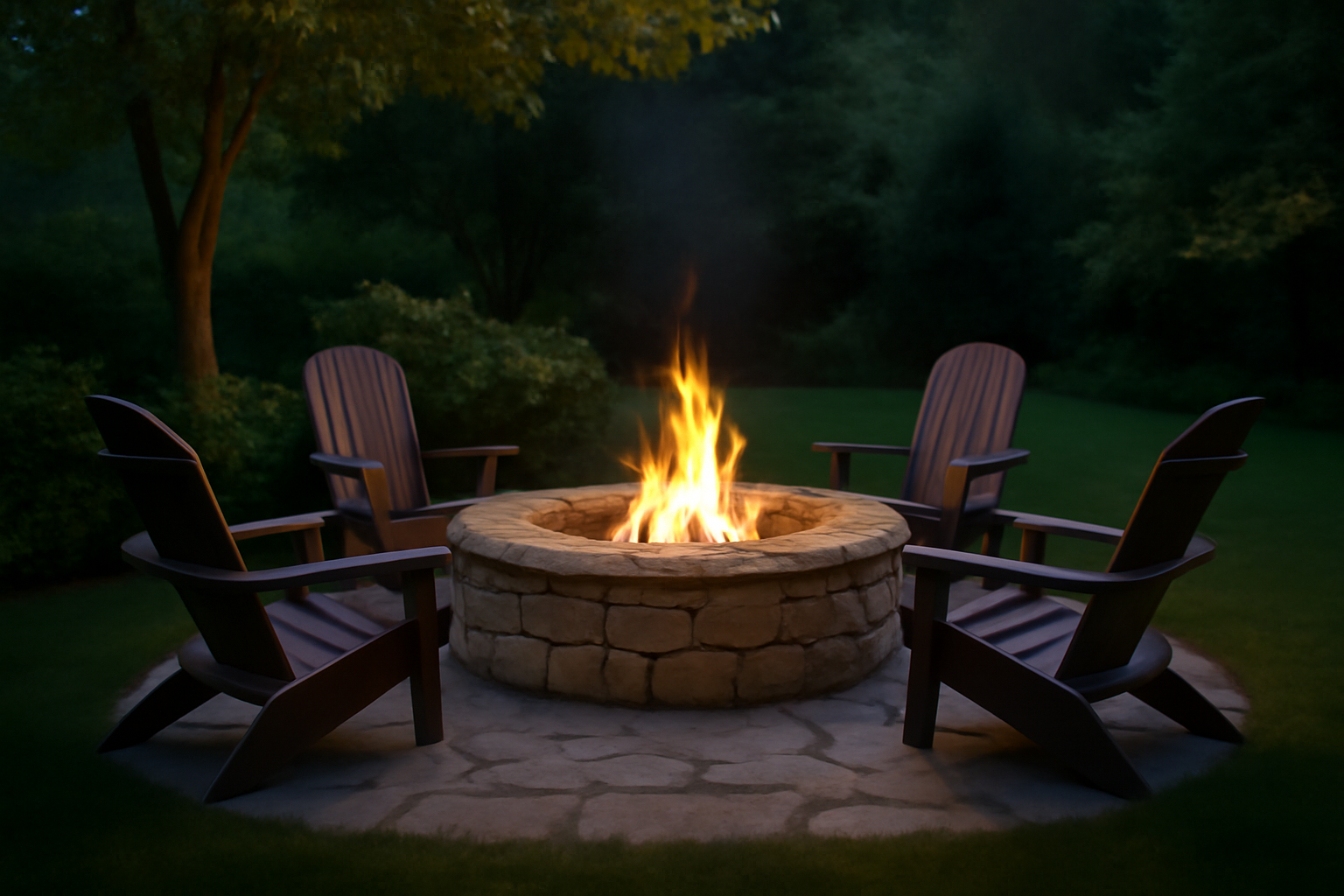
Above-Ground Block Ring
This is the most popular DIY fire pit style for good reason — it’s fast, affordable, looks polished, and anyone can do it. You stack retaining wall blocks in a circle, drop in a steel liner, and you’re done. This is the build we’ll walk through step by step below, and it’s what I’d recommend for most homeowners building their first backyard fire pit.
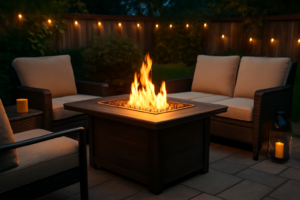
Fire Pit Table
Sometimes the smartest move is to just buy something. Fire pit tables — the kind that run on propane and sit inside a finished frame — are worth considering if you want zero maintenance, no smoke, and a cleaner aesthetic for an entertainment patio. They’re not a DIY project, but they’re also not a bad call if your HOA restricts wood-burning or you just want the ambiance without the ash cleanup.
The Ring Insert That Finally Made My Fire Pit Level and Stable
Building a fire pit from scratch means dealing with uneven ground, shifting stones, and the constant worry that your ring insert will tip or settle unevenly. A quality pre-fabricated insert takes that variable completely off the table so you can focus on the surround and actually enjoy the finished project.
What works
- The 30-inch inner diameter gives you a genuine fire—not a toy flame—while staying manageable for a residential yard and easy to contain with basic stone work.
- Pre-welded construction means no assembly headaches; you drop it in place and start building your stone ring around it, cutting your afternoon project time in half.
- The smokeless design actually works because the angled airflow vents force convection, which means fewer neighbors asking you to put it out and fewer mornings with ash-covered patio furniture.
What doesn’t
- The weight is real—this thing is steel and it doesn’t budge, which is great for stability but means you’ll need help moving it into position or a solid plan for placement before it arrives.
- If your ground is heavily sloped, you’ll still need to do some leveling work or shim it; the insert itself won’t correct major grade issues.
I had a moment of panic when I realized my first fire pit—built with just stacked stone and no insert—was settling unevenly after the first month, which meant cracks and a lopsided fire. Spending the money upfront on a solid Iron Forge Tools Smokeless Firepit – 36 inch Outer/30 inch Inner Round Fire Ring Insert Liner means your pit stays square and functional for years.
About This Article

Written by Marcus Delvecchio. Marcus Delvecchio isn't a licensed contractor — he's a handyman and DIY outdoor landscaper who got obsessed with driveways, patios and pavers after redoing his own place badly enough to want to understand why. Twenty years later he spends his weekends on his own projects and on side jobs for neighbours and friends around the mid-Atlantic, and writes up what actually worked, mistakes included. More about this site.
Scope and limits. Marcus is a homeowner who got obsessive about driveways, not a licensed contractor. Structural repair, drainage changes, and anything requiring a permit should go to a licensed contractor.
Verify this against a primary source
Specifics change, and your situation may differ from the one described here. These are the authorities worth checking directly:
- Concrete Masonry & Hardscapes Association — segmental paver installation standards
- National Asphalt Pavement Association — asphalt placement and maintenance guidance
- Portland Cement Association — concrete durability and jointing