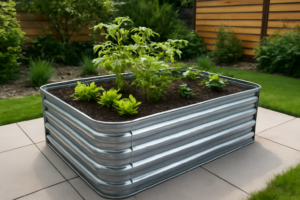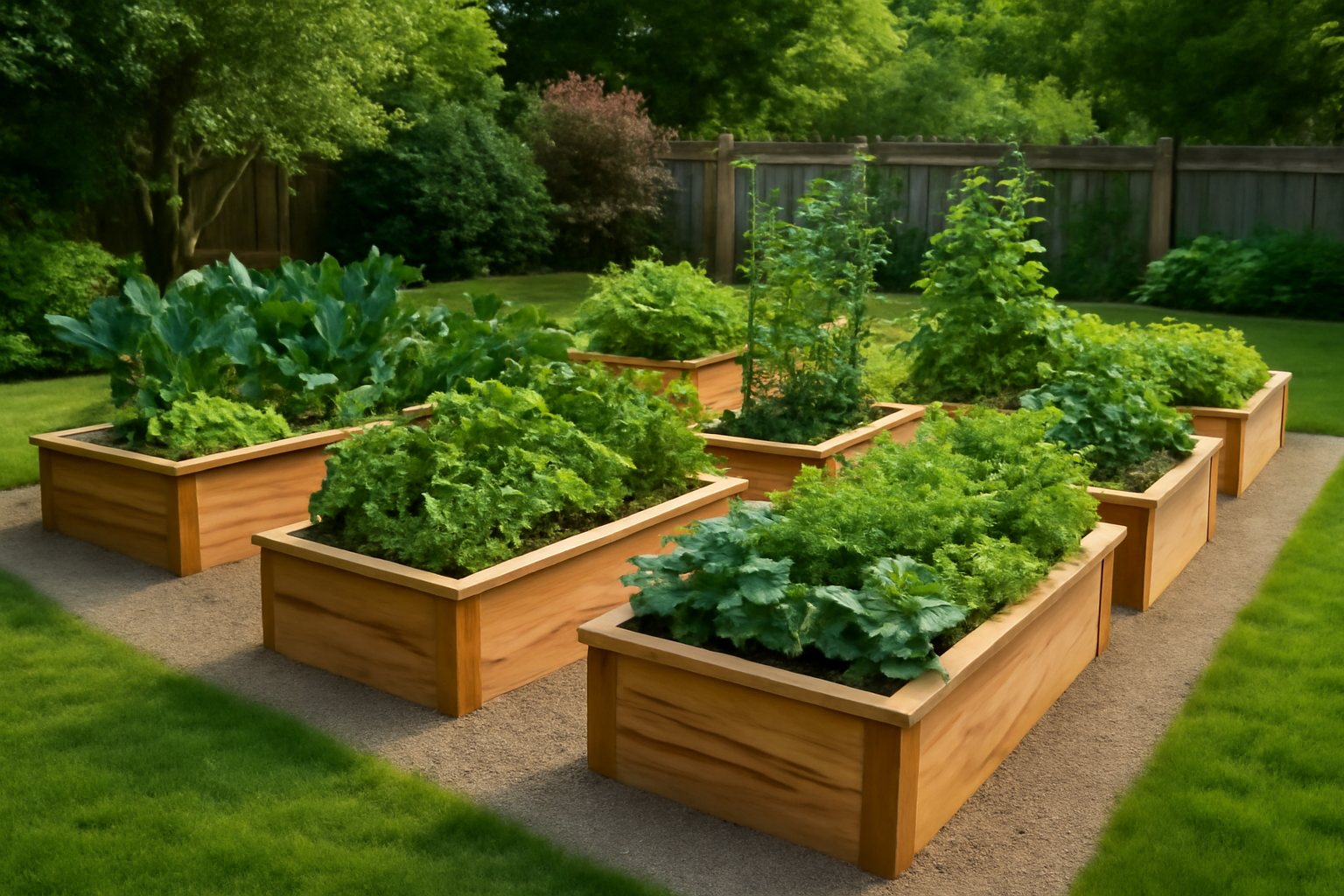
If I could give every new vegetable gardener just one piece of advice, it would be this: skip the in-ground bed and build a raised garden bed first. I’ve grown food both ways for over fifteen years, and the difference in productivity, ease, and sheer enjoyment is not even close. A raised garden bed gives you complete control over your soil, your drainage, and your growing environment from day one. The reality: most beginners underestimate how much their clay soil or compacted backyard actually fights drainage and root growth, and they end up frustrated with poor yields their first season. Whether you’re working with rocky ground, heavy clay, or a tiny backyard, a well-built raised bed levels the playing field immediately. In this guide, I’ll walk you through everything — why raised beds work, what to build them from, how to construct one, and exactly how to fill it so your plants thrive from the first season.
Why Raised Garden Beds Work Better
The case for raised garden beds comes down to one thing: control. When you grow in the ground, you’re at the mercy of whatever soil happens to be there, whatever weeds already have roots established, and whatever drainage conditions exist naturally. A raised bed changes all of that.
- Better soil control and drainage: You fill a raised bed with exactly the mix your vegetables need. No compaction, no clay, no poor drainage. Roots penetrate easily, water moves through at the right pace, and plants grow visibly faster because of it.
- Far fewer weeds: Because you’re starting with fresh, weed-free soil above ground level, the weed pressure in a raised bed is dramatically lower than in-ground gardening. You’ll still get a few wind-blown seeds, but they’re easy to pull from loose, fluffy soil.
- Easier on your body: A taller raised bed means less bending, less kneeling, and far less strain on your back and knees. If mobility is a concern, this alone makes raised beds worth every penny.
- Extended growing season: Soil in a raised bed warms up two to three weeks faster than in-ground soil in spring. That means earlier planting dates, longer harvests, and more food from the same space each year.
- Pest protection: Ground-level pests like voles, moles, and some ground-dwelling insects have a much harder time reaching your crops. Add a layer of hardware cloth on the bottom and you’ve built a serious barrier against burrowing animals.
Best Materials for Raised Garden Beds
One of the most common questions I get is what to build a raised garden bed out of. The honest answer is that the best material depends on your budget, your aesthetic preferences, and how long you want it to last. Here’s how the main options stack up.
The Cedar Bed That Actually Lasts Through Winter (Without Rotting Out)
Most budget raised beds start rotting at the seams after two or three seasons, especially if you live somewhere with real moisture. I learned this the hard way—twice. Cedar holds up because it naturally resists rot and decay, and the Infinite Cedar Select bed is built with actual 2×10 boards that feel substantial from day one.
What works
- The 4′ x 8′ footprint gives you serious growing space without being so wide you can’t reach the center from either side—exactly the dimension I recommend for beginners.
- Cedar’s natural durability means you’re not replacing boards every few years or worrying about treated lumber chemicals leaching into your soil.
- The depth (17.5″) is deep enough for root vegetables and perennials without requiring a foundation or tons of fill material to get started.
What doesn’t
- Cedar costs more upfront than composite or pressure-treated alternatives, though you recoup that over time by not rebuilding.
- Assembly takes patience if you’re doing it alone—you’re handling full-length 2×10 boards, not lightweight panels.
I almost went with a cheaper kit last year to save a few dollars, then remembered standing in my backyard watching my previous bed fall apart at the corners after a wet spring. That friction alone is worth the investment. Grab the Infinite Cedar Select Cedar Raised Garden Bed (4′ x 8′ x 17.5″ H) and build once, garden for years.
About This Article

Written by Marcus Delvecchio. Marcus Delvecchio isn't a licensed contractor — he's a handyman and DIY outdoor landscaper who got obsessed with driveways, patios and pavers after redoing his own place badly enough to want to understand why. Twenty years later he spends his weekends on his own projects and on side jobs for neighbours and friends around the mid-Atlantic, and writes up what actually worked, mistakes included. More about this site.
Scope and limits. Marcus is a homeowner who got obsessive about driveways, not a licensed contractor. Structural repair, drainage changes, and anything requiring a permit should go to a licensed contractor.
Verify this against a primary source
Specifics change, and your situation may differ from the one described here. These are the authorities worth checking directly:
- Concrete Masonry & Hardscapes Association — segmental paver installation standards
- National Asphalt Pavement Association — asphalt placement and maintenance guidance
- Portland Cement Association — concrete durability and jointing