Landscape lighting was the single best investment I made in my entire yard — and I’ve done a lot of projects over the years. I’ve repaved the driveway, built a pergola, and redesigned the garden beds twice. Nothing moved the needle the way outdoor lighting did. The problem is that doing the work is only half the battle—getting people to actually see and appreciate what you’ve done requires you to light it up at night. The first night I flipped that transformer switch and watched the trees glow, the walkway come alive, and the whole property feel like somewhere worth arriving at, I knew I’d waited too long. If you’re looking for outdoor lighting ideas that actually transform your space, this guide covers everything I’ve learned the practical way — through trial, error, and a few burnt-out fixtures.
Types of Outdoor Lighting and Where to Use Each
Before you buy a single fixture, it helps to understand what each light type actually does. Mixing them correctly is what separates a professional-looking result from the “I stuck some solar stakes in the ground” look.
Path Lights
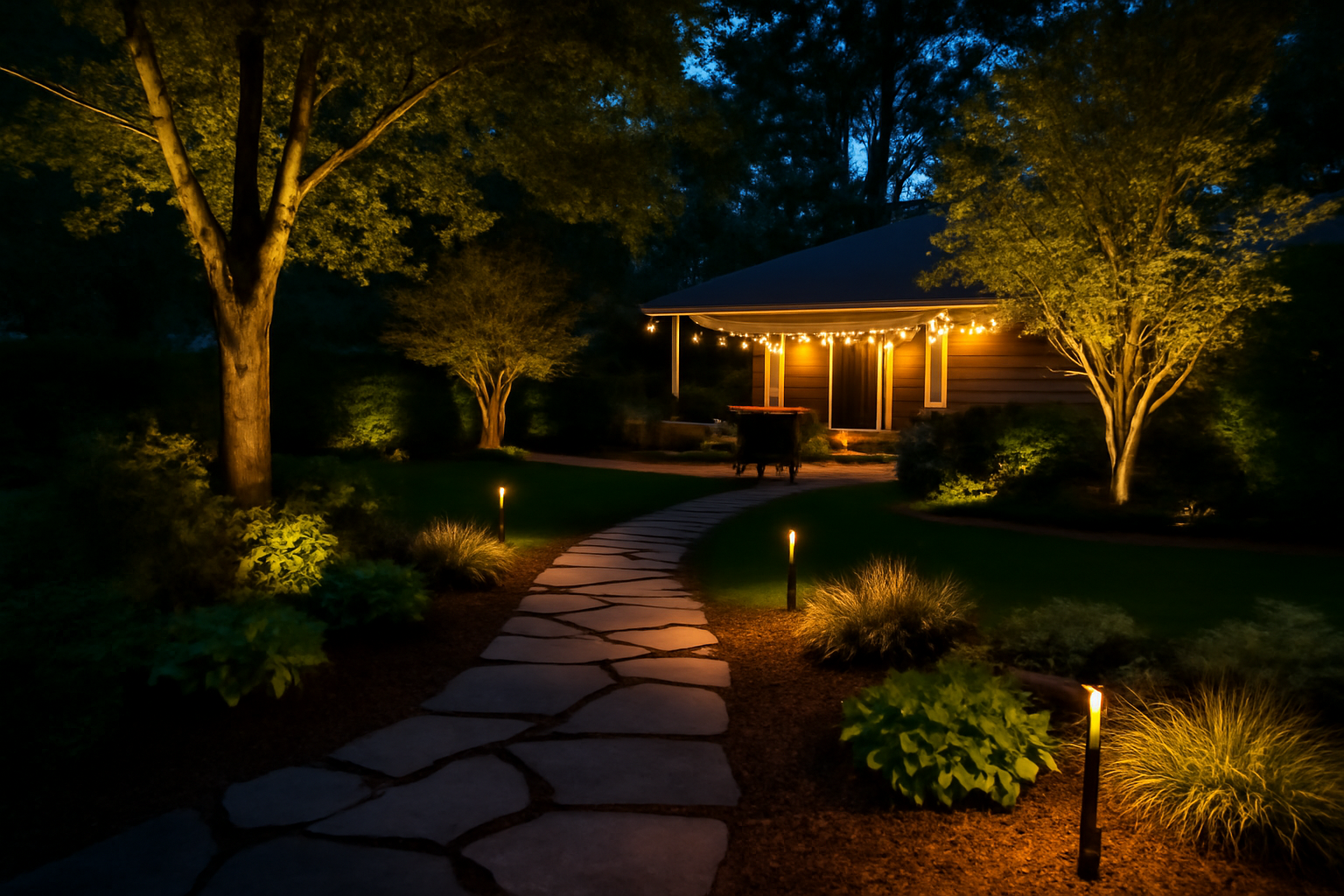
Path lights are the most recognizable outdoor lighting idea for residential yards. They line walkways, edge garden borders, and guide foot traffic safely after dark. The goal isn’t to illuminate the path like an airport runway — it’s to create gentle, repeating pools of light that define the route. Space them roughly eight to ten feet apart on alternating sides for the most natural effect.
Uplights
Uplights sit at ground level and shine upward. Use them at the base of mature trees, architectural columns, tall ornamental grasses, or the corners of your home’s facade. The upward angle creates drama and depth that’s hard to achieve any other way. Even a single uplight under a large oak can completely reframe how your yard reads at night.
Downlights (Moonlighting)
Downlights mounted high in tree canopies — a technique called moonlighting — produce the softest, most natural-looking outdoor lighting available. The light filters through the branches and casts moving shadows on the ground below, mimicking full moonlight. It takes a little more effort to install at height, but the result is stunning and unlike anything else in the landscape lighting toolkit.
Accent and Spot Lights
Accent lights and spotlights are your precision tools. Point them at a water feature, a boulder, a sculpture, a specimen shrub — anything that deserves a dedicated moment in the dark. These are the lights that create focal points and give your yard a sense of intentional design rather than just “lit up.”
String Lights
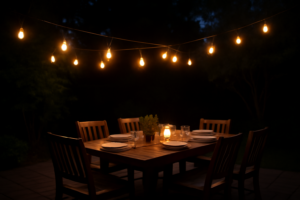
String lights belong on patios, under pergolas, and over outdoor dining areas. They create ambient warmth that no other fixture can replicate for entertaining spaces. They’re not landscape lighting in the traditional sense, but they’re essential for making an outdoor room feel finished and inviting.
Step Lights
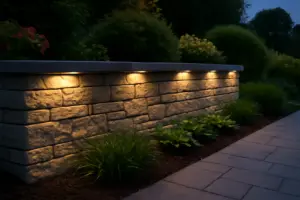
Step lights are built into risers, deck edges, or retaining walls. They’re as much about safety as aesthetics — anyone who has stumbled on an unlit step at night understands the value immediately. Recessed step lights are nearly invisible during the day and provide clean, low-profile illumination after dark.
Solar vs Low-Voltage vs Line Voltage
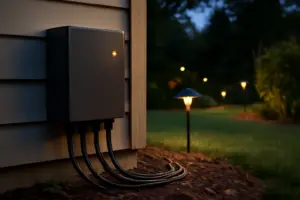
The power source you choose affects cost, performance, longevity, and how much work the installation actually requires. Here’s my honest breakdown after using all three.
The Solar Lights That Finally Made My Driveway Sealing Work Shine
A freshly sealed driveway looks incredible during the day—but at night, if you can’t see it, nobody notices the work you did. Solar pathway lights are the simplest way to highlight your pavement investment without running electrical conduit or hiring an electrician.
What works
- Zero wiring required—just stake them into the ground along your driveway edge in under an hour, and they’re operational the same night
- The 12-pack spacing gives you consistent lighting every 3–4 feet, which is the sweet spot for making a sealed driveway look deliberate and finished rather than accidental
- They charge during the day from the sun alone—no transformer, no timer adjustments, no electricity bill impact whatsoever
What doesn’t
- Solar lights dim noticeably on cloudy days and completely fade by early winter in northern climates—they’re great for September through October, less reliable in December
- The batteries degrade after 2–3 seasons of heavy use, and replacing them costs nearly as much as buying a new light, so they’re more of a 3-year product than a forever solution
I was skeptical the first time—I stood in my yard at dusk waiting for them to kick in, convinced they’d be too dim to matter. Then the sun dropped below the tree line and they all switched on at once, and the whole driveway suddenly had definition and presence. That’s when I ordered the Greluna Solar Lights Outdoor 12 Pack to fill in the gaps I’d missed.
About This Article

Written by Marcus Delvecchio. Marcus Delvecchio isn't a licensed contractor — he's a handyman and DIY outdoor landscaper who got obsessed with driveways, patios and pavers after redoing his own place badly enough to want to understand why. Twenty years later he spends his weekends on his own projects and on side jobs for neighbours and friends around the mid-Atlantic, and writes up what actually worked, mistakes included. More about this site.
Scope and limits. Marcus is a homeowner who got obsessive about driveways, not a licensed contractor. Structural repair, drainage changes, and anything requiring a permit should go to a licensed contractor.
Verify this against a primary source
Specifics change, and your situation may differ from the one described here. These are the authorities worth checking directly:
- Concrete Masonry & Hardscapes Association — segmental paver installation standards
- National Asphalt Pavement Association — asphalt placement and maintenance guidance
- Portland Cement Association — concrete durability and jointing