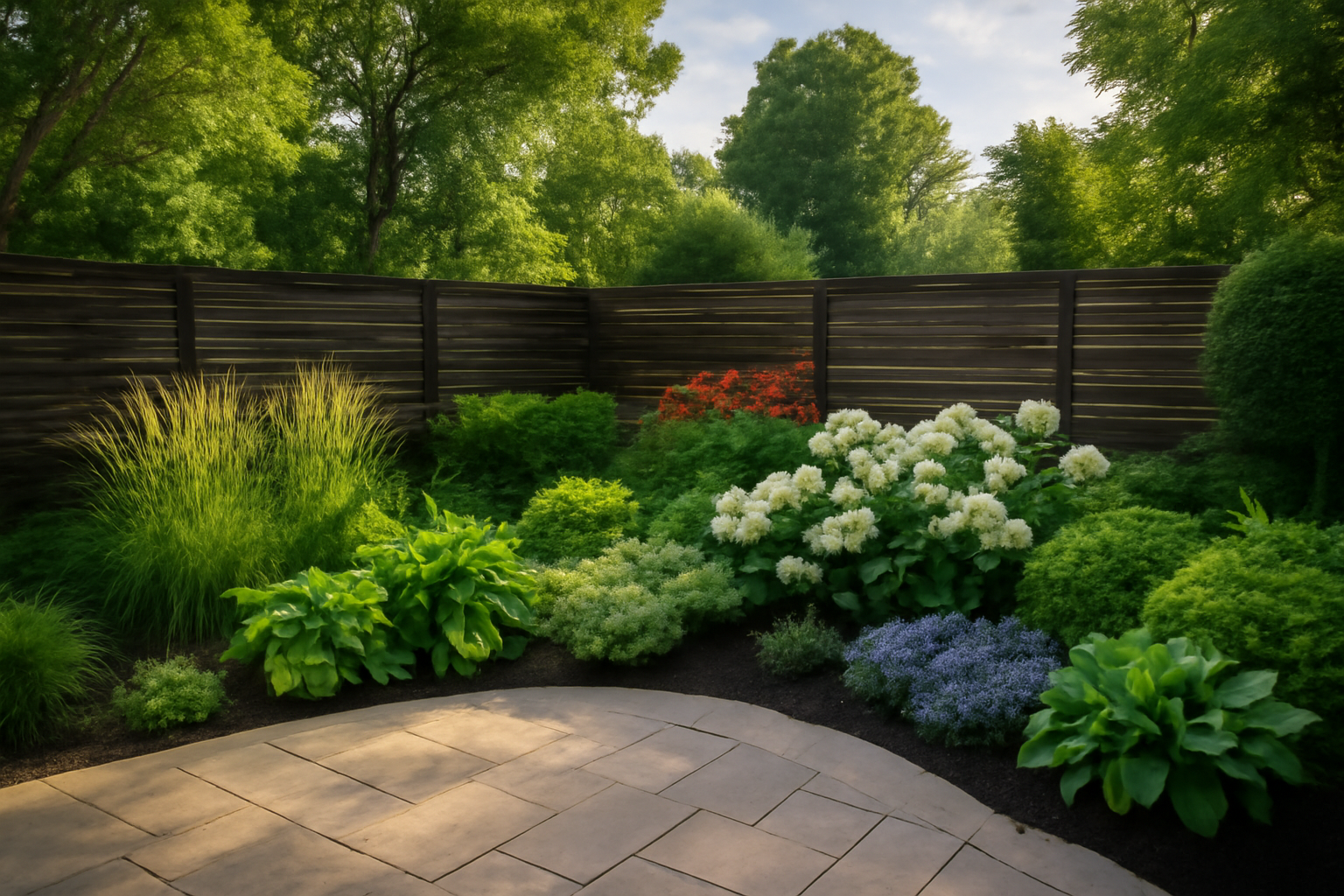
If you want your backyard to actually feel like yours — somewhere you can eat dinner without waving at the neighbors, let the dog run loose, or just sit quietly without an audience — a privacy fence is the single best investment you can make. I’ve redesigned my outdoor space twice now, and both times the fence came first. Everything else, the furniture, the lighting, the landscaping, only starts to feel intentional once you have a defined, enclosed space to work with. A good privacy fence doesn’t just block sightlines. It creates the psychological boundary that turns a yard into a room. If you’ve been searching for privacy fence ideas that are practical, attractive, and built to last, this guide walks through everything I’ve learned the hard way so you don’t have to.
Privacy Fence Styles That Actually Look Good
Not all privacy fences are created equal. Some block views and nothing else. The best ones add genuine curb appeal and work with your home’s architecture instead of fighting it. Here are the styles worth considering.
Board-on-Board
This is the classic for a reason. Boards overlap slightly on alternating sides of the fence rail, which means there are no gaps and it looks clean from both the street and your yard. If you have neighbors on multiple sides or your fence runs along a shared property line, board-on-board is the most considerate option because neither side gets the “ugly” back of a fence. It’s traditional, sturdy, and pairs well with just about any home style.
Horizontal Slat
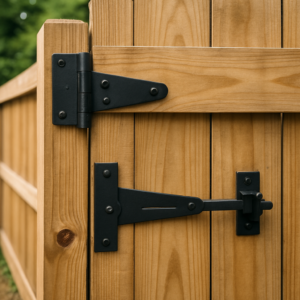
This is my personal favorite and it’s been trending hard for the past several years for good reason. Horizontal boards run parallel to the ground instead of vertically, which immediately gives the fence a more modern, architectural feel. It reads more like a design feature than a barrier. Paired with cedar or composite materials and steel post hardware, a horizontal slat fence can look genuinely custom. The main tradeoff is that horizontal boards can be slightly more prone to warping over time if the wood isn’t properly sealed, so material choice matters more here than with other styles.
Shadowbox
Shadowbox fencing alternates boards on either side of the rail with small gaps between them. You get solid visual privacy from most angles, but air can still move through the fence. This is a real advantage if you live somewhere hot and humid, or if you’re enclosing a garden bed that needs circulation. It also has a lighter, less fortress-like appearance than solid board styles, which some neighborhoods and HOAs prefer.
Lattice Top
A solid privacy fence with a lattice panel added above the main fence height gives you the best of both worlds. The lower section blocks sightlines completely while the lattice top adds height, light, and visual interest without making the fence feel oppressive. It’s especially effective in smaller yards where a fully solid tall fence might feel like a wall closing you in. You can train climbing plants up the lattice over time for a finished, layered look.
Living Fence
Sometimes the best privacy fence idea isn’t a fence at all. Dense hedges like arborvitae, privet, or clumping bamboo can create a living wall that’s genuinely beautiful and softens the edge of your property naturally. The downside is time — most plantings take three to five years to reach useful screening height. Many homeowners combine a lower structural fence with tall ornamental grasses or shrubs planted along the exterior for a layered, natural look that still goes up on day one.
Best Materials for Privacy Fences
The style is what you see. The material is what determines whether you’re repainting and repairing every few years or just enjoying the yard. Here’s how the main options stack up.
Cedar
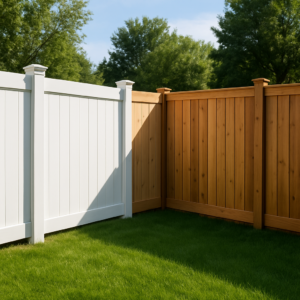
Cedar is the premium wood option for a reason. It contains natural oils that resist rot and insects without chemical treatment, and it weathers to a beautiful silver-gray if you leave it untreated or holds stain exceptionally well if you want to maintain a richer color. A well-built cedar privacy fence will last 15 to 20 years with basic maintenance. Expect to pay roughly $18 to $28 per linear foot installed.
Pressure-Treated Pine
The most budget-friendly wood option. Pressure-treated pine is chemically treated to resist moisture and insects, and it’s widely available at any home improvement store. With a quality stain applied every two to three years, a pressure-treated fence can hold up for 10 to 15 years. It doesn’t have quite the same natural character as cedar, but the cost savings are significant at roughly $12 to $18 per linear foot installed.
Vinyl
If you never want to think about your fence again after it’s installed, vinyl is the answer. It doesn’t rot, warp, or need painting, and quality vinyl fencing carries warranties of 30 years or more. The upfront cost is higher at around $25 to $40 per linear foot installed, but the lifetime maintenance cost is essentially zero. The main criticism is that it can look a little plastic, especially up close, but the better product lines have improved significantly in recent years.
Composite
Composite fencing splits the difference between wood and vinyl. It’s made from a blend of wood fiber and recycled plastic, which gives it the warm appearance of real wood with the durability and low maintenance of synthetic material. It resists fading, warping, and rot, and most composite fence products last as long as vinyl. You’ll pay a premium for it, usually $30 to $45 per linear foot installed, but it’s the most visually convincing low-maintenance option on the market.
The No-Dig Screen That Finally Let Me Stop Fighting with Post Holes
If you’ve ever spent a Saturday digging fence post holes in compacted clay or rocky soil, you know the real barrier to privacy isn’t the design—it’s the installation labor. The Enclo Concord cedar screens solve that problem by eliminating the digging entirely, which means you can actually get your fence up before frustration sets in.
What works
- Real cedar construction weathers naturally and actually looks better over time—not like plastic screening that fades in two seasons
- No digging required means you can install sections incrementally, one or two at a time, without renting equipment or calling a crew
- The 5ft height gives you legitimate privacy from standing neighbors while still feeling less fortress-like than a full 6ft privacy wall
What doesn’t
- At 3.2ft wide per section, you’re looking at covering a full perimeter in multiple units, which means multiple price tags and more assembly work than a traditional fence run
- The no-dig base relies on ground contact and stability—wind in an exposed yard will test those brackets, and uneven terrain makes leveling trickier than it sounds
I was skeptical the first time I set one up, worried the no-dig base would shift after the first hard rain, but three seasons in it’s held solid. If you’re serious about getting your backyard enclosed without the digging ordeal, grab the 5ft H x 3.2ft W No Dig Enclo Concord Cedar Wood Privacy Screen (EC18022).
About This Article

Written by Marcus Delvecchio. Marcus Delvecchio isn't a licensed contractor — he's a handyman and DIY outdoor landscaper who got obsessed with driveways, patios and pavers after redoing his own place badly enough to want to understand why. Twenty years later he spends his weekends on his own projects and on side jobs for neighbours and friends around the mid-Atlantic, and writes up what actually worked, mistakes included. More about this site.
Scope and limits. Marcus is a homeowner who got obsessive about driveways, not a licensed contractor. Structural repair, drainage changes, and anything requiring a permit should go to a licensed contractor.
Verify this against a primary source
Specifics change, and your situation may differ from the one described here. These are the authorities worth checking directly:
- Concrete Masonry & Hardscapes Association — segmental paver installation standards
- National Asphalt Pavement Association — asphalt placement and maintenance guidance
- Portland Cement Association — concrete durability and jointing