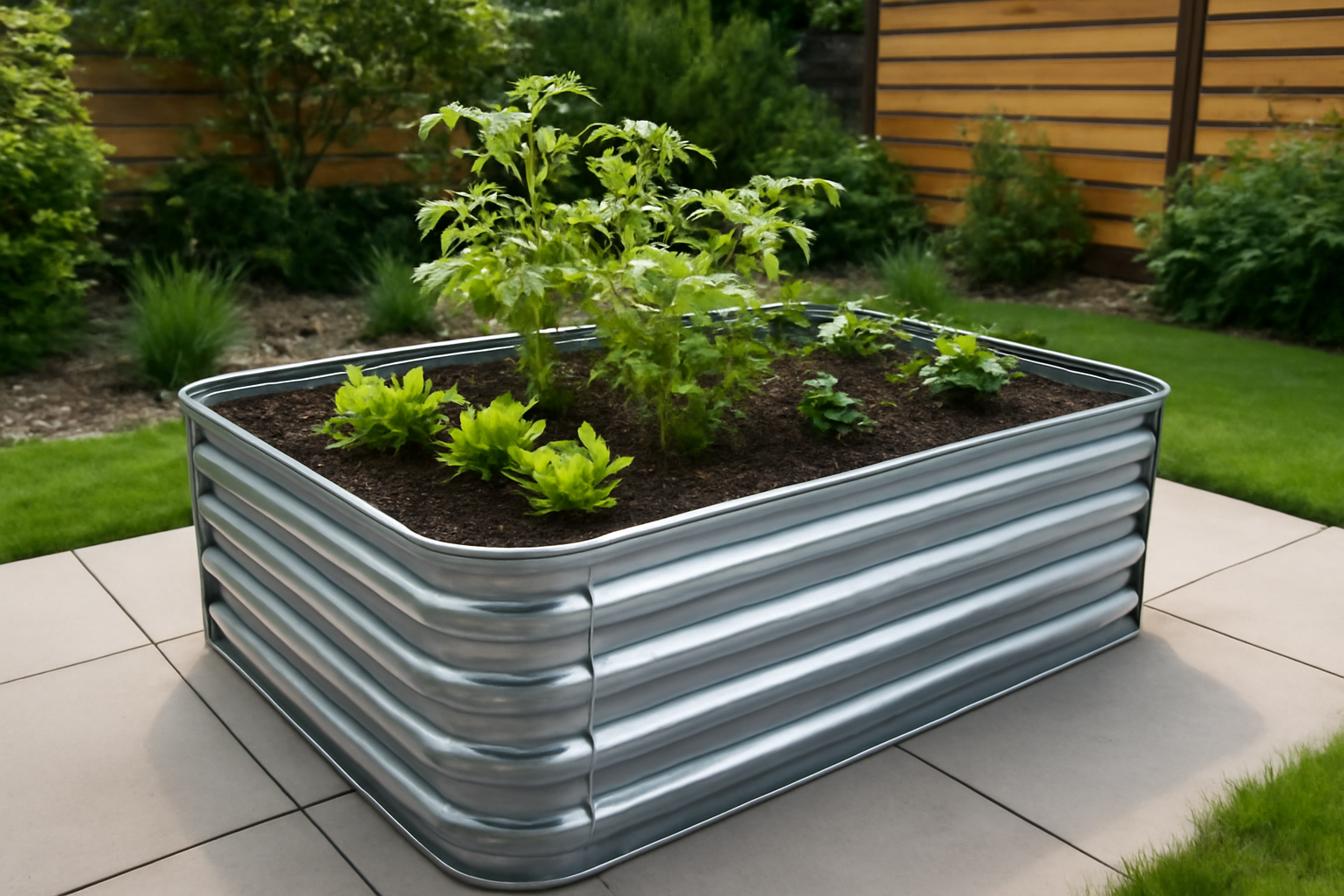
Last spring, I finally decided to do something about the sad patch of dirt along my back fence. It had been an eyesore for three years. My wife wanted vegetables. I wanted something that didn’t look like a construction site. After way too many hours researching the right steel raised garden bed kit, I landed on something that honestly exceeded my expectations — and the garden has never looked better.
I’ve been doing backyard builds for over 15 years. Patios, retaining walls, pergolas, fire pit surrounds — you name it, I’ve probably built it wrong at least once. So when I approach any new project, I try to learn from my past mistakes. Raised garden beds were supposed to be the “easy” project. Spoiler: the product you choose still matters a lot.
The Steel Kit That Finally Made My Dirt Patch Look Intentional
After years of concrete work, I know the difference between something that looks slapped together and something that looks built to last. This galvanized steel raised bed kit gave me that finished, intentional look without requiring me to source materials and spend a weekend cutting and fastening.
What works
- The galvanized steel doesn’t rust or degrade the way wood does—I’ve watched it hold up through two full growing seasons without any corrosion or structural shift.
- Assembly is genuinely quick. The oval design and pre-cut pieces mean you’re not fussing with measurements or fasteners—just slot and lock, which appealed to my impatience.
- The 6×3 footprint fits that awkward fence-line space perfectly without looking cramped, and the 1-foot depth gives enough soil volume for most vegetables without overkill.
What doesn’t
- The metal edges are sharp right out of the box—I cut myself twice during assembly and ended up filing down the corners before letting my wife near it.
- In direct sun, the steel gets hot enough that it can dry soil faster than traditional wooden beds, so you’ll need to water more frequently during peak summer.
Assembly and Siting
The two beds went together in about 40 minutes with nothing but the supplied hardware, and the round profile is genuinely more forgiving than a rectangular kit — there are no corners to pull out of square. What matters far more is what goes underneath. I levelled and lightly compacted the ground first, because a bed full of wet soil that settles unevenly will bow the panels outward over a season.
Set them where they will actually get sun. Mine sit along a back fence that reads as bright at midday but is in shade by four, which limited what would grow well in the first year until I moved the tomatoes and gave that spot to leafy greens instead.
Filling it without spending a fortune
A bed this size takes more soil than people expect and bagged compost gets expensive fast. I filled the bottom third with coarse organic matter — branch prunings, turf sods flipped upside down, leaf mould — and topped with a proper soil and compost blend. It settles over the first season, so plan to top up in spring.
Galvanised Steel in Practice
- It does heat up. The soil at the edges warms faster than the middle, which is useful in April and a nuisance in July.
- Cut edges are the weak point for corrosion — if you trim anything, treat the cut.
- The coating has held with no rust bleed after a full year of mid-Atlantic winter and sprinkler overspray.
- It does not rot, which is the whole argument against a timber bed that needs replacing in six or seven years.
Would I Use Them Again
Yes, and I have — I put a pair in for a neighbour who wanted something tidier than the pallet-wood bed that had gone soft at the base. For a defined, permanent-looking bed with almost no build skill required, this is about as low-friction as it gets. If you want an unusual size or a built-in seat edge, you are better off building from timber.
I had one moment of doubt when I realized the kit didn’t include any kind of base liner, and I was worried water would pool and rust the underside—but after a season of sitting on the ground with proper drainage, that fear proved unfounded. If you’re looking for a garden bed that actually looks like a finished hardscape element and not just a dirt box, grab the zizin 2 Pack Galvanized Raised Garden Bed Metal Oval Raised Garden Beds Outdoor Planter Box for Vegetables (6x3x1FT, Silver).
About This Article

Written by Marcus Delvecchio. Marcus Delvecchio isn't a licensed contractor — he's a handyman and DIY outdoor landscaper who got obsessed with driveways, patios and pavers after redoing his own place badly enough to want to understand why. Twenty years later he spends his weekends on his own projects and on side jobs for neighbours and friends around the mid-Atlantic, and writes up what actually worked, mistakes included. More about this site.
Scope and limits. Marcus is a homeowner who got obsessive about driveways, not a licensed contractor. Structural repair, drainage changes, and anything requiring a permit should go to a licensed contractor.
Verify this against a primary source
Specifics change, and your situation may differ from the one described here. These are the authorities worth checking directly:
- Concrete Masonry & Hardscapes Association — segmental paver installation standards
- National Asphalt Pavement Association — asphalt placement and maintenance guidance
- Portland Cement Association — concrete durability and jointing