My side yard gate sagged so badly within its first year that it dragged a groove into the dirt every time I opened it. I assumed the gate frame itself was built wrong—poor joinery, wood movement, the usual suspects. Turns out it wasn’t the gate at all. It was cheap gate hardware hinges and latches that couldn’t handle the weight and seasonal stress. Once I replaced them with proper hardware sized for the actual gate mass, the whole problem disappeared. That experience taught me that gate hardware hinges and latches are not decorative afterthoughts. They’re structural.
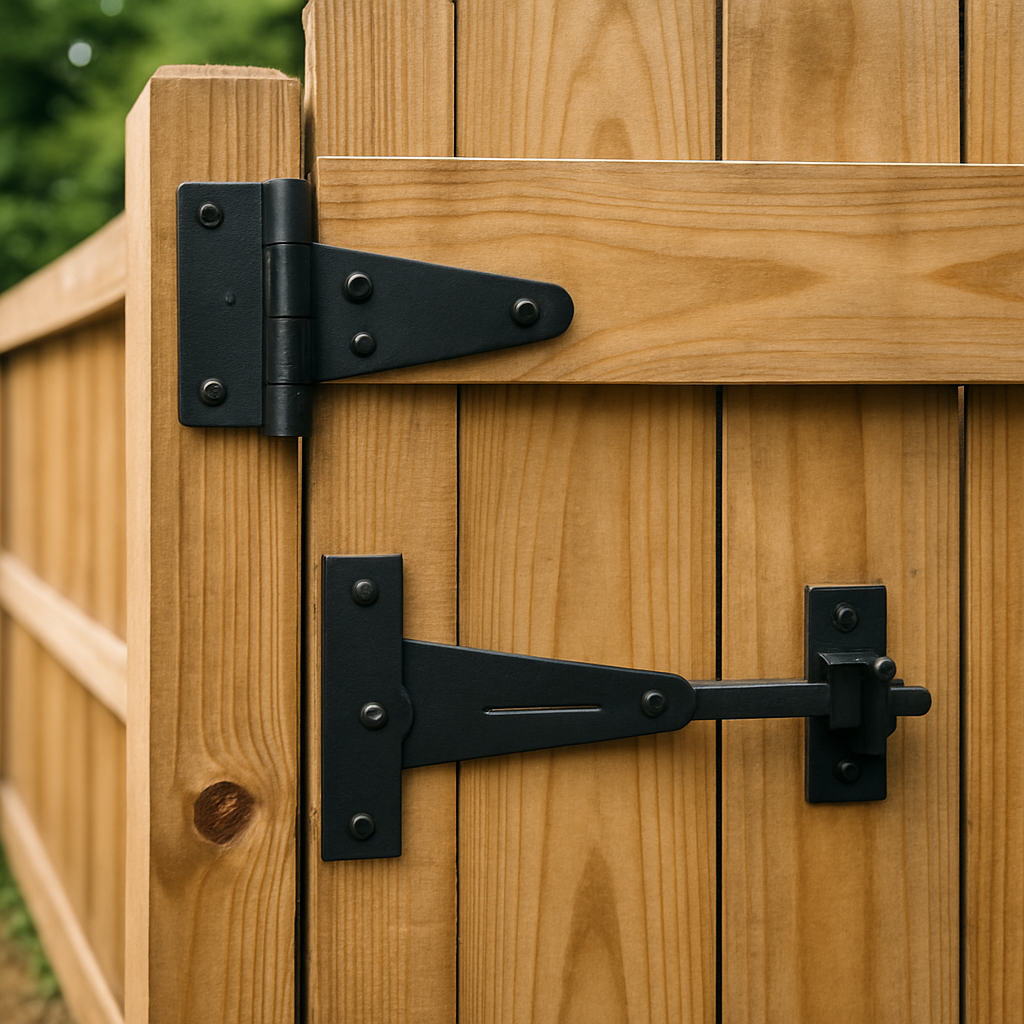
Most homeowners—myself included, at first—buy whatever hinges and latches are cheapest at the big-box store and call it done. That’s a false economy. Undersized hardware will fail, sometimes quickly. The gate sags, binds, won’t close properly, and eventually the wood cracks or splits under uneven load. Replacing hardware is infinitely cheaper than rebuilding a gate.
In this post, I’ll walk through what actually matters when choosing gate hardware: hinge weight capacity, material durability, and latch mechanics. I’ve learned the hard way which types hold up and which don’t.
Know Your Gate Weight Before You Buy Hinges
This is the step everyone skips, and it’s the most important one. You cannot pick hinges without knowing how much your gate weighs. Seriously. That sagging gate I mentioned? It weighed roughly 85 pounds. The hinges I’d bought were rated for 50 pounds. Math doesn’t lie.
Calculate your gate weight by measuring its dimensions, estimating the wood volume, and accounting for hardware. A rough rule: solid wood gates run 8–12 pounds per square foot. A 4-foot-wide by 5-foot-tall cedar gate is about 20 square feet and weighs 160–240 pounds. Yes, really. If your gate has a lattice top or is partially open, reduce that estimate by 20–30 percent.
Once you know the weight, add 20 percent as a safety margin. Then look for hinges rated for that number. That 85-pound gate needed 100-pound-rated hinges minimum. I bought 150-pound hinges and haven’t looked back.
Stainless Steel Hinges Are Worth Every Penny
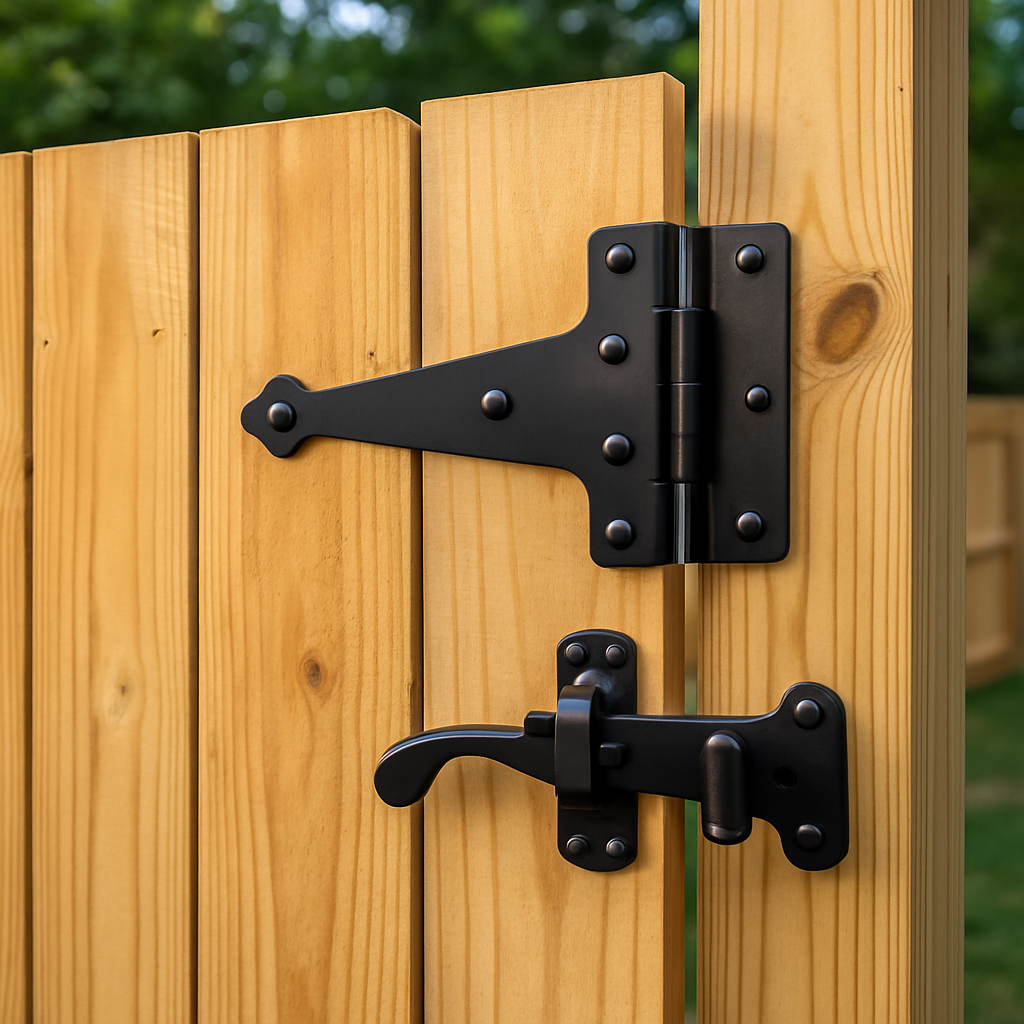
Material matters intensely for gate hardware hinges and latches. Standard steel hinges are cheap—$3 to $8 per hinge. They will rust. You’ll see surface rust within months if you live anywhere with moisture, humidity, or winter salt spray. Within two years, the rust becomes structural. The hinge weakens, the bolt holes enlarge, and suddenly you’re replacing hardware again.
Stainless steel hinges cost three to five times more—$15 to $35 each—but they don’t rust. Not in normal conditions, anyway. Over five years of Pacific Northwest weather, my stainless hardware shows almost no corrosion. The cost difference is real, but the durability math works out. One replacement cycle of cheap hinges versus two decades of stainless hardware: stainless wins.
Aluminum hinges are a middle ground. They’re lighter, corrosion-resistant, and cheaper than stainless. However, they’re not strong enough for heavy gates. Save aluminum for lightweight vinyl or aluminum gates. For wood gates over 75 pounds, stainless is the move.
Strap Hinges vs. Butt Hinges: Which Type Lasts
Strap hinges are large, decorative, and distributed across a wider area of wood. They’re nearly indestructible for heavy gates because they spread the load. That said, they’re expensive—$25 to $60 per pair—and they announce themselves visually. They work beautifully on rustic or farmhouse gates.
Butt hinges are compact and hidden when the gate is closed. They’re cheaper and cleaner-looking. However, all the stress concentrates on a small section of wood. For gates over 100 pounds, or for long-term durability, strap hinges are the safer choice. I’ve used both. The strap hinges on my vegetable garden gate have never given me a moment of concern, even after four years and a region full of wet winters.
In my experience, butt hinges work fine for lighter gates under 75 pounds or for gates you plan to replace in five years. Otherwise, the extra cost of strap hinges is insurance.
Latches That Actually Stay Closed
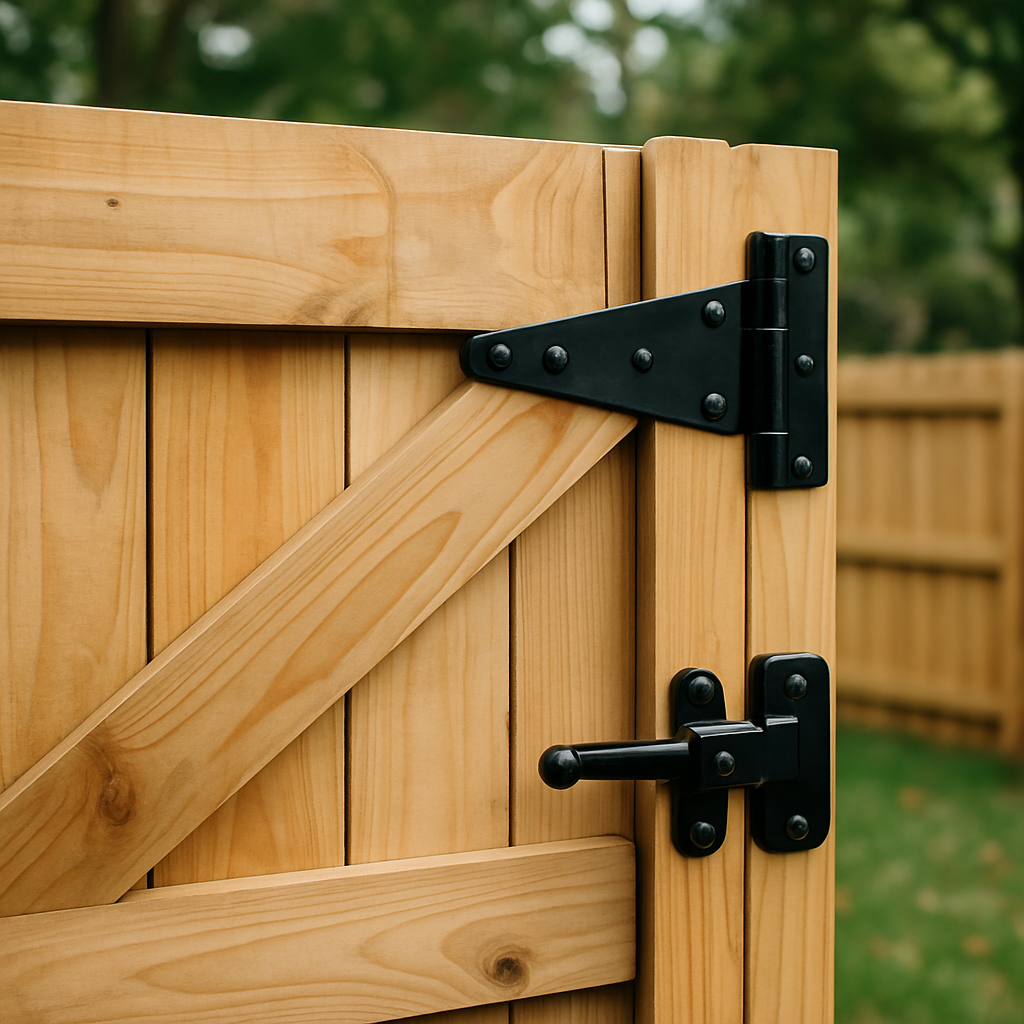
A good hinge will support the gate weight, but a good latch keeps it closed against wind, animals, and human carelessness. Cheap latches fail because they don’t engage fully or they wear out quickly. Gates drift open, and you’re chasing the dog across the neighborhood.
Look for latches with a positive catch mechanism—something that literally clicks into place and requires deliberate action to open. Slide latches and hook-and-eye hardware are fine for light gates or situations where the gate doesn’t get heavy use. But for a main entry gate or a pet enclosure, invest in a proper latch with spring tension.
Stainless steel latches cost $15 to $35, compared to $3 to $8 for basic hardware. Once again, the durability argument wins. A latch that corrodes or wears out stops holding the gate properly. A quality latch will outlast the gate itself.
Self-Closing Hinges: Convenience With Caveats
Self-closing hinges contain a spring mechanism that automatically pulls the gate shut behind you. For pool gates or pet enclosures, they’re genuinely useful. You never worry about whether someone left the gate open.
Here’s what I didn’t know until I installed a pair: self-closing hinges are heavy, expensive—$40 to $80 per hinge—and the spring tension needs regular adjustment. As springs weaken over time, the gate closes more slowly. I spent an afternoon with an Allen wrench re-tensioning mine last summer.
That said, if you have small children, pets, or a swimming pool, self-closing hinges are probably worth it. Just factor in the cost and the occasional maintenance. They’re not set-and-forget hardware.
Installation: The Part That Determines Success
Hardware quality matters, but installation matters equally. Even the best hinges will sag if they’re not mounted correctly. Space hinges at least 10 inches apart on the gate frame. For gates taller than 4 feet, use three hinges instead of two. The extra hinge costs $15 to $25 more but prevents the twisting and racking that causes long-term sag.
Use bolts, not screws, for everything. Screws pull out over time as the wood moves and the gate swings repeatedly. Bolts with washers and lock nuts stay tight. I learned this the hard way when one of my first gate’s screws stripped out and the whole thing shifted sideways.
Mount hinges as low and high on the gate frame as possible—this creates the longest possible lever arm and reduces stress on the bolts. If you’re replacing hardware on an existing gate, the screw holes might not align perfectly. Drill new holes rather than forcing old hardware into misaligned mounting points. That guarantee the hinge sits flat and square.
One final note: install hinges on pressure-treated or naturally rot-resistant wood if possible. Hinges bolted into pine or hemlock will eventually pull through as the wood rots around the bolt holes. I’ve seen this happen, and it’s not pretty.
What I’d Do Differently Now
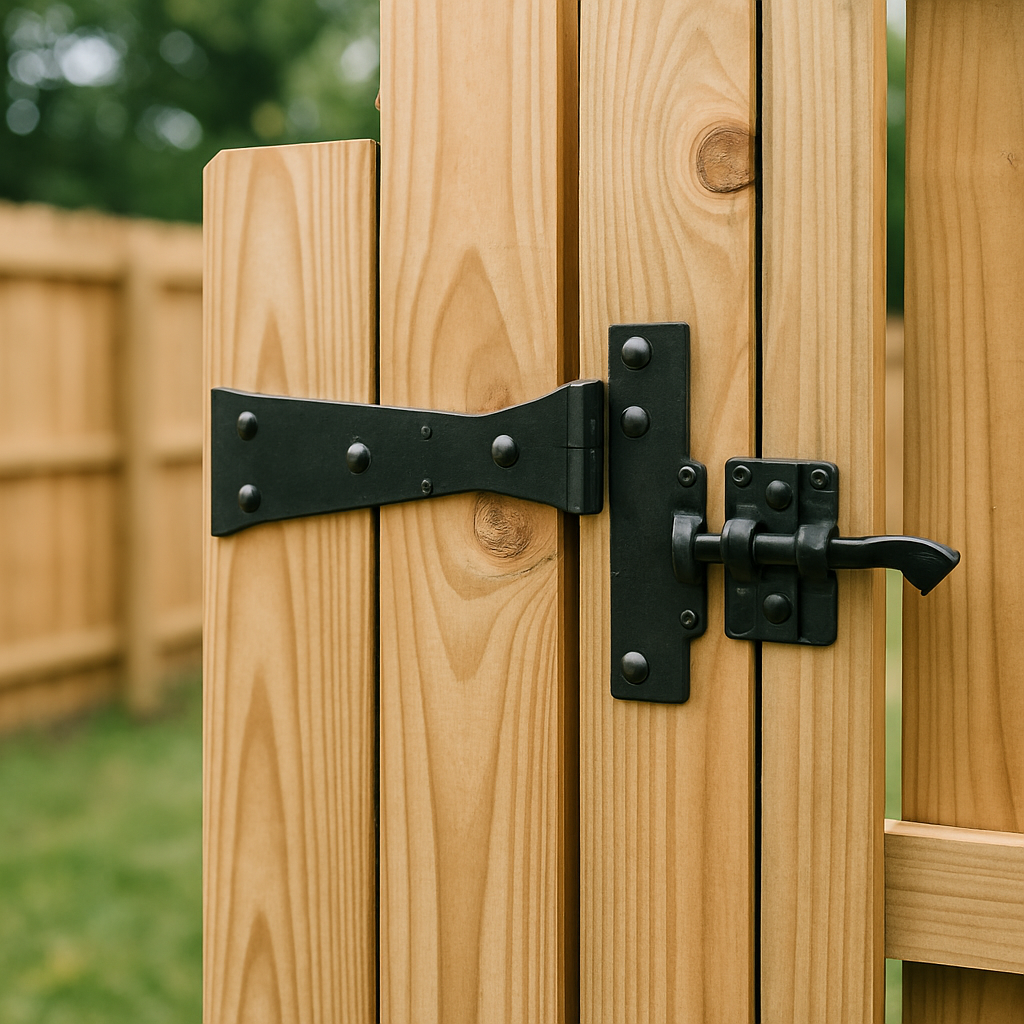
If I were building a new gate today, I’d choose stainless steel strap hinges rated for 150 percent of the gate weight. I’d use three hinges instead of two on any gate over 3 feet wide. I’d pair them with a positive-action stainless latch and spend the extra $60 to $100 for hardware that will outlast the wood itself.
I wouldn’t use self-closing hinges on the main side yard gate because that gate gets opened and closed 50 times a day, and the constant spring tension eventually wears the mechanism. However, I would use self-closing hinges on a pool or pet enclosure gate where safety is paramount.
Most importantly, I’d weigh the gate first. A 20-minute calculation saves years of frustration and eventual replacement costs.
The Real Cost of Gate Hardware
A full set of quality gate hardware—two or three stainless hinges, a good latch, bolts, and washers—runs $75 to $150 for a typical residential gate. Cheap hardware for the same gate costs $20 to $40. That’s a $50 to $110 difference upfront.
But cheap hardware fails in two to five years. Quality hardware lasts 15 to 20 years. Over that timeline, quality hardware costs less per year and saves you from rebuilding or hanging a new gate. It’s not even close.
Buy good gate hardware hinges and latches the first time. Your future self will thank you, and your gate will actually work properly.
About This Article

Written by Marcus Delvecchio. Marcus Delvecchio isn't a licensed contractor — he's a handyman and DIY outdoor landscaper who got obsessed with driveways, patios and pavers after redoing his own place badly enough to want to understand why. Twenty years later he spends his weekends on his own projects and on side jobs for neighbours and friends around the mid-Atlantic, and writes up what actually worked, mistakes included. More about this site.
Scope and limits. Marcus is a homeowner who got obsessive about driveways, not a licensed contractor. Structural repair, drainage changes, and anything requiring a permit should go to a licensed contractor.
Verify this against a primary source
Specifics change, and your situation may differ from the one described here. These are the authorities worth checking directly:
- Concrete Masonry & Hardscapes Association — segmental paver installation standards
- National Asphalt Pavement Association — asphalt placement and maintenance guidance
- Portland Cement Association — concrete durability and jointing