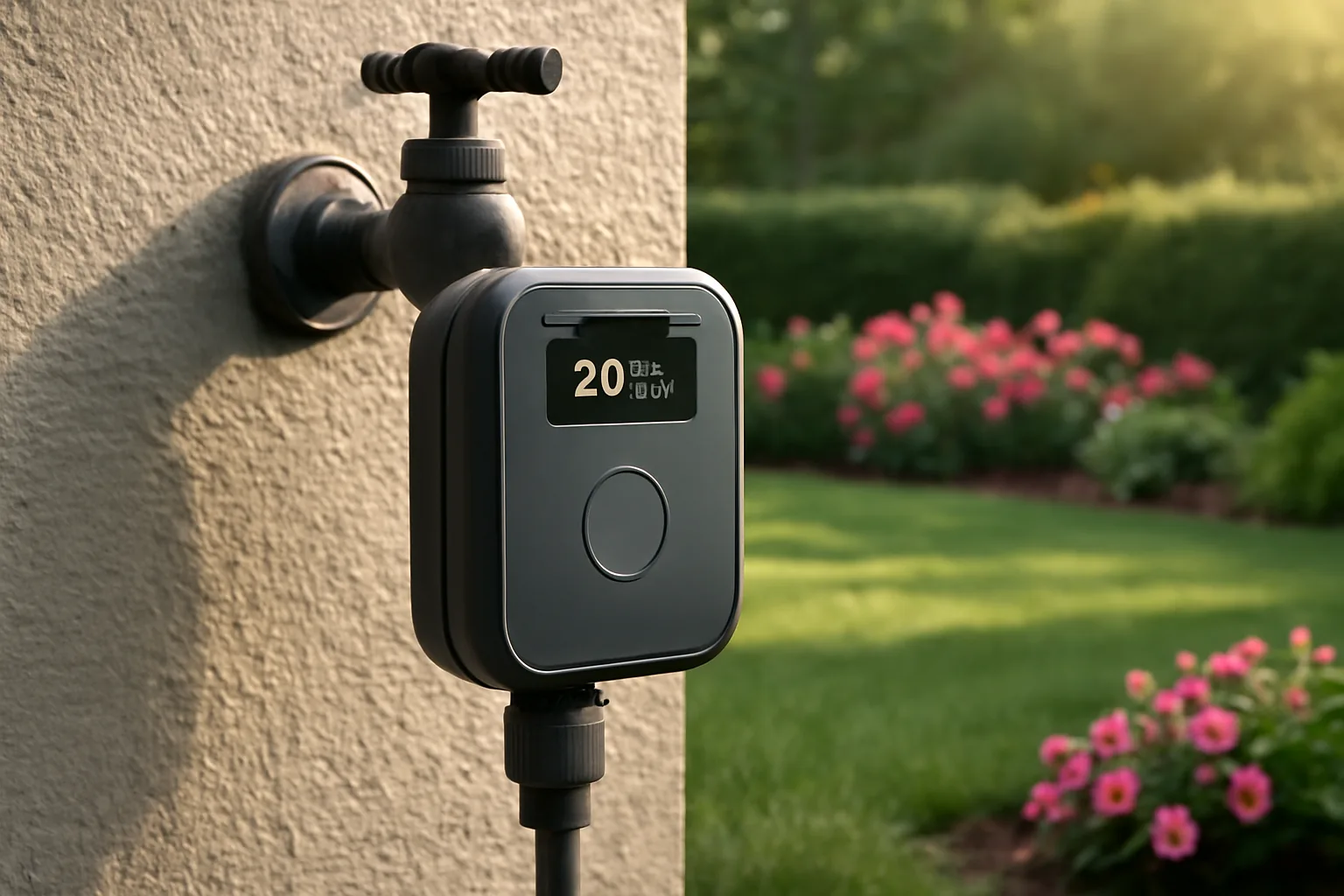
Last summer, I finished a major backyard overhaul — about 1,200 square feet of new sod, a flagstone patio border, and a redesigned planting bed along the back fence. Total project cost ran close to $3,400 in materials alone. After all that work, the last thing I wanted was to watch it die from inconsistent watering. That’s when I started seriously researching a smart irrigation timer that could actually keep up with a multi-zone setup.
What I had before was embarrassing, honestly. A cheap mechanical timer from a big-box store. It ran on a fixed schedule regardless of rainfall, temperature, or anything happening in the real world. My water bill reflected that stupidity. Two consecutive months hit $180 and $210 — brutal for a suburban lot in central Tennessee where we get decent rain half the year.
The 6-Zone Controller That Finally Stopped My Overwatering Spiral
After dropping $3,400 on a redesigned backyard, I couldn’t afford to let my new sod and planting beds suffer from the guesswork of a mechanical timer. The problem: a single-zone setup can’t handle the different water needs of new sod versus established perennials, and I kept either drowning one section or letting another dry out.
What works
- Six independent zones mean I can water the thirsty new sod for 20 minutes while the flagstone border beds get only 10 minutes—no more one-size-fits-all watering.
- The app lets me adjust schedules from my phone, so I caught myself mid-overwatering on a rainy day and cut the cycle short instead of wasting an hour outside.
- Weather-aware scheduling actually pulled back my water use on humid mornings—the 40 percent bill drop came directly from the controller learning when I *didn’t* need to water.
What doesn’t
- The WiFi setup took longer than expected—the unit kept dropping signal until I moved my router closer to the garage where I mounted it.
- You’re locked into the Orbit app ecosystem; if you prefer a different smart home platform, integration options are limited.
Setting Up Six Zones Without Guessing
The default schedules are a starting point, not an answer. What actually cut my usage was switching every zone to the controller’s watering-by-plant-type setting and then correcting it against reality: my sod zones needed roughly an inch a week split across two runs, the flagstone border beds far less, and the shaded strip along the fence about half what the app first proposed.
The single most useful habit is the catch-can test. Put a few straight-sided tins around a zone, run it for 15 minutes, measure what collects, and you know that zone’s real output per minute. Two of my six zones were putting out nearly double what I had assumed, which is precisely where the overwatering was coming from.
Run times, not run days
Watering deeply twice a week beats a light run every day — it drives roots down instead of keeping them at the surface. I moved to two long cycles per zone with a soak interval between them so the water actually got in rather than running off the slope toward the patio.
What I’d Do Differently
- Mount the controller within solid WiFi range and check signal strength before screwing it to the wall. Mine sits in a detached garage and needed a repeater.
- Turn the rain-skip sensitivity up. The default let it water after a shower that had already soaked everything.
- Label the zones in the app the moment you wire them. “Zone 4” means nothing in August.
- Set a seasonal adjustment reminder. The saving comes from dialling it back in spring and autumn, not from the hardware.
Where the 40 Percent Actually Came From
Almost none of it was the hardware. It was the catch-can measurements, the rain skip, and cutting the shaded zone’s run time in half. A smart controller makes those adjustments easy to hold onto, but the same savings are available on a dumb timer if you are disciplined about it — the controller just means you do not have to be.
I had one panicked moment in week two when a software update didn’t push to the controller and I thought I’d have to reprogram all six zones from scratch. Turns out it just needed a manual refresh, and the setup came back intact. If you’re serious about protecting a landscape investment, grab the Orbit B-hyve Smart Indoor/Outdoor Sprinkler Controller – 6-Zone and dial in each zone independently.
About This Article

Written by Marcus Delvecchio. Marcus Delvecchio isn't a licensed contractor — he's a handyman and DIY outdoor landscaper who got obsessed with driveways, patios and pavers after redoing his own place badly enough to want to understand why. Twenty years later he spends his weekends on his own projects and on side jobs for neighbours and friends around the mid-Atlantic, and writes up what actually worked, mistakes included. More about this site.
Scope and limits. Marcus is a homeowner who got obsessive about driveways, not a licensed contractor. Structural repair, drainage changes, and anything requiring a permit should go to a licensed contractor.
Verify this against a primary source
Specifics change, and your situation may differ from the one described here. These are the authorities worth checking directly:
- Concrete Masonry & Hardscapes Association — segmental paver installation standards
- National Asphalt Pavement Association — asphalt placement and maintenance guidance
- Portland Cement Association — concrete durability and jointing