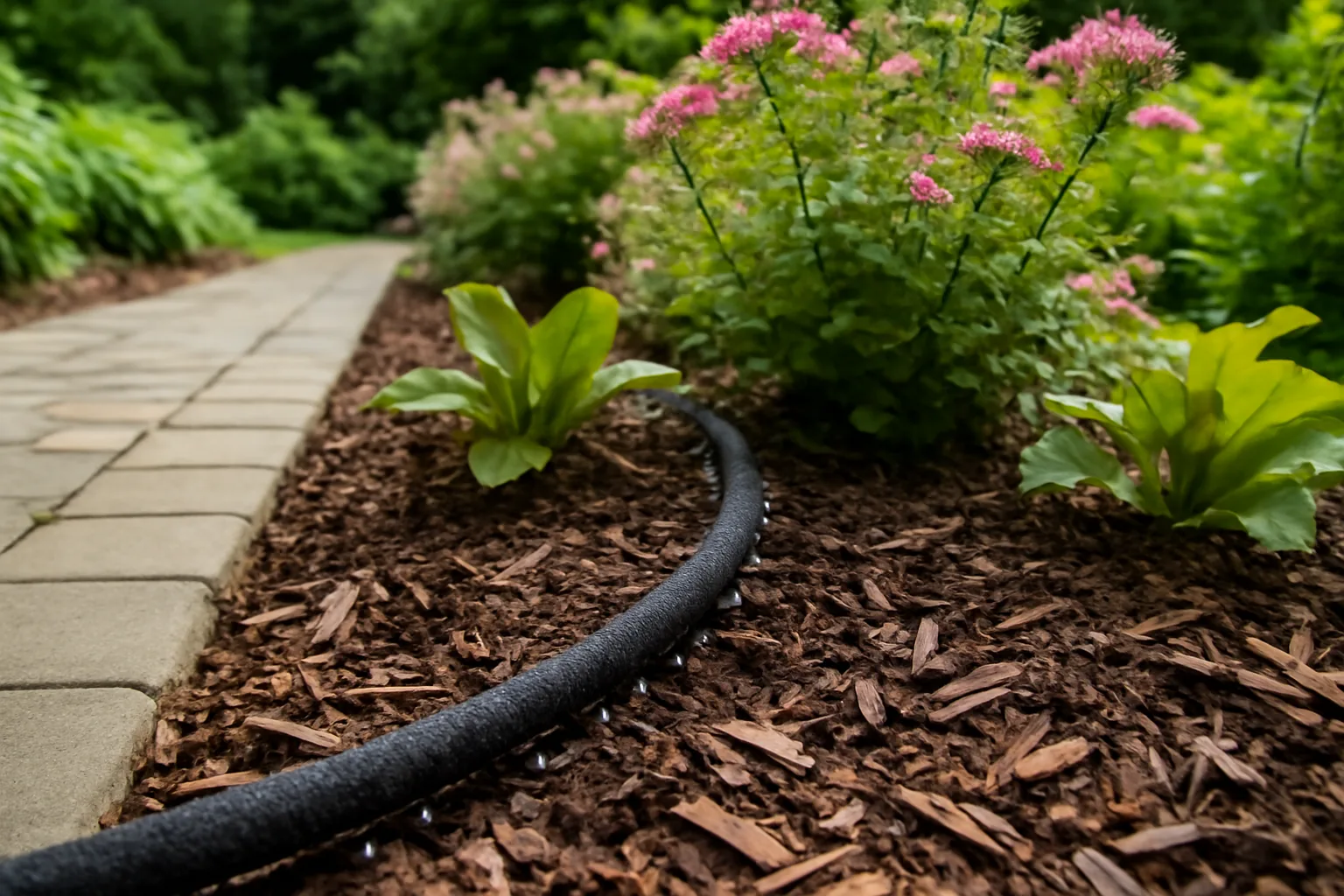
Last spring, I finally expanded my raised garden beds. Three new cedar frames, each 4 feet wide by 12 feet long, sitting along the south-facing fence line where I’d ripped out an old concrete pad. That’s 144 square feet of new planting space. It looked great. Then I realized I had absolutely no plan for watering it consistently. I was doing what I always do — dragging a hose around every morning, standing there half-awake, probably overwatering some spots and missing others entirely. My tomatoes were showing it. My peppers were stressed. Something had to change before I wasted an entire growing season.
I’d used drip irrigation on a hillside project about eight years ago, but that system cost me close to $300 in emitters, tubing, and fittings. It worked, but it was fussy to install and even fussier to maintain. For three simple raised beds, I wanted something faster and more straightforward. That’s when I started researching soaker hose garden beds setups — specifically flat soaker hoses, which I’d seen a neighbor use with impressive results on her vegetable rows.
What followed was about two weeks of YouTube rabbit holes, Reddit threads, and reviews on Amazon before I pulled the trigger on a solution I’ve now been using for one full growing season. Here’s everything I learned — including the part where I almost returned the whole thing.
The Flat Soaker Hose That Finally Stopped Me from Drowning Half My Beds
When you’re watering 144 square feet of raised beds by hand, you’re not actually watering—you’re guessing. I needed something that would sit in place, deliver water consistently to every plant, and let me actually drink my morning coffee instead of standing there with a hose like some kind of driveway pressure washer.
What works
- The flat profile sits right on top of soil under mulch and basically disappears—no tripping over hoses, no moving it every time you weed.
- Water seeps out along the entire length instead of pooling in one spot, so tomatoes on one end get the same moisture as peppers on the other without me having to adjust anything.
- The linkable sections mean I can configure it however my beds are laid out—I ran one continuous line through all three frames in about 20 minutes.
What doesn’t
- You have to manually turn it on and off—it’s not automated, so if I forget to shut it off, I come back to soggy beds. That’s actually happened twice.
- The hose can get kinked if you don’t lay it down carefully during setup, and once kinked, water won’t flow through that section until you straighten it out.
I almost bought a cheaper single-pack version and called it done, but I’m glad I went with the two-pack setup—100 feet gave me enough coverage that I didn’t have to cut and rejoin sections. Check out the Hlinker Flat Soaker Hose 100 FT for Garden Beds, 50Ft 2Packs 1/2″ Linkable Consistent Drip Irrigation Hose Save 80% Water, Leakproof Heavy Duty Double Layer Sprinkler Hose if you’re dealing with similar square footage.
About This Article

Written by Marcus Delvecchio. Marcus Delvecchio isn't a licensed contractor — he's a handyman and DIY outdoor landscaper who got obsessed with driveways, patios and pavers after redoing his own place badly enough to want to understand why. Twenty years later he spends his weekends on his own projects and on side jobs for neighbours and friends around the mid-Atlantic, and writes up what actually worked, mistakes included. More about this site.
Scope and limits. Marcus is a homeowner who got obsessive about driveways, not a licensed contractor. Structural repair, drainage changes, and anything requiring a permit should go to a licensed contractor.
Verify this against a primary source
Specifics change, and your situation may differ from the one described here. These are the authorities worth checking directly:
- Concrete Masonry & Hardscapes Association — segmental paver installation standards
- National Asphalt Pavement Association — asphalt placement and maintenance guidance
- Portland Cement Association — concrete durability and jointing