This post contains affiliate links. As an Amazon Associate, I earn from qualifying purchases at no extra cost to you.
I used to think a beautiful backyard required a landscape architect, a generous budget, and some kind of innate design talent I simply didn’t have. Turns out, I was wrong on all three counts. After years of trial and error in my own yard — some seasons more embarrassing than others — I’ve learned that great backyard landscaping really comes down to a handful of solid principles and a little upfront planning. You don’t need a design degree. You need a sketch pad, an afternoon, and a willingness to get your hands dirty. Whether you’re starting from scratch or trying to bring some order to a yard that’s gotten away from you, these backyard landscaping ideas will help you build something you’re genuinely proud of.
Start With a Plan (Even a Rough One)
Before you buy a single plant or bag of mulch, spend some time observing your yard. I mean really observing it. Walk out there in the morning, midday, and late afternoon and take note of where the sun hits and where the shade lingers. Grab a piece of graph paper or just use the back of a grocery bag — it doesn’t need to be pretty. Sketch the rough shape of your yard, mark your house, any existing trees, the fence line, and any slopes or low spots where water collects. That last part matters more than most people realize, and I’ll come back to it later.
Once you have a rough map, start thinking about zones. How do you actually want to use your backyard? Most yards benefit from at least a few defined areas: an entertaining space near the house (patio, deck, or lawn), a garden zone for flowers or vegetables, maybe a play area if you have kids, and a utility corner for the compost bin or garden storage. Assigning zones before you start planting saves you from a lot of rearranging later.
Finally, plan for year-round interest, not just the big spring show. It’s tempting to fill your beds with tulips and call it done, but a well-designed yard has something going on in every season. Mix in plants that offer summer blooms, fall color, interesting seed heads or bark for winter, and early spring bulbs. When I started layering seasonal interest into my own landscaping, the yard transformed from a one-month wonder into something I enjoyed looking at all year long.
Easy Backyard Landscaping Ideas That Make the Biggest Impact
If you want dramatic results without a complete overhaul, focus on the changes that punch above their weight. These are the backyard landscaping ideas I come back to again and again, whether I’m refreshing my own yard or helping a neighbor get started.
Define Your Bed Edges
Nothing makes a yard look more pulled-together than clean, defined bed edges. The line between your lawn and your planting beds is the visual foundation of your whole design. Without it, even healthy, well-chosen plants look a little chaotic. Metal edging is my preferred solution — it’s durable, stays put through freeze-thaw cycles, and gives you that crisp, professional look without a lot of ongoing maintenance.
For most of my beds, I’ve had great results with the 33ft. Galvanized Steel Landscape Edging (10-Pack). What I like most about this set is that it comes with 11 stakes per pack and installs with just a rubber mallet — no special tools, no contractor required. The galvanized steel holds up season after season without rusting out, and the 40-inch sections are long enough to cover real ground quickly. I used this along my main perennial border and it immediately made the whole bed look more intentional. If you’re doing one thing to upgrade your yard this weekend, clean up your edges.
If you have longer runs to cover — say, a large curved bed or a full fence line — the LAVEVE Corrugated Metal Garden Edging 6″ x 40Ft is worth a serious look. The corrugated design adds structural rigidity, which means it holds its shape even in longer straight or gently curved sections without buckling. At 6 inches tall, it also does a better job of keeping aggressive grass and groundcovers from creeping into your beds. The black finish blends into the landscape so your eye goes straight to the plants, not the edging itself. I’ve used this along a stretch of lawn next to the patio and it’s held up beautifully through two full winters.
Lay Fresh Mulch
If I had to name the single most dramatic improvement you can make to a yard for the least amount of money, it’s fresh mulch. A 2-3 inch layer of shredded hardwood or dyed mulch does three things at once: it suppresses weeds, retains soil moisture, and makes every plant in your bed look like it was professionally installed. I do a full mulch refresh every spring, and without fail, it’s the update that gets the most compliments from neighbors walking by.
Layer Your Plantings
One of the easiest landscaping ideas borrowed from professional designers is layering: tall plants or shrubs at the back of the bed, medium-height perennials in the middle, and low-growing border plants or groundcovers at the front. This tiered approach gives the eye somewhere to travel and makes beds look lush and full even when individual plants are modest in size. Start with a few anchor shrubs, then fill in around them.
Add a Specimen Tree
Every great backyard has at least one focal point, and a well-placed specimen tree is the best one I’ve found. A Japanese maple, ornamental cherry, or even a multi-stem serviceberry gives the yard vertical structure, seasonal interest, and a sense of permanence that no amount of flowers can replicate. Place it where you’ll see it from inside the house as well as from your patio.
Use Curved Bed Lines
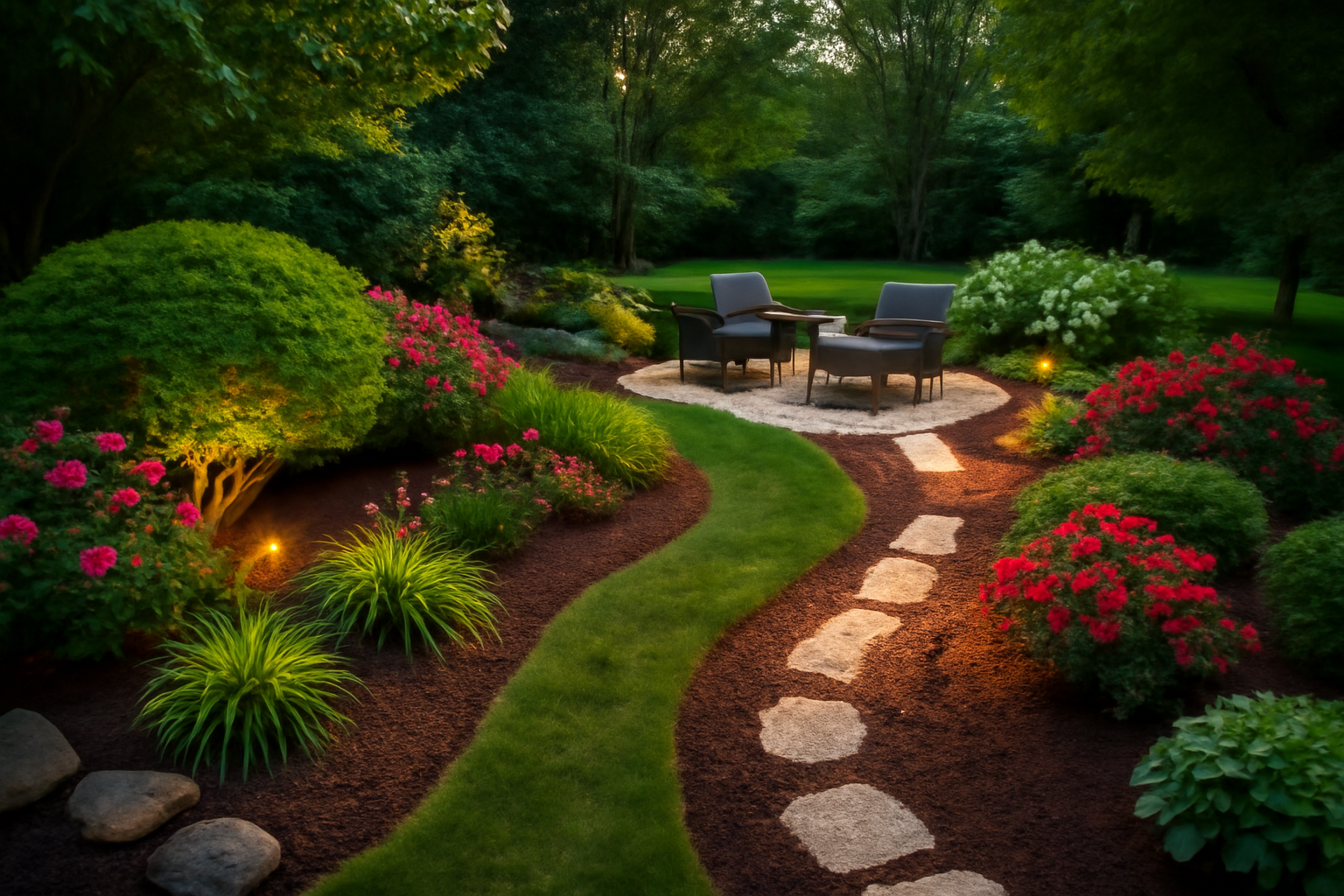
Straight bed lines tend to look rigid and formal unless you’re going for a very deliberate geometric design. For most residential yards, gentle curves feel more natural and are actually easier to maintain because they follow the natural flow of the space. Use a garden hose to lay out your curves before you cut anything — adjust until it looks right, then mark and edge.
Low-Maintenance Landscaping Strategies
Let’s be honest: most of us want a yard that looks great without consuming every free hour we have. The good news is that smart backyard landscaping can be genuinely low-effort once you make the right choices upfront.
Choose Native Plants
Native plants are adapted to your local soil, rainfall, and climate, which means they generally need less water, less fertilizer, and less fussing overall. They also support local pollinators, which is a bonus I’ve come to appreciate more every year. Spend an hour on your local cooperative extension website to find a list of natives that thrive in your region — it’s one of the best investments of time you can make before buying a single plant.
Water Smarter
Overhead sprinklers waste water through evaporation and promote fungal issues on foliage. Drip irrigation delivers water directly to the root zone, which is more efficient and better for plant health. That said, you still need a reliable hose for hand-watering new transplants, containers, and spot treatments. After testing several options over the years, the Flexi Hose Expandable Garden Hose with 8 Function Nozzle, 50FT is the one I keep coming back to. The double latex core resists kinking even when you’re moving quickly between beds, and the 3/4-inch solid brass fittings haven’t leaked on me once. It expands to full length under pressure and shrinks back down for easy storage — a small thing that makes a real difference when you’re trying to keep the garage tidy.
If you want a newer model with even more spray pattern flexibility, the 50 ft Expandable Garden Hose with 10 Pattern Spray Nozzle is worth considering. The extra-strength fabric outer layer holds up well to dragging across gravel or rough edging, and the 10-pattern nozzle gives you everything from a gentle mist for seedlings to a strong jet for washing down the patio. The 3/4-inch brass fittings connect securely to standard spigots, and for the price, the build quality is genuinely impressive. It’s become my go-to recommendation for anyone setting up a new yard from scratch.
Replace Difficult Grass Areas
Those shady spots under trees where grass refuses to grow? Stop fighting them. Groundcovers like pachysandra, sweet woodruff, or creeping Jenny thrive in shade and choke out weeds once established. Similarly, steep slopes that are a nightmare to mow are excellent candidates for low-growing junipers, ornamental grasses, or a simple rock garden. Work with your yard’s natural conditions instead of against them.
Consider a Dry Creek Bed
A dry creek bed does double duty: it manages water runoff during heavy rain and adds a natural, sculptural element to the landscape. Line a shallow channel with river rock, add a few ornamental grasses along the banks, and you’ve turned a drainage problem into a design feature. It’s one of my favorite landscaping ideas for yards with any kind of slope.
Backyard Landscaping Mistakes I’ve Made (So You Don’t Have To)
I’ve made plenty of landscaping mistakes over the years, and I’m happy to share them if it saves you the same headaches.
Planting Too Close Together
This is the most common mistake I see, and I’ve made it myself more times than I’d like to admit. Young plants at the nursery look small, and it’s tempting to pack them in for an instant full look. But plants grow. That cute little butterfly bush is going to be six feet wide in three years, and if you’ve planted it 18 inches from your garden path, you’ll spend the next decade cutting it back. Always check mature plant size before you dig, and space accordingly. It looks sparse at first — that’s what mulch is for.
Ignoring Drainage
That low spot in the yard that gets soggy after every rain? It’s not just a nuisance — it will kill plants that aren’t suited for wet conditions, and it can cause real problems near your foundation over time. Before you plant anything in a problem area, figure out where the water is coming from and where it needs to go. Sometimes the fix is as simple as regrading a small area or installing a simple french drain. Don’t skip this step.
Choosing High-Maintenance Plants Near the Patio
I once planted a rose bed right next to my patio because I loved the idea of sitting outside surrounded by blooms. What I didn’t love was the constant deadheading, the blackspot treatments, the thorny branches scratching guests, and the aphid battles every June. Plants near your primary entertaining area should be low-drama: ornamental grasses, coneflowers, Russian sage, or well-behaved shrubs. Save the fussier specimens for a dedicated garden area where you’re already expecting to spend time.
Your Backyard Is Worth the Effort
Good backyard landscaping is one of those projects that keeps paying you back. Every time you sit outside, host a gathering, or just glance out the kitchen window, you get the return on the time and thought you put in. Start with a simple plan, focus on the high-impact moves first, and make choices that work with your lifestyle rather than against it. You don’t have to do everything at once — the best yards I know were built one season at a time, with a little patience and a lot of learning along the way. Get out there and start digging.