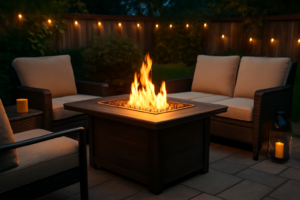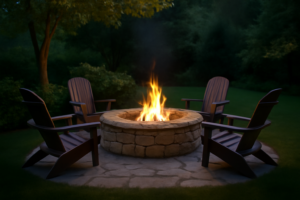
A fire pit with a cracked foundation spreads heat unevenly, creating hot spots that ignite nearby decking or landscaping—sometimes hours after you’ve gone inside for the night. I’ve seen charred fence posts, melted vinyl siding, and one case where a poorly positioned pit got hot enough to warp a composite deck beyond repair. The homeowners didn’t realize anything was wrong until the damage was done, and by then it was too late to fix with a weekend project. What separates a backyard gathering spot from a liability is knowing exactly where the dangers hide, and I’m going to walk you through every one of them because this is the kind of mistake that doesn’t give you a second chance.
The Night Everything Almost Went Wrong
Dave had brought over a bundle of wood he’d had sitting in his garage — dry, seasoned, perfect for burning, he said. We stacked it high because we wanted a big, impressive fire. Within ten minutes we had exactly that: a roaring, crackling blaze that shot embers about four feet in every direction. One landed on the welcome mat near my back door. Another settled into a gap in my wooden deck boards about six feet away. Dave stomped them out, laughing nervously. I was not laughing. My wife, watching from the kitchen window, had already grabbed her phone to look up the non-emergency fire department line. We got lucky. Really, embarrassingly lucky.
After we let the fire die down and everyone’s heart rate returned to normal, I spent the rest of that night down a rabbit hole of fire pit safety guides, local fire codes, and product reviews. By Sunday afternoon I had a plan — and a small Amazon order on the way. That experience turned me from a careless fire pit owner into a genuinely careful one, and honestly, the hobby has been ten times more enjoyable since. There’s something about knowing you’ve done things right that lets you actually relax and enjoy the fire.
Outdoor Fire Pit Safety Tips Every Backyard Owner Needs to Know
Let me share the practical lessons I pulled from my research — and from that terrifying Saturday night. These aren’t complicated rules, but skipping even one of them can turn a cozy evening into an emergency.
1. Location Is Everything
Most fire safety guidelines — and many local municipal codes — recommend keeping a fire pit at least ten feet away from any structure, including fences, your home’s exterior, pergolas, and overhanging tree branches. Before you ever light a fire, walk the perimeter. Look up. Look at what’s downwind. On the night of my near-disaster, the wind shifted and I hadn’t accounted for it at all. If your fire pit is on a wooden deck or composite decking, distance alone won’t protect you — which brings me to the next point.
The Mat That Saved My Deck (And My Insurance Premium)
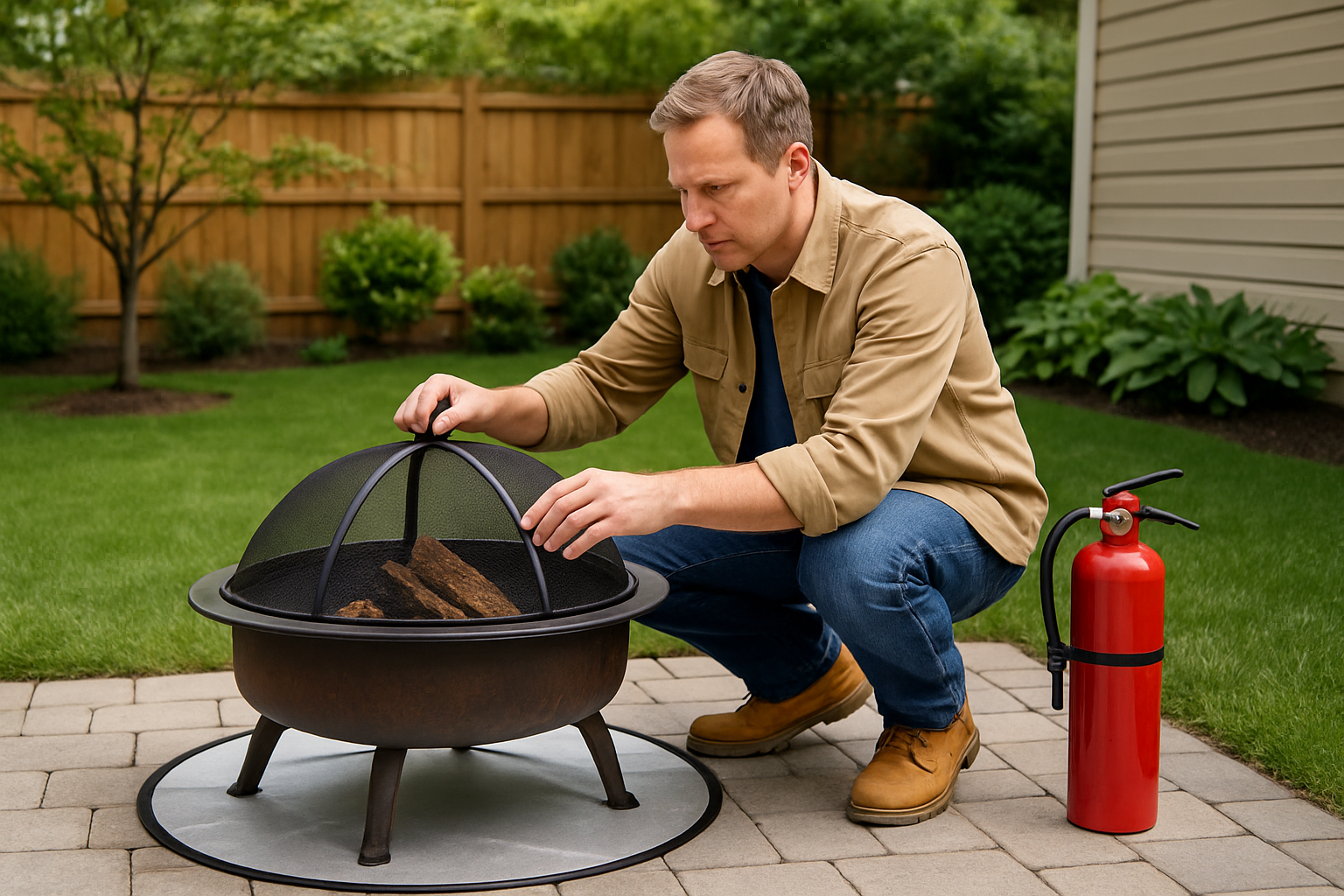
A fire pit on pavement sounds safe until you realize heat damage and ember drift don’t care about your intentions. I learned this the hard way when a neighbor’s pit scorched their composite deck — and I realized my own setup had the same vulnerability.
What works
- Protects finished surfaces (decks, pavers, stamped concrete) from radiant heat that spreads way further than you’d expect.
- Sits flat enough that it won’t become a tripping hazard, but thick enough to actually insulate — not just a gesture toward safety.
- Works with standard fire pit footprints without looking like an afterthought; fits the aesthetic of a real outdoor setup.
What doesn’t
- You still need to keep it clear of debris and check underneath occasionally — it’s protection, not a set-it-and-forget-it solution.
- Size matters; you have to measure your exact pit footprint or you’ll end up with gaps that defeat the whole purpose.
I almost bought a generic fireproof tarp before realizing it would just shift and bunch every time anyone moved around the pit — a real liability waiting to happen. Get the 40″ Fire Pit Mat for Solo Stove Bonfire and actually sleep at night.
About This Article

Written by Marcus Delvecchio. Marcus Delvecchio isn't a licensed contractor — he's a handyman and DIY outdoor landscaper who got obsessed with driveways, patios and pavers after redoing his own place badly enough to want to understand why. Twenty years later he spends his weekends on his own projects and on side jobs for neighbours and friends around the mid-Atlantic, and writes up what actually worked, mistakes included. More about this site.
Scope and limits. Marcus is a homeowner who got obsessive about driveways, not a licensed contractor. Structural repair, drainage changes, and anything requiring a permit should go to a licensed contractor.
Verify this against a primary source
Specifics change, and your situation may differ from the one described here. These are the authorities worth checking directly:
- Concrete Masonry & Hardscapes Association — segmental paver installation standards
- National Asphalt Pavement Association — asphalt placement and maintenance guidance
- Portland Cement Association — concrete durability and jointing