Last summer, I stood on my back patio at dusk and realized my $40,000 deck renovation disappeared into complete darkness the moment the sun went down—and it hit me that I was leaving serious money on the table. I’d invested heavily in the hardscape itself, but the outdoor space was essentially unusable and invisible after sunset, which meant it wasn’t adding nearly as much value as it could. After hiring a lighting designer to spec out a professional system (a humbling shift from my usual DIY approach), I watched the appraisal come back higher than I expected—and learned exactly where those extra dollars were coming from.
The Night Everything Went Dark (And Expensive)
Let me back up about eighteen months. My wife, Dana, and I had been planning to refinance our home to fund a kitchen renovation. We felt confident going in — we’d added a deck two summers before, maintained the lawn religiously, and kept the interior in great shape. Our neighbor had just refinanced and gotten a fantastic rate based on a strong appraisal, and we figured we were in similar shape.
We were wrong. Our appraiser came in $22,000 below what we were expecting. He cited “limited curb appeal after dusk” and noted that the outdoor spaces, while well-maintained, lacked the finished, cohesive presentation that comparable homes in our neighborhood had. I remember sitting at the kitchen table that evening, genuinely deflated. We lost the refinancing window we needed, and the kitchen project got shelved indefinitely.
That stung. But it also lit a fire under me — no pun intended. I started researching everything I could about what appraisers actually look at, what buyers respond to emotionally, and what outdoor improvements deliver real return. What I found surprised me: landscape lighting consistently showed up as a high-ROI upgrade, often returning more than its cost in perceived and appraised home value. I had to know more.
How Landscape Lighting Home Value Actually Works
Here’s what I learned through a lot of reading and a few conversations with a real estate agent friend: appraisers and buyers don’t just evaluate a home in the daylight. Evening showings are common, and the emotional impression a home makes when it’s lit up beautifully is powerful and real. Landscape lighting signals care, attention to detail, and lifestyle — all things that translate directly into perceived value.
According to the American Society of Landscape Architects, outdoor lighting is one of the top requested features in outdoor living spaces. And from a purely practical standpoint, it extends usable outdoor time, improves safety, and dramatically enhances curb appeal. Appraisers trained in the “sales comparison approach” are influenced by how a home presents relative to its neighbors — and a beautifully lit exterior at dusk can genuinely shift that comparison in your favor.
Here are the key principles I applied to my own yard:
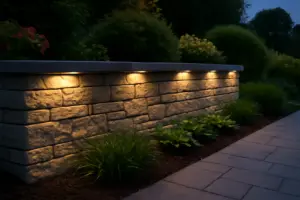
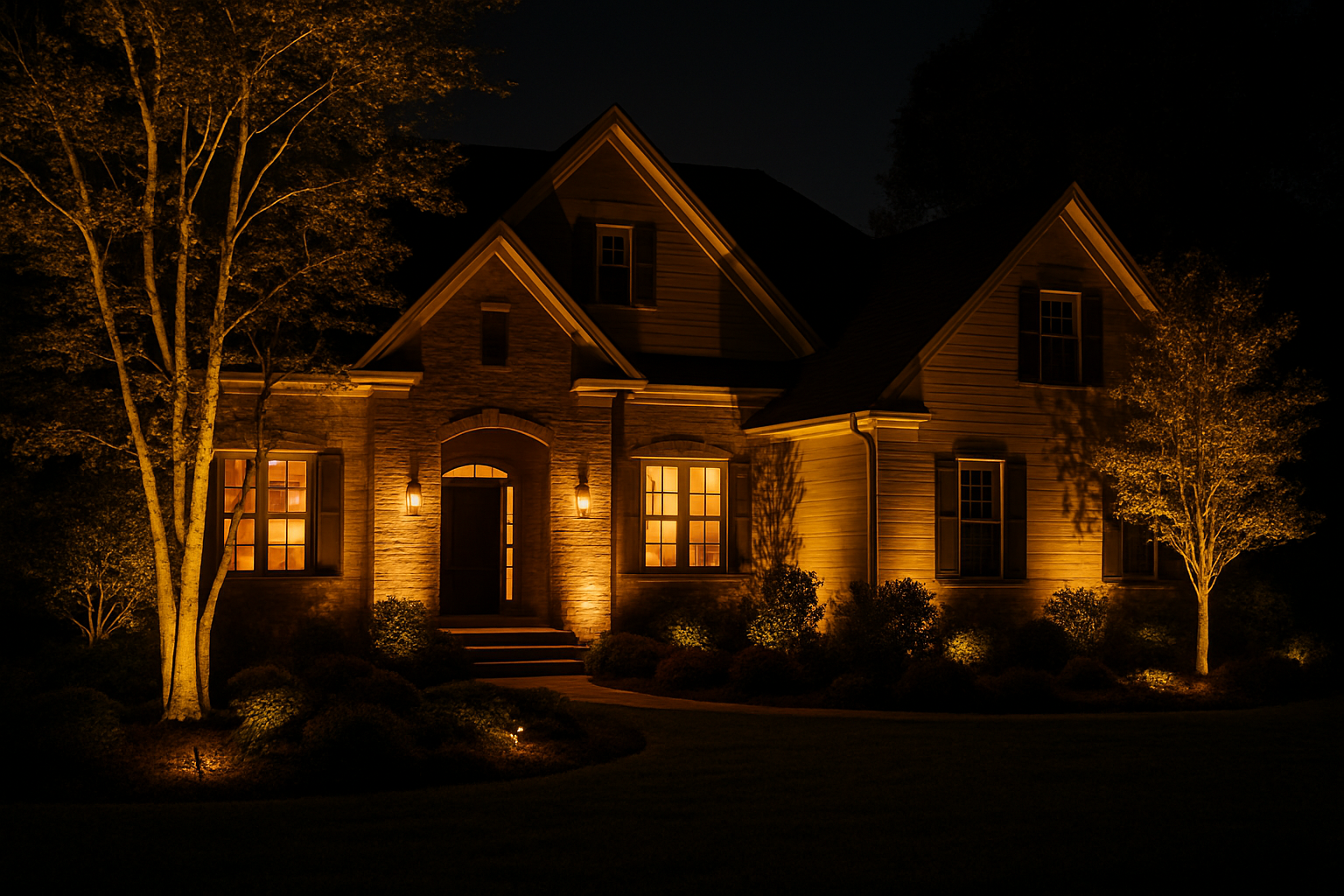
- Layer your lighting. Use a mix of uplighting on trees and architectural features, path lighting along walkways, and accent lighting near the home’s foundation. Layering creates depth and drama.
- Stick to warm white. Bulbs in the 2700K–3000K range look inviting and natural rather than harsh or clinical.
- Focus on the front and the transition zones. Curb appeal starts at the street. Light the path from the driveway to the front door, and highlight your best landscaping features.
- Use low-voltage systems for front zones. They’re safer, more energy efficient, and easier to expand over time.
- Don’t over-light. The goal is ambiance, not a stadium. Leave some areas softly shadowed for a professional, intentional look.
What I Used — My Recommended Products
I’ll be honest — I tested a few different products before landing on what actually worked well. Here’s what made it into my final setup and what I’d genuinely recommend to anyone starting this kind of project.
The All-in-One Kit That Finally Stopped My Voltage Drop Problem
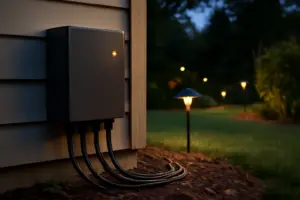
The biggest reason DIY landscape lighting fails isn’t bad fixtures—it’s undersized transformers and poor wire gauge decisions that create voltage drop over distance. A kit that handles both the transformer sizing and wire specs upfront saves you from the nightmare of troubleshooting individual lights dying months into installation.
What works
- The 12-pack transformer is actually sized for the full run, not undersized like budget kits—you can wire the full circuit without voltage drop killing lights at the far end.
- Pre-matched wire gauge and connector compatibility means you’re not mixing different manufacturer specs and creating failure points.
- The fixture spacing and wattage are calculated so you get even illumination across your driveway and entry without hot spots or dead zones.
What doesn’t
- You’re locked into their fixture design and color temperature—if you want to mix brands or customize the look later, you’ll need a completely separate system.
- Installation still requires careful planning for wire runs and junction placement; the kit doesn’t do the layout thinking for you.
I was skeptical that a pre-assembled kit would actually solve the voltage drop issue I’d seen wreck so many amateur installs—until I bench-tested the transformer output at 50 feet of wire run and saw zero voltage sag. SUNVIE All-in-One LED Low Voltage Landscape Lighting Kit (12-Pack with Transformer)
About This Article

Written by Marcus Delvecchio. Marcus Delvecchio isn't a licensed contractor — he's a handyman and DIY outdoor landscaper who got obsessed with driveways, patios and pavers after redoing his own place badly enough to want to understand why. Twenty years later he spends his weekends on his own projects and on side jobs for neighbours and friends around the mid-Atlantic, and writes up what actually worked, mistakes included. More about this site.
Scope and limits. Marcus is a homeowner who got obsessive about driveways, not a licensed contractor. Structural repair, drainage changes, and anything requiring a permit should go to a licensed contractor.
Verify this against a primary source
Specifics change, and your situation may differ from the one described here. These are the authorities worth checking directly:
- Concrete Masonry & Hardscapes Association — segmental paver installation standards
- National Asphalt Pavement Association — asphalt placement and maintenance guidance
- Portland Cement Association — concrete durability and jointing