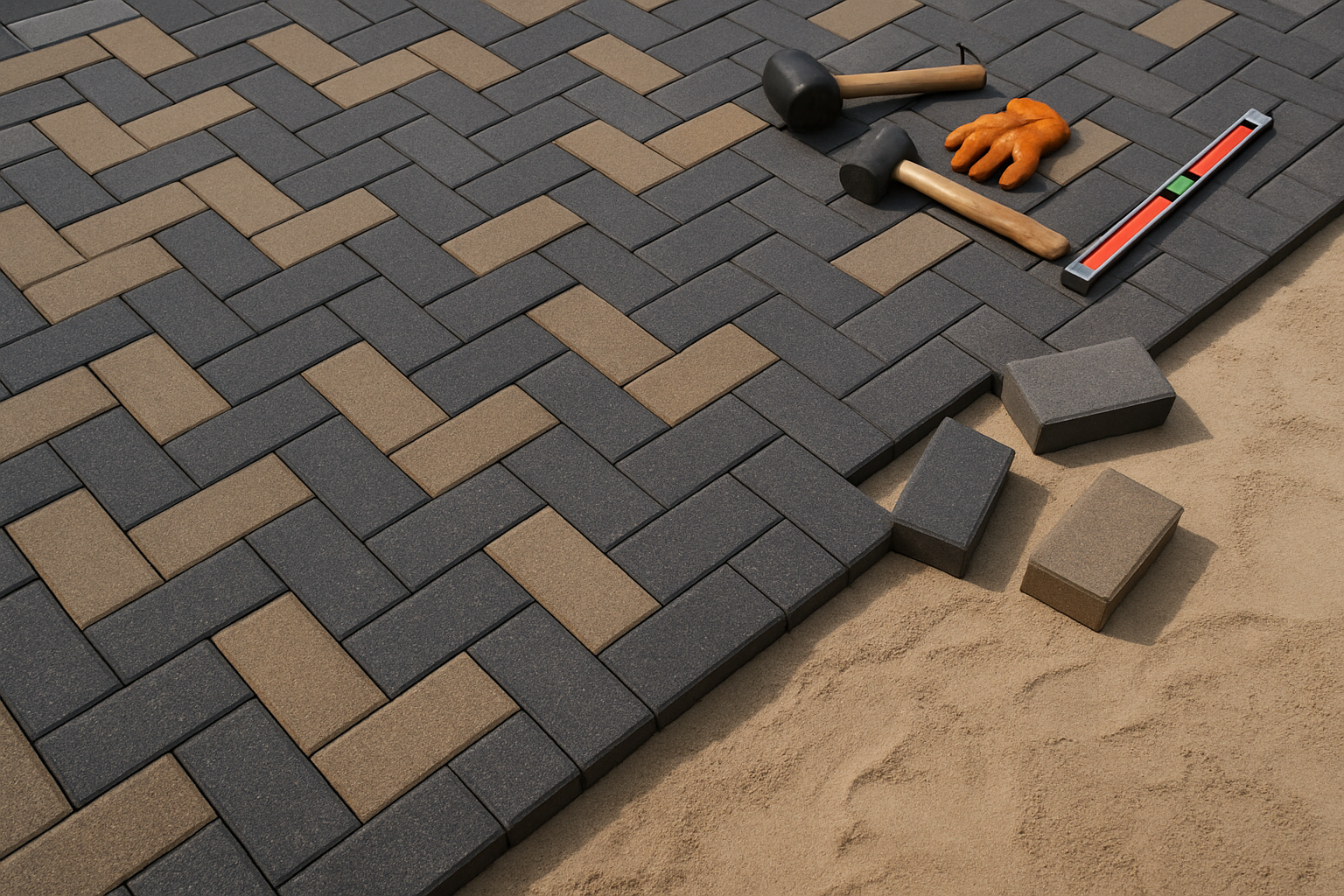
# New Opening Paragraph Late fall is when I get the calls—homeowners standing in their bare backyards after the summer entertaining season ends, suddenly aware of what they’re missing and determined to fix it before next year rolls around. That urgency, combined with cooler weather that makes outdoor work actually enjoyable, is when I’ve found the sweet spot for tackling a patio project, and it’s also when I discovered that concrete pavers could deliver me 400 square feet of finished outdoor space for less than two grand. The timing matters because you’re not fighting heat, you’re not competing with summer contractor schedules, and you’ve got just enough runway before spring to get the base prep and installation dialed in right—which is exactly where most homeowners either waste money or leave themselves vulnerable to settling and cracking down the road.
How a Silly Mistake Turned Into a 400-Square-Foot Backyard Transformation
Once the laughter died down — and once I confirmed the return window had conveniently closed — I decided to lean into the chaos. The original order came in wrong — I’d accidentally ordered double the pavers for a project half the size, and the return window was closing fast. Our original plan was a modest 10×10 sitting area off the back door. But with all those pavers staring at me, we redesigned on the fly into an L-shaped patio that wraps around the back of the house and connects to the fence line. It came in just under 400 square feet, and the total project cost landed right around $1,850. Honestly? Best mistake I ever made.
If you’ve been eyeing your sad patch of backyard grass and wondering whether a real patio is actually within reach, I promise you it is. Here’s exactly how we did it, what I learned the hard way, and what I’d do the same way all over again.
Planning and Prep: The Step That Actually Makes or Breaks Your DIY Concrete Paver Patio Budget
Before you buy a single paver, measure your space twice and then measure it again. Sketch the layout on graph paper or use a free online patio planner. Account for a 10% overage in materials for cuts, breakage, and the inevitable moment where you realize your “square” patio is somehow a trapezoid. Here’s what the prep phase actually involves:
- Mark your layout using stakes and mason’s line. This is your visual guide and your sanity anchor throughout the whole project.
- Excavate 6–8 inches deep across the entire area. You need room for a 4-inch gravel base, a 1-inch sand layer, and your pavers. Rent a sod cutter if you have grass — doing this by hand over 400 square feet is a full-body workout nobody asked for.
- Establish proper slope — aim for about 1/8 inch of drop per foot away from your house. This keeps rainwater draining away from your foundation instead of pooling on your beautiful new patio.
- Compact the subgrade before adding any base material. Skipping this step is how you end up with a patio that looks lumpy and uneven by year two.
The Paver That Let Me Scale a 400-Square-Foot Patio Without Breaking the Budget
When you’re working with a tight $2,000 budget across 400 square feet, your paver choice makes or breaks the math. The River Red Square pavers gave me a full pallet of uniform, durable units at a price point that didn’t force me to compromise on quality or cut the project scope.
What works
- Full pallet coverage means one order handles most of the base field — no cobbling together multiple SKUs or dealing with inventory gaps mid-project.
- Square format cuts layout time significantly and reduces waste on an L-shaped patio; straight edges mean fewer angled cuts and fewer broken units eating into your overage buffer.
- Consistent color and finish across all 168 units meant no “surprise darker pavers arrived in box three” moments — the final patio looked intentional, not like a patchwork repair.
What doesn’t
- A full pallet is heavy — delivery and unloading require space and either help or equipment; this isn’t a product you casually carry to the backyard.
- The square format, while efficient, doesn’t offer the accent or visual break options that colored or shaped pavers bring — you’re committing to a single-tone look.
I’ll admit I panicked when the pallet arrived and I realized I’d ordered the full 168 units — that’s a lot of commitment staring at you from the driveway — but once I started laying, the consistency and coverage actually came through exactly as promised. River Red Square Concrete Step Stone — Full Pallet of 168 Units
About This Article

Written by Marcus Delvecchio. Marcus Delvecchio isn't a licensed contractor — he's a handyman and DIY outdoor landscaper who got obsessed with driveways, patios and pavers after redoing his own place badly enough to want to understand why. Twenty years later he spends his weekends on his own projects and on side jobs for neighbours and friends around the mid-Atlantic, and writes up what actually worked, mistakes included. More about this site.
Scope and limits. Marcus is a homeowner who got obsessive about driveways, not a licensed contractor. Structural repair, drainage changes, and anything requiring a permit should go to a licensed contractor.
Verify this against a primary source
Specifics change, and your situation may differ from the one described here. These are the authorities worth checking directly:
- Concrete Masonry & Hardscapes Association — segmental paver installation standards
- National Asphalt Pavement Association — asphalt placement and maintenance guidance
- Portland Cement Association — concrete durability and jointing