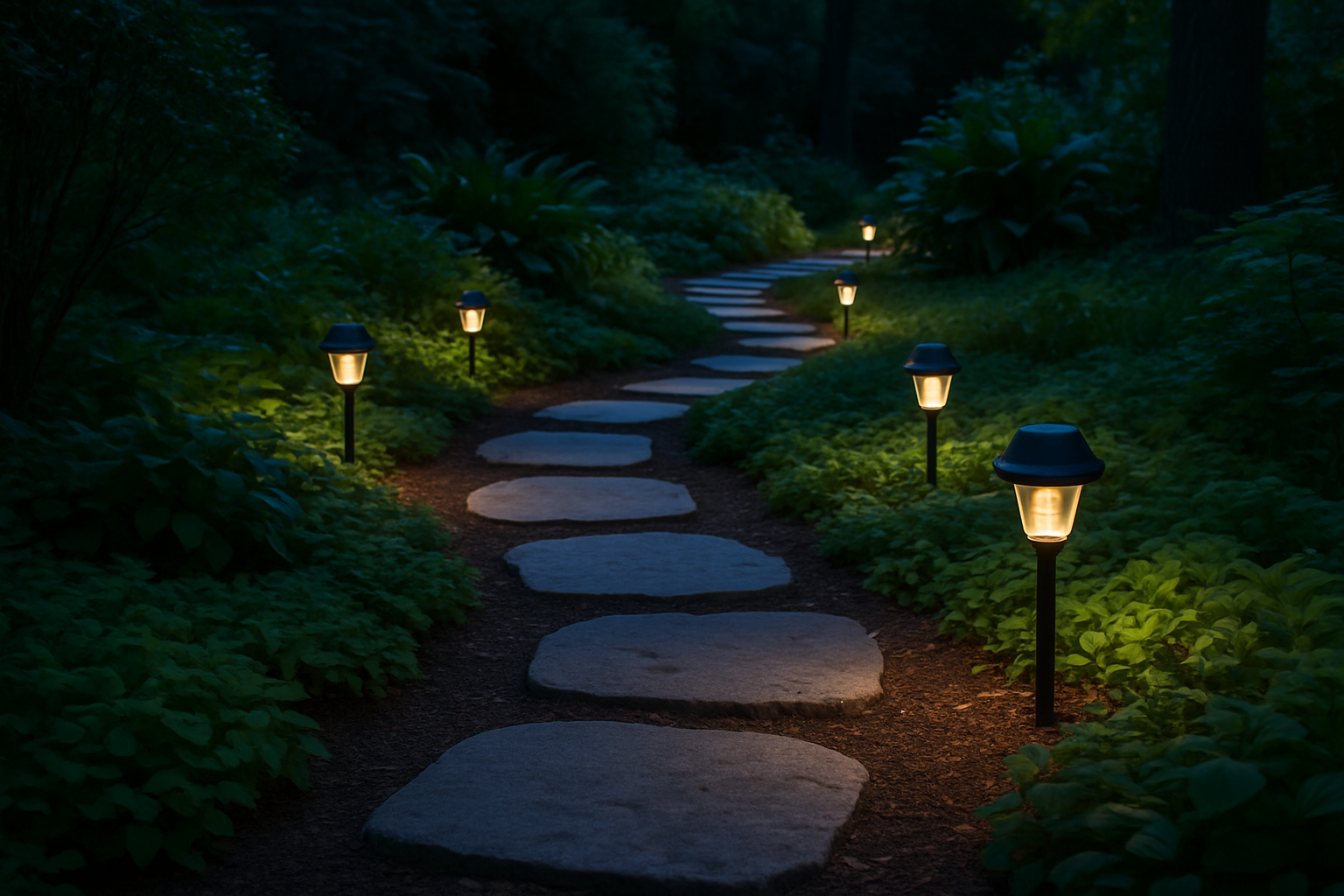
- Maximize sun exposure. Solar panels need direct sunlight — not shade from your house, a tree, or even nearby shrubs. Even partial shade can cut charging time by 40 to 50 percent. Walk your intended path at noon and watch the shadow patterns before you commit.
- Clean the panels monthly. Dust, pollen, and in winter, a thin layer of grime can reduce charging efficiency significantly. A quick wipe with a damp cloth takes 90 seconds and makes a noticeable difference.
- Let them charge before first use. Pull the activation tab and set them in full sun for a full day or two before expecting a full night’s runtime. This conditions the battery properly.
- Space them evenly. For a walkway, 6 to 8 feet between lights gives good coverage without looking cluttered. For a garden border, 4 to 6 feet works well depending on brightness level.
- Bring them in during extreme cold snaps if possible. Below 20°F, even good solar path lights will struggle. A quick pull-and-store during a three-day
This post contains affiliate links. As an Amazon Associate, I earn from qualifying purchases.
When I walk a deck or patio for an inspection, I’m looking at things most homeowners never think about: joist spacing, ledger attachment, post anchors, how the footings were set. The surface can look immaculate and the structure underneath can be six months from failure. That gap between appearances and reality is where most of my busiest seasons come from. I see the same dynamic play out with solar path lights — homeowners pick a set based on how they look in an Amazon photo, install them along a walkway, and by February they’ve got a row of dead or dim fixtures they’re blaming on bad luck when the real issue is that nobody told them what actually separates a light that survives a full winter from one that doesn’t. That’s the kind of straight-trade answer I’m going to give you here, because after overseeing enough outdoor builds to know which products hold up under real conditions and which ones just photograph well, I’ve got opinions worth listening to.
Over the following winter, I tested all six sets under real conditions — freezing temps, ice, heavy rain, snow accumulation, and the general chaos of a yard with a dog, two kids, and a very opinionated mailman who steps on things. Here’s what I learned.
Why Most Solar Path Lights Fail Before Spring
Here’s the honest truth nobody tells you at the hardware store: the majority of budget solar path lights are designed to look great in an August product photo and die quietly before Valentine’s Day. The failure points are almost always the same — cheap battery cells that can’t hold a charge in cold weather, poorly sealed housings that let moisture creep into the electronics, and flimsy stakes that crack when the ground freezes and shifts. I watched three of my six test sets go dark by January. Two more were flickering inconsistently by February. One set — and we’ll get to which one — was still burning strong when the crocuses came up in March.
Cold weather is genuinely brutal on solar lights. Most use NiMH or NiCd batteries, and their capacity drops significantly below freezing. If the solar panel isn’t efficient enough to top off the charge during the short, gray days of December and January, you’re going to get maybe two hours of dim light instead of the eight to ten hours promised on the box. Look for lights rated IP65 or higher for water resistance, stainless steel or UV-resistant plastic housings, and panels with at least a 1.2V/600mAh battery or better.
My Solar Path Lights Review: What I Actually Used This Winter
After my glamorous deck debut, I got serious. I installed four different sets from Amazon across different zones of my yard — the front walkway, the side garden bed, the driveway edge, and the back path. Here’s what made the cut and why I’d recommend each one.
Eyrosa Solar Outdoor Lights — 10 Pack
These were the ones I installed on the front walkway the night of my infamous fall, and honestly, they earned their spot. The Eyrosa Solar Outdoor Lights 10-pack have a stainless steel housing that held up through three ice storms without a single crack or visible rust. The cool white output is clean and bright — not the dingy yellow glow you get from the cheapest sets. They were still reliably turning on at dusk and running well past midnight through January. Solid build, easy install, genuinely survived the winter.
GIGALUMI Solar Lights — 12 Pack
I put the GIGALUMI Solar Lights 12-pack along the side garden bed, and they’ve been one of my favorite sets for years now — this winter just confirmed it. GIGALUMI has been in this space long enough to get the little things right: the stakes go in cleanly, the diffuser caps give a nice warm spread of light, and the waterproofing holds up even when there’s standing water around the base after a heavy rain. The 12-pack gives you great coverage for a longer path or a wider area, and the price-per-light ratio is genuinely hard to beat at this quality level.
URAGO Super Bright Solar Lights — 10 Pack
If you need more actual brightness — say, a driveway edge or a path where you’re walking in real darkness — the URAGO Super Bright Solar Lights are the ones to reach for. The “super bright” claim isn’t just marketing copy. These are noticeably more luminous than most path lights in this price range, and the dusk-to-dawn auto shutoff worked consistently all winter. URAGO advertises up to 12 hours of runtime, and while I clocked closer to nine or ten on the shortest winter days, that still covered the full dark hours without issue. Great for safety lighting where visibility actually matters.
SOLPEX Mini Solar Ground Lights — 10 Pack
These are a different animal — low-profile ground lights rather than the traditional stake style — and I love them for the back garden path where I wanted something subtle. The SOLPEX Mini Solar Ground Lights sit nearly flush with the ground, which means they don’t get knocked sideways by kids running through the yard or, hypothetically, a husband shuffling outside in slippers. The cool white LEDs cast a clean, even glow upward, and the low form factor actually seems to help with durability — there’s less surface area catching wind, ice, or errant footballs.
Tips for Getting the Most Out of Your Solar Path Lights
Even the best solar path lights will underperform if you place or maintain them wrong. Here’s what made a real difference for me this winter:
- Maximize sun exposure. Solar panels need direct sunlight — not shade from your house, a tree, or even nearby shrubs. Even partial shade can cut charging time by 40 to 50 percent. Walk your intended path at noon and watch the shadow patterns before you commit.
- Clean the panels monthly. Dust, pollen, and in winter, a thin layer of grime can reduce charging efficiency significantly. A quick wipe with a damp cloth takes 90 seconds and makes a noticeable difference.
- Let them charge before first use. Pull the activation tab and set them in full sun for a full day or two before expecting a full night’s runtime. This conditions the battery properly.
- Space them evenly. For a walkway, 6 to 8 feet between lights gives good coverage without looking cluttered. For a garden border, 4 to 6 feet works well depending on brightness level.
- Bring them in during extreme cold snaps if possible. Below 20°F, even good solar path lights will struggle. A quick pull-and-store during a three-day