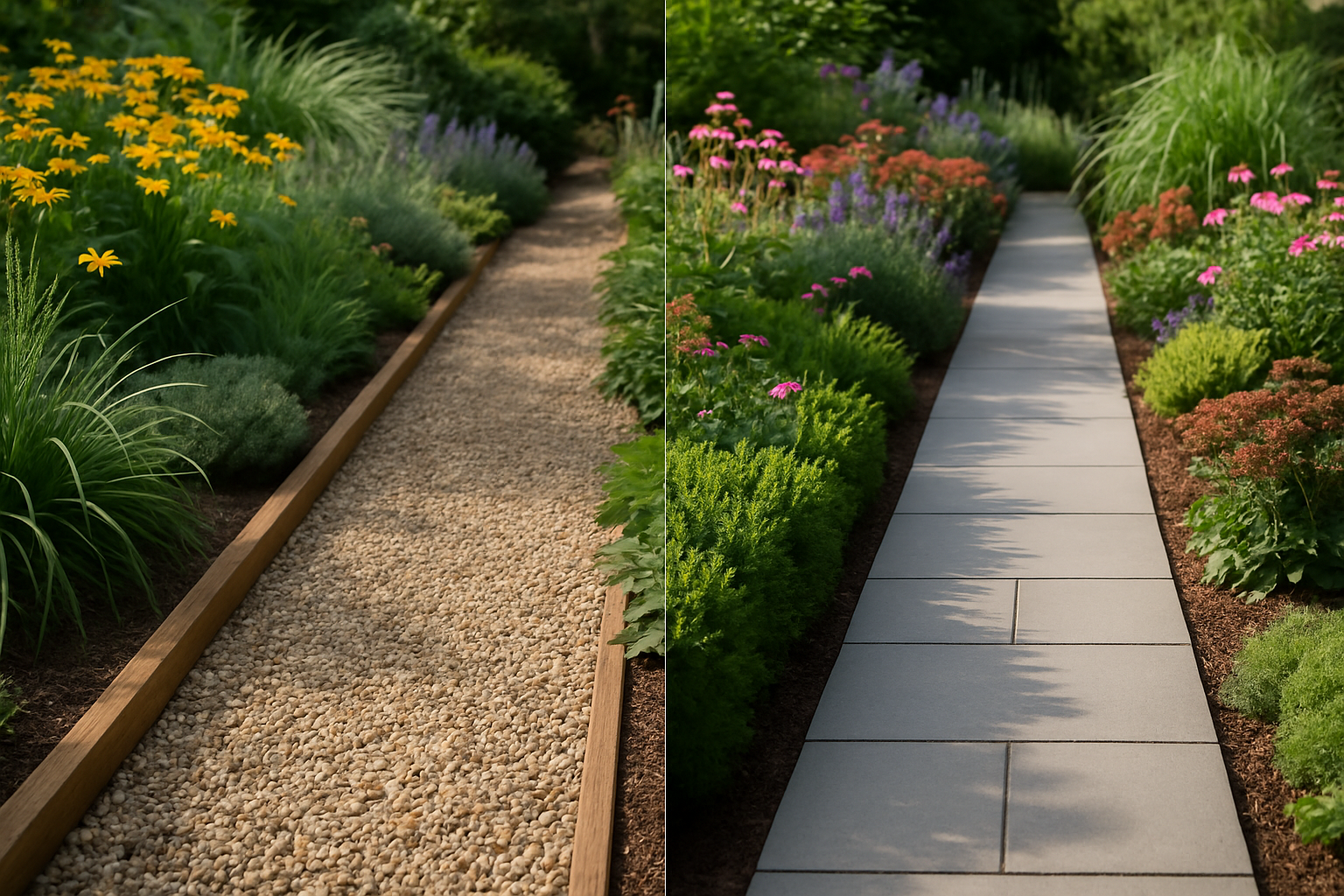
- For a classic, natural look: The Cureton Industries 40 lb Bucket of Multicolor Cream Pea Gravel is a great option if you want warm, earthy tones that blend well with most garden aesthetics. The ⅛–½ inch size is comfortable underfoot and drains well.
- For a uniform, polished appearance: The Mulctun 45 lb Natural Pea Gravel has a consistent 1/5-inch size that looks tidy and intentional — great for more formal garden paths or anywhere you want a refined feel.
- For a riverbed, natural-stone aesthetic: This
This post contains affiliate links. As an Amazon Associate, I earn from qualifying purchases.
There’s one thing I tell every apprentice on their first day: everything is level or everything is a future problem. Doesn’t matter if it’s a paver base, a deck joist, a pergola post — if you don’t fix the pitch on day one, water finds a way to remind you every single spring that gravity is not negotiable. I’ve been installing patios, pavers, walkways, and outdoor hardscape professionally for over a decade, and I’ve ripped out more gravel paths and reset more sunken paver edges than I can count — usually because a homeowner made a choice based on aesthetics or price without understanding what that material actually demands from the ground beneath it. That’s exactly why I want to give you a straight, no-sales answer on the gravel versus pavers question — not from a catalog, but from someone who’s dealt with the aftermath of both decisions in every kind of soil, slope, and climate condition you can imagine.
I’ll get back to the incident. First, let’s talk about what you actually came here for.
The Real Gravel Walkway vs Pavers Comparison: What Nobody Tells You Upfront
Most articles will list the pros and cons in a nice clean table and send you on your way. That’s useful, but it doesn’t account for the fact that your yard has quirks, your budget has limits, and your ambition may occasionally outpace your skill level. (I say this with love, because mine certainly did.)
Here’s what I’ve learned from living with both options on my own property over the past few years.
Gravel Walkways: The Good, the Crunchy, and the Annoying
Gravel is wonderfully affordable and surprisingly satisfying to install. That deeply satisfying crunch underfoot? Absolutely worth it. It drains beautifully, which matters a lot if you live somewhere that gets real rain, and it gives even a modest garden path a cottage-charming, slightly European feel.
The downsides are real though. Gravel migrates. It gets kicked out of the path, tracked into the house, and redistributed by every dog, child, and oblivious houseguest you’ve ever hosted. Without solid edging, you’ll find yourself raking it back into place every few weeks. And if you have anyone in your household with mobility challenges, gravel paths can be genuinely difficult to navigate.
That said, for side yards, garden borders, casual paths through a planting bed, or anywhere you want texture and drainage without a big budget? Gravel is hard to beat.
Pavers: Beautiful, Permanent, and Humbling to Install
Pavers are the long game. They look incredible, they’re easy to walk on, they hold their position, and they can genuinely increase your home’s curb appeal. A well-laid paver path from the driveway to the front door is the kind of thing that makes people slow their cars down.
But here’s what they don’t emphasize enough in the Pinterest photos: proper paver installation is work. You’re digging down four to six inches, laying a compacted gravel base, adding sand, leveling obsessively, and then — only then — setting the pavers. Skip any of those steps and you’ll have a wavy, heaving mess within a couple of seasons. The material cost is also significantly higher than gravel, especially for larger paths.
Back to the Incident (Or: Why I Now Measure Twice)
Okay. So. The summer in question, I decided I was going to install a gravel path along the side of my house leading to the backyard gate. Lovely idea. I ordered what I thought was a reasonable amount of pea gravel online, did some extremely casual mental math, and hit “add to cart” with total confidence.
Reader, I ordered seven times more gravel than I needed.
When the delivery arrived — and kept arriving — my wife came outside, looked at the growing pile in the driveway, and said absolutely nothing for about fifteen seconds. Then: “Are we opening a quarry?”
In my defense, cubic feet and square feet sound very similar when you’re not paying close attention. In reality they are not the same thing at all and this is a lesson I have now fully internalized.
What did I do with the surplus? I laid the side yard path as planned, refreshed the drainage area around the downspouts, filled in the bare patches near the shed, topped off the garden beds, and — this is the part where it ended well — finally extended a short paver walkway I’d been putting off for two years by using the leftover gravel as the base layer. So the absurd miscalculation accidentally gave me the motivation to finish a project I’d been procrastinating on for months. Unintentional genius.
Making It Last: Edging Is Everything
Whether you go gravel or pavers, the single most important thing you can do to make your path look good long-term is install quality edging. This is the step that most DIYers skip and then regret within one growing season.
For gravel paths especially, edging is the difference between a tidy walkway and a slow-motion gravel explosion across your lawn. I’ve been really happy with the 50FT Black Corrugated Metal Landscape Edging — it’s flexible enough to handle curves, it doesn’t rust, and it gives a really clean, modern border that holds gravel firmly in place. For taller containment or raised bed areas, the Land Guard Corrugated Garden Edging Border in 6″ height gives you even more coverage and works beautifully along lawn edges where grass tends to creep in.
My Recommended Products for a Gravel Walkway
If you’re leaning toward gravel (smart move for a first path project), here are the products I’d actually recommend based on my own experience — including my very educational bulk-ordering adventure.
- For a classic, natural look: The Cureton Industries 40 lb Bucket of Multicolor Cream Pea Gravel is a great option if you want warm, earthy tones that blend well with most garden aesthetics. The ⅛–½ inch size is comfortable underfoot and drains well.
- For a uniform, polished appearance: The Mulctun 45 lb Natural Pea Gravel has a consistent 1/5-inch size that looks tidy and intentional — great for more formal garden paths or anywhere you want a refined feel.
- For a riverbed, natural-stone aesthetic: This