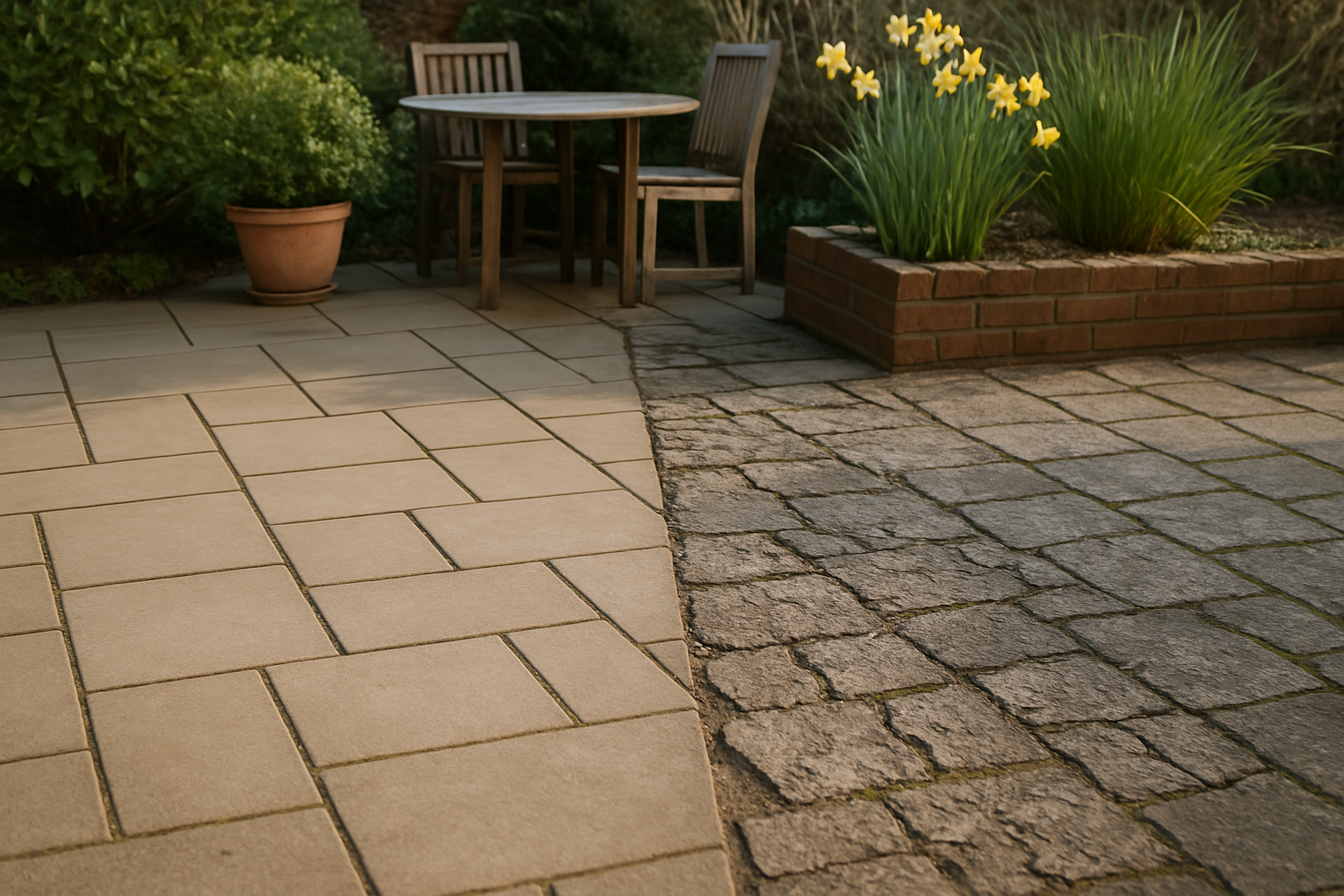
Homeowners believe that if they buy quality pavers and hire someone competent to install them, their patio will last—but I’ve watched expensive materials turn to rubble in three winters because of one missing step that costs eighty bucks. The installers did their job right, the base was solid, the drainage worked, and then winter arrived to exploit the one thing nobody sealed. I’ve stood in enough driveways looking at cracked and heaving patios to know that freeze-thaw destruction isn’t random—it’s predictable, preventable, and almost always the result of skipping the protection that should have happened before the first frost ever hit.
My contractor had mentioned sealing when the project wrapped up. I nodded, filed it under “things to do someday,” and promptly forgot about it. Life got busy. Summer turned to fall, fall turned to a brutal Midwest winter with seventeen freeze-thaw cycles in a single season, and by the time spring arrived, my investment was showing serious battle scars. What followed was months of research, a few difficult conversations with contractors about repair costs, and ultimately a surprisingly simple fix that I wish someone had spelled out for me from day one.
What Freeze-Thaw Damage Actually Does to Your Pavers
Here’s what nobody tells you when you’re admiring your brand-new patio: concrete and brick pavers are porous. They absorb water constantly — from rain, from sprinklers, from morning dew. Under normal conditions, that’s not a huge problem. But when temperatures drop below freezing, that trapped water expands by about 9% as it turns to ice. Do that seventeen times in a single winter, and you’re essentially running a jackhammer through your paver’s internal structure, one microscopic crack at a time.
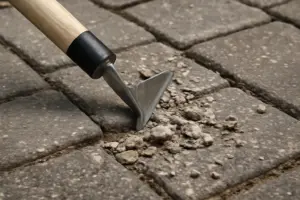
The technical term for what happened to my patio is spalling — that’s when the surface literally flakes, chips, or pops off in chunks. It’s caused by repeated freeze-thaw cycling, and it’s almost entirely preventable with the right sealer applied at the right time. Road salt and ice melt products make things dramatically worse by drawing in more moisture and introducing chemical reactions that accelerate the breakdown. My patio had gotten all of the above, completely unprotected.
After talking to two different contractors about repair options — quotes ranged from $600 to “you should really just replace the damaged section” — I started digging into sealers myself. What I found changed everything.
Paver Sealer Freeze Thaw Protection: How to Choose the Right Product
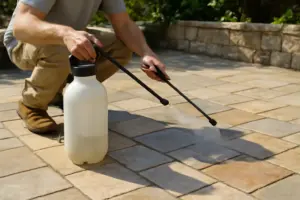
Not all sealers are created equal, and this is where a lot of homeowners go wrong. There are two main categories: topical sealers, which sit on the surface and create a film, and penetrating sealers, which soak into the paver and protect from within. For freeze-thaw protection specifically, penetrating sealers are almost always the better choice. They block moisture from entering the pores in the first place, which means there’s nothing inside the paver to freeze and expand.
Look for sealers with silane, siloxane, or silane-siloxane blends on the label. These compounds bond chemically with the silica in your pavers and create a hydrophobic barrier that repels water without changing the look or breathability of the surface. The paver can still release moisture vapor outward — it just can’t take new water in. That breathability is critical. Trap moisture inside with the wrong sealer and you can actually make freeze-thaw damage worse.
A few other things to check before you buy:
- Coverage rate: Most penetrating sealers cover 150–400 square feet per gallon depending on porosity. Measure your patio before you shop.
- Salt resistance: If you live somewhere that uses road salt or you apply ice melt, you need a sealer rated for salt repellency.
- Application temperature: Most sealers need temperatures above 40°F during application and for 24 hours after. Don’t rush it in early spring.
- Reapplication schedule: Quality penetrating sealers typically last 3–7 years. Set a reminder and stick to it.
The Sealer That Stopped My Patio From Spalling After That Brutal Freeze
After watching salt spray and freeze-thaw cycles attack my patio’s surface for two winters, I realized that a $4,000 mistake was sitting in my backyard — but a $80 application could actually save it. The trick is choosing a sealer built specifically for concrete’s structural weaknesses, not just its appearance.
What works
- Water repellency that actually stops salt penetration — I could see frost damage halt on treated areas while untreated concrete continued spalling through the season.
- Breathability that doesn’t trap moisture underneath — unlike film-forming sealers, this lets subsurface water vapor escape before it freezes and cracks the concrete from within.
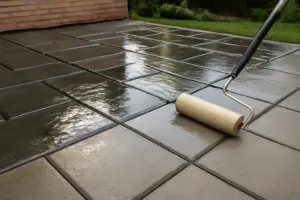
- Re-application is straightforward enough for DIY work — two coats with a roller, no special equipment, and the coverage per gallon actually matches the label claim.
What doesn’t
- The 5-gallon size is heavy and awkward to move solo — I had to call my neighbor over, and even then it’s a two-person job if your patio is more than 30 feet from the truck.
- Weather timing is strict; you need 48 hours of dry conditions after application, which in late fall can mean waiting two weeks for the right window.
I second-guessed buying the 5-gallon size — part of me wanted to test it on a small section first — but after the first winter, seeing my treated patio still intact while my neighbor’s untreated deck was already spalling, I knew I’d made the right call. Grab the McKinnon Concrete Sealer in the 5-gallon size and don’t skip this step.
About This Article

Written by Marcus Delvecchio. Marcus Delvecchio isn't a licensed contractor — he's a handyman and DIY outdoor landscaper who got obsessed with driveways, patios and pavers after redoing his own place badly enough to want to understand why. Twenty years later he spends his weekends on his own projects and on side jobs for neighbours and friends around the mid-Atlantic, and writes up what actually worked, mistakes included. More about this site.
Scope and limits. Marcus is a homeowner who got obsessive about driveways, not a licensed contractor. Structural repair, drainage changes, and anything requiring a permit should go to a licensed contractor.
Verify this against a primary source
Specifics change, and your situation may differ from the one described here. These are the authorities worth checking directly:
- Concrete Masonry & Hardscapes Association — segmental paver installation standards
- National Asphalt Pavement Association — asphalt placement and maintenance guidance
- Portland Cement Association — concrete durability and jointing