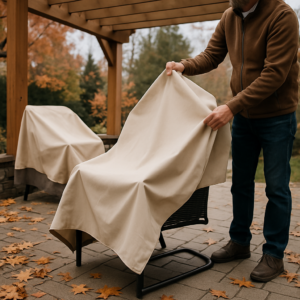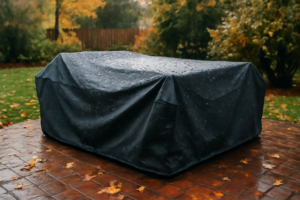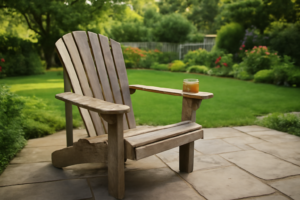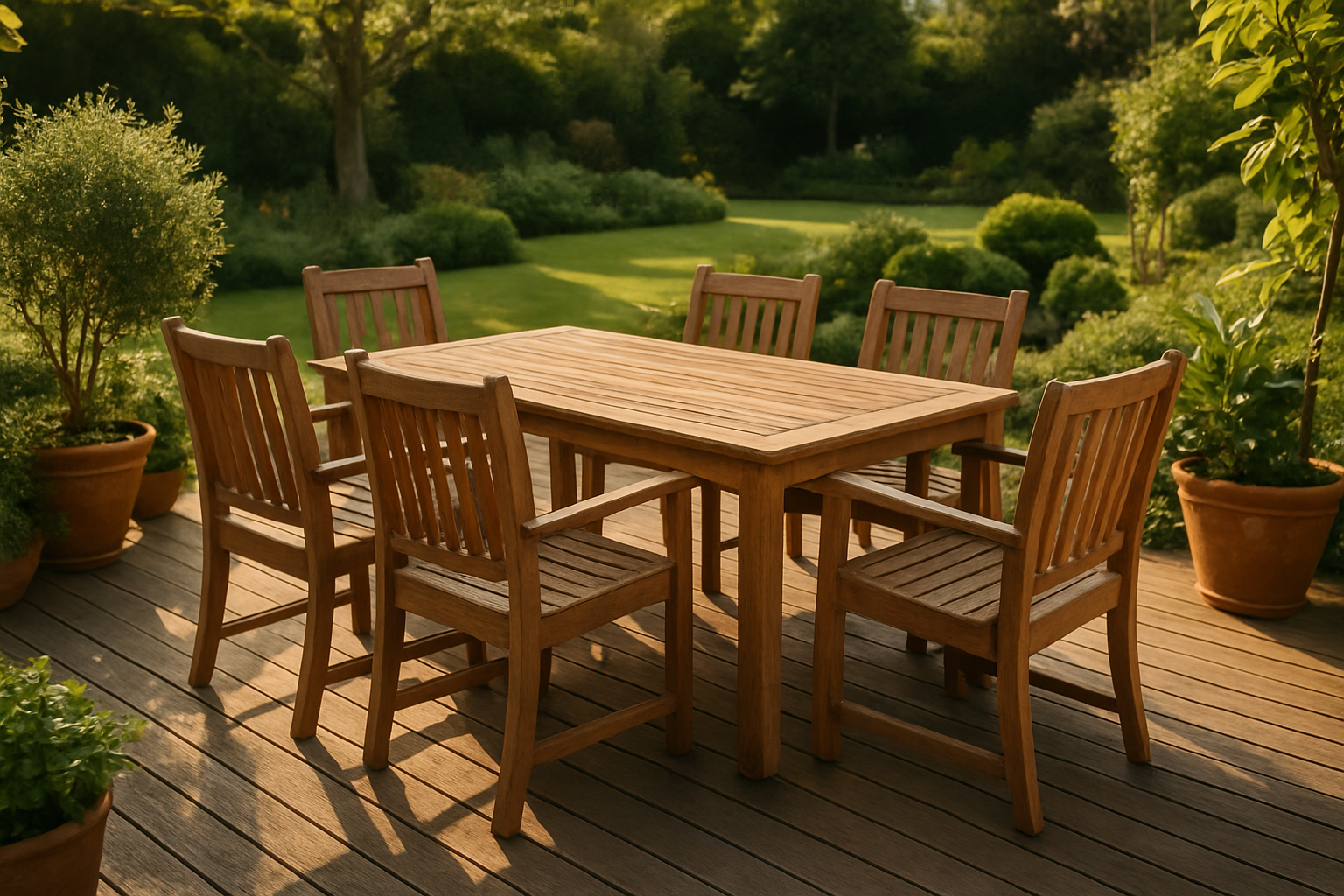
I went through a lot of outdoor furniture before I understood this, and the gap between what I budgeted and what quality furniture actually costs was almost never smaller than 40%. Not because I was being overcharged — because I kept underestimating what durability actually requires. What I also learned, the expensive way, was that I kept saving money on the wrong things — cutting corners on materials that sit outside in the sun and rain 365 days a year, then replacing them two seasons later wondering why everything looked like it belonged at a garage sale. Outdoor furniture is where I made that mistake most, and teak specifically is where the math flipped for me — where spending more upfront turned out to be the cheaper decision over time. I’m not selling anything here; I’m telling you what I watched play out in my own backyard, season after season.
Let me back up a little. My wife and I had just finished landscaping our backyard, and we were so proud of the space. We’d spent months planning it — new pavers, string lights, raised garden beds along the fence. All we needed was furniture to pull it together. I was trying to be responsible with money, so I grabbed two sets of budget patio chairs and a table from a big box store. They looked great in the photos. They looked even better when I set them up. And then summer ended.
When “Budget-Friendly” Becomes the Most Expensive Choice
The following spring, I walked outside and genuinely felt my stomach drop. The chair frames had rusted through at the joints. The table had warped so badly it rocked on flat ground. The powder coating was peeling in long strips. My wife thought we could salvage them with some spray paint and a prayer. We tried. We really did. By June, they were on the curb.
What made it worse? I had a family birthday party coming up. Twelve people, no outdoor seating, and a beautifully landscaped backyard that suddenly looked like the furniture section of a yard sale — if that yard sale only had a trash pile. I was embarrassed and frustrated, and honestly, I felt foolish. I’d been so focused on saving money upfront that I’d never thought about what the furniture would look like in year two.
That’s when my neighbor Karen walked over, coffee in hand, and said something I still think about: “I bought teak ten years ago and I’ve done nothing but oil it once a season. Still looks brand new.” I told her I couldn’t justify spending that much. She laughed and said, “You just spent $400 in two years. My teak was $600 and I’ll probably pass it down to my kids.” She had a point I couldn’t argue with.
Is Teak Patio Furniture Worth It? Here’s What I Found Out
I did a deep dive. Teak is a hardwood native to Southeast Asia and it’s genuinely different from most outdoor materials. It contains natural oils and a tight grain structure that make it highly resistant to moisture, warping, cracking, and even insects. When left untreated, it weathers to a beautiful silver-gray patina. When maintained with a good oil, it stays that warm golden-brown color for decades. That’s not marketing — that’s just the science of the wood.
Here’s what really changed my thinking: the cost-per-year math. If a cheap set lasts two seasons before it falls apart, and a quality wood set lasts fifteen or twenty years, the “expensive” option is often cheaper in the long run. Not to mention the environmental cost of sending furniture to the landfill every couple of years. That math hit hard.
But I also learned that you don’t have to go full premium teak to get real, lasting value. Acacia wood furniture with a teak finish is an excellent alternative — it’s durable, beautiful, and significantly more affordable while still giving you that natural hardwood quality that holds up through seasons.
My Recommended Products for Long-Lasting Outdoor Dining
After all my research — and a few more conversations with Karen — here’s what I actually recommend, whether you’re starting fresh or replacing a set that didn’t survive its second birthday like mine didn’t.
The Dining Set That Made Me Stop Replacing Furniture Every Other Summer
When you’re pouring money into a sealed driveway that’ll last 5-7 years, it makes no sense to surround it with patio furniture that falls apart in two. I learned this the hard way after watching homeowners buy cheap outdoor sets, then watch the wood crack, fade, and splinter before the sealer on their new concrete even needed its first touch-up.
What works
- Acacia wood holds up to UV and moisture without the constant re-oiling that teak demands — you actually get to enjoy your patio instead of maintaining it like it’s a second job.
- The five-piece scale is practical for the driveway surround space most homeowners are working with — big enough to matter, small enough not to crowd a freshly sealed surface.
- This set won’t absorb water the way budget furniture does, so you’re not dealing with rot spreading under the finish by year three.
What doesn’t
- Assembly takes longer than you’d think if you’re working solo — I blocked out a full afternoon and still had to adjust joints before it felt solid.
- It’s heavier than particle-board sets, so moving it for deep cleaning or driveway maintenance isn’t a one-person job once it’s weathered in.
I almost passed on this set because the initial price felt wrong compared to the flat-pack options at the big box stores — until I did the math on replacement cycles and realized I’d be buying three cheap sets in the time this one lasted. Check out the Flamaker Patio Dining Set for 4 Outdoor Acacia Wood Table and Chairs, Gray and see if it fits your outdoor footprint.
About This Article

Written by Marcus Delvecchio. Marcus Delvecchio isn't a licensed contractor — he's a handyman and DIY outdoor landscaper who got obsessed with driveways, patios and pavers after redoing his own place badly enough to want to understand why. Twenty years later he spends his weekends on his own projects and on side jobs for neighbours and friends around the mid-Atlantic, and writes up what actually worked, mistakes included. More about this site.
Scope and limits. Marcus is a homeowner who got obsessive about driveways, not a licensed contractor. Structural repair, drainage changes, and anything requiring a permit should go to a licensed contractor.
Verify this against a primary source
Specifics change, and your situation may differ from the one described here. These are the authorities worth checking directly:
- Concrete Masonry & Hardscapes Association — segmental paver installation standards
- National Asphalt Pavement Association — asphalt placement and maintenance guidance
- Portland Cement Association — concrete durability and jointing