This post contains affiliate links. As an Amazon Associate, I earn from qualifying purchases.
Every landscaping client comes in with a vision that’s half Pinterest board and half vague feeling. My job in the first consultation is to translate that feeling into something that works with the soil, the slope, the sun exposure, and the budget — usually in that order, because nature doesn’t care about Pinterest. What surprises most homeowners is how often the weakest link in an otherwise well-designed outdoor space isn’t the planting scheme or the lighting — it’s the pavers they laid five years ago that nobody ever sealed properly. Paver maintenance, and driveway sealing in particular, is one of those things that looks simple from the outside but has a short list of non-negotiable steps that separate a result that lasts a decade from one that peels by spring. So when I walk you through what actually works here, it’s coming from years of specifying, installing, and yes — fixing other people’s mistakes on jobs where the pavers were the last thing anyone thought about until they became the only thing anyone could look at.
How I Ended Up Covered in Sealer (And Why It Was Worth It)
It started so well. I showed up at Dave’s house on a Saturday morning with borrowed equipment, a confident stride, and a large coffee. I had the pressure washer running in under ten minutes. I was basically a professional. Then I turned the nozzle the wrong way, caught the rebound spray directly in the face, and stumbled backward into a potted rosemary bush. Dave, standing at his front door with a second cup of coffee, watched the whole thing without saying a single word. Just nodded slowly, like he had expected this outcome all along.
After cleaning up — myself and the rosemary — we actually got to work. And this is where things got genuinely interesting, because once I stopped fooling around, the process was surprisingly simple and the results were honestly stunning.
What Paver Driveway Sealing Actually Involves (Step by Step)
Here is the honest truth: paver driveway sealing is one of those home improvement tasks that looks harder than it is. Once you understand the steps, it is totally approachable for a weekend DIYer — even one who has already embarrassed himself in front of a rosemary bush.
Step 1: Clean the Driveway Thoroughly
This is the step that makes or breaks the whole job. You cannot seal over dirt, oil, or grime and expect good results. We pressure washed the entire driveway, working in overlapping passes and paying extra attention to stained areas near the garage. For any stubborn oil spots, a degreaser applied beforehand does wonders. Once you finish washing, you absolutely must let the pavers dry completely — and I mean completely. We waited a full 24 hours before applying any sealer. Rushing this part is the most common mistake people make.
Step 2: Check Your Pavers and Pick the Right Sealer
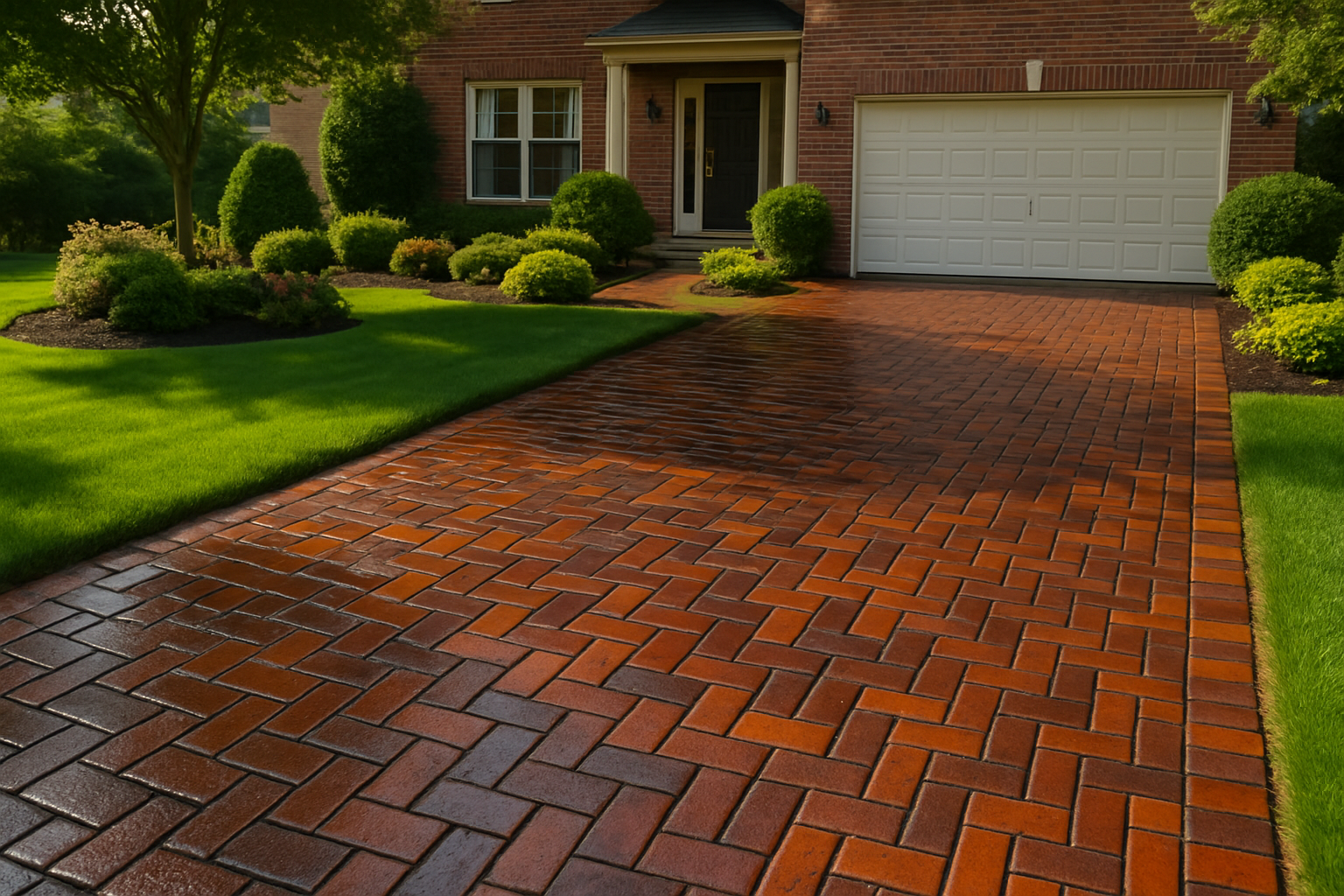
Not all sealers are the same, and your choice depends on the look you want. There are two main categories: penetrating sealers, which soak into the surface and protect from within while leaving a natural matte appearance, and topical sealers, which sit on top and can give you anything from a subtle sheen to a dramatic high-gloss wet look. Dave wanted his pavers to look rich and vibrant — the kind of color pop that makes the whole front of a house look freshly renovated. That meant going with an enhancing sealer.
Step 3: Apply the Sealer Evenly
We used a pump sprayer for the first pass and a roller for areas that needed a little more coverage. Work in small sections, maintain a wet edge so you do not get lap marks, and avoid applying too thick a coat. Thin, even coats cure better and last longer. Two coats is usually the sweet spot — one to penetrate and establish, one to build protection. Allow proper dry time between coats according to your product’s instructions.
My Recommended Products for Paver Driveway Sealing
Here is what I actually used and what I would recommend depending on your goals. Every driveway is a little different, so I have included options for the wet-look crowd and the natural-finish crowd.
For a Stunning High-Gloss Wet Look
This is what we used on Dave’s driveway, and it is the reason his pavers looked like they came straight from a magazine. The Shabebe Premium Stone Sealer (1 Gallon) delivers a max gloss wet look finish that is also waterproof and UV resistant. It enhanced the color of his concrete pavers dramatically — we are talking a complete transformation. The earthy reds and tans in the stone practically glowed. It goes on smoothly and the long-lasting formula means Dave should be good for several years before needing to reapply.
For a Deep Color Boost Without the High Gloss
If you want to bring out the natural beauty of your pavers without a shiny surface, a color enhancing sealer is the way to go. The Color Enhancer Sealer for Natural Stone and Pavers (1 Gallon) works beautifully on all types of natural stone and pavers — marble, travertine, granite, slate, brick, and more. It deepens the color and gives a rich, natural appearance without looking plastic or over-coated. If you have a smaller area or just want to try before committing to a gallon, the same product is available in a 1-Quart size as well.
For a Clean, Invisible Protective Finish
Some people just want protection without changing the look of their pavers at all — totally valid. The Concrete Sealer Clear Penetrating Waterproofing Spray is a fantastic choice here. It soaks deep into the surface to waterproof from within while leaving a completely natural appearance. Durable, easy to apply, and great for driveways, patios, brick, and stone surfaces. For a quick spot-treatment option or smaller paver areas, I also like the Rainguard Water Sealers Paver Sealer Spray, which uses a silane/siloxane formula to repel oil, moisture, stains, and sap. It is ready to use right out of the bottle, which makes it incredibly convenient.
- Want glossy wet look? Go with the Shabebe Premium Stone Sealer.
- Want rich color, natural finish? Try the Color Enhancer Sealer in the gallon or quart size.
- Want invisible protection only? The Clear Penetrating Waterproofing Spray or Rainguard Spray are your best bets.