This post contains affiliate links. As an Amazon Associate, I earn from qualifying purchases at no extra cost to you.
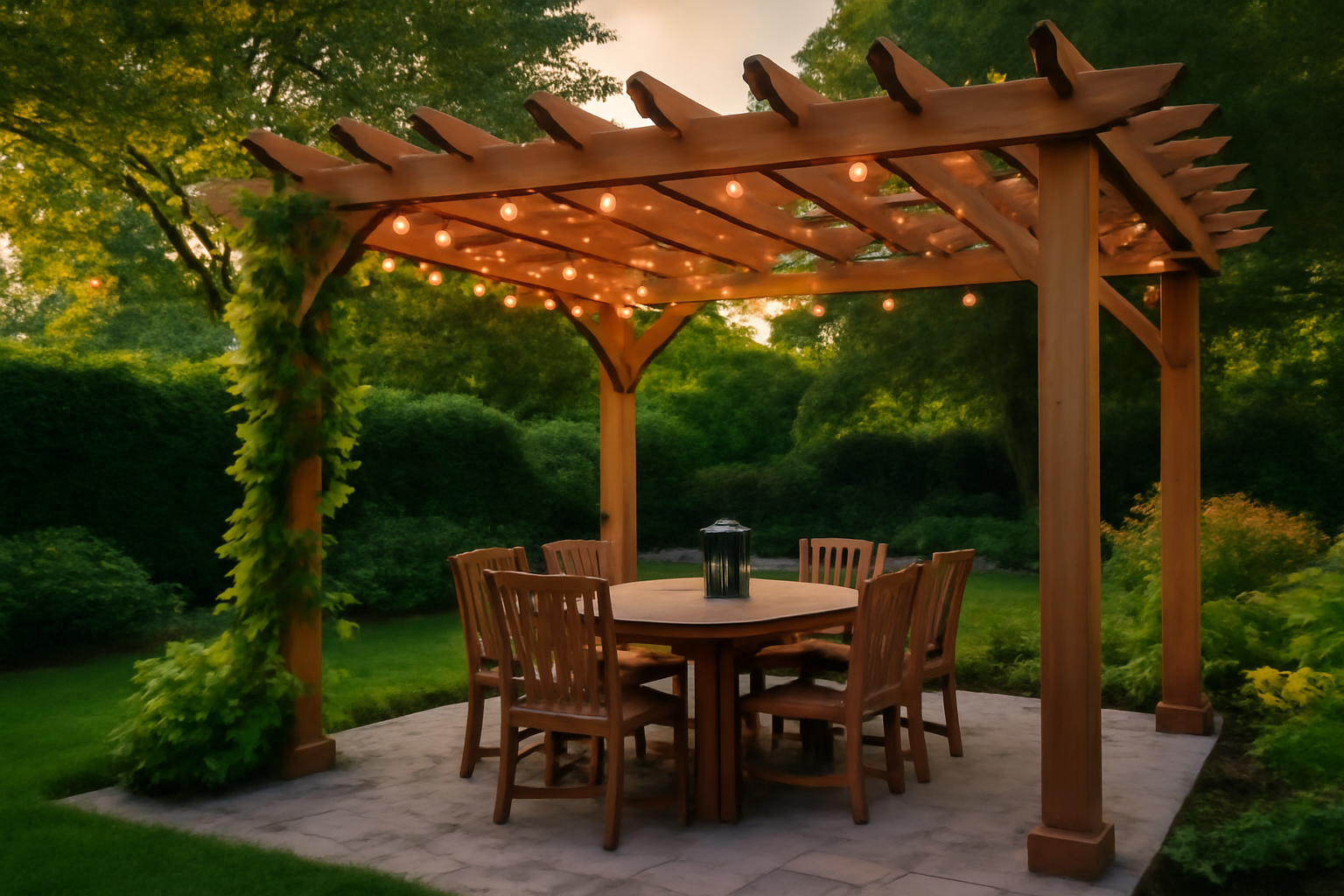
There’s a moment when your backyard stops feeling like a yard and starts feeling like an actual outdoor room. For me, that moment came the day we finished building our pergola. Nothing else I’ve added to this property — not the stone pavers, not the raised garden beds, not even the fire pit — changed the way we use our outdoor space quite like that structure did. A pergola defines a zone. It creates a ceiling without closing you in, frames a view without blocking it, and gives your backyard a sense of intention that open space just doesn’t have. Whether you’re sketching out pergola ideas for the first time or you’ve been circling this project for a couple of seasons, this guide walks you through every decision you’ll face — style, materials, budget, and how to make the thing actually work for your life.
Pergola Styles and Which Suits Your Space
Before you buy a single board or browse a single kit, get clear on what style fits your home’s architecture. A pergola that clashes with your house looks like an afterthought, and the whole point is to make your backyard feel cohesive and intentional.
Traditional
Traditional pergolas feature thick, heavy posts — usually 6×6 or larger — decorative rafter tails, and ornate beam detailing. They’re built for homes with classic architectural character: Craftsman bungalows, colonial-style houses, brick Tudors. The visual weight of a traditional pergola reads as permanent and substantial, which is exactly what those homes need. If your home has crown molding, detailed trim, and shutters, a traditional pergola fits right in.
Modern and Minimalist
Clean lines, thin profiles, and a flat or slatted roof define the modern pergola. No decorative cuts on the rafter ends, no turned posts — just geometry. These work beautifully on contemporary homes, mid-century builds, and anything with a flat or low-slope roofline. If your backyard already features concrete, steel, or large-format pavers, a minimalist pergola will tie the whole space together without visual noise.
Rustic
Rough-hewn timber, live-edge boards, and natural wood with visible grain and texture — that’s the rustic pergola. It belongs in farmhouse settings, cottage gardens, and wooded backyards where the goal is organic warmth rather than polish. Rustic pergola ideas lean heavily on climbing plants, Edison-style string lights, and weathered finishes. This is the style that looks better as it ages.
Attached vs. Freestanding
An attached pergola connects directly to your house, usually anchoring to a ledger board on the exterior wall. It extends your indoor-outdoor flow naturally and can double as a covered transition from a sliding door to the yard. The tradeoff is that it requires more careful flashing and waterproofing where it meets the house. A freestanding backyard pergola, on the other hand, can go anywhere — over a patio, in the middle of the lawn, or at the far end of the garden as a destination point. Freestanding structures are easier to install and don’t carry the risk of water intrusion at the house connection. For most DIYers, freestanding is the simpler and safer starting point.
Pergola Materials Compared
Material choice affects how your pergola looks, how long it lasts, and how much time you spend maintaining it. Here’s an honest breakdown of every major option.
Cedar
Cedar is my personal favorite for traditional and rustic pergola builds. It’s naturally rot-resistant, it smells incredible when freshly cut, and the warm reddish-brown tone is hard to beat. It sits in the moderate price range — more than pressure-treated pine, less than aluminum or fiberglass. The maintenance reality is that cedar needs periodic staining or sealing every two to three years to keep its color and prevent graying. Skip that step and it’ll still last — it’ll just turn a silver-gray that some people actually love.
If you want a cedar pergola without the complexity of a custom build, the Backyard Discovery Beaumont 12′ x 10′ Traditional Cedar Wood Pergola Kit with Trellis Roof is worth a serious look. I’ve recommended this one to several neighbors because it uses real cedar — not a wood composite or vinyl pretending to be wood — and comes with a high-wind rating that matters if you live somewhere with real weather. The built-in PowerPort for running electrical is a feature I wish every kit included from the start. It fits a standard patio or deck footprint and goes together in a weekend with two people and basic tools.
If your space runs larger, the Backyard Discovery Beaumont 16′ x 12′ Traditional Cedar Wood Pergola Kit with Trellis Roof scales up the same design with the same all-season durability and PowerPort feature. This is the version I’d go with for a dining area that needs to seat eight or more, or for a backyard pergola meant to anchor a large entertaining zone. The extra square footage changes the feel entirely — it stops being a shade structure and starts being an outdoor room.
Pressure-Treated Pine
Pressure-treated pine is the budget-friendly workhorse. It’s the cheapest structural lumber you’ll find at any home center, it resists rot and insects thanks to its chemical treatment, and with paint or solid-color stain it can look clean and intentional. Expect 15 or more years of service life with basic upkeep. The downside is that fresh pressure-treated wood is greenish and wet — you’ll need to let it dry out before applying any finish, usually six months to a year.
Vinyl
Vinyl pergola kits are genuinely maintenance-free. No staining, no sealing, no painting — ever. That’s a real benefit if you want to set it and forget it. The limitations are style-related: vinyl comes in a narrow range of profiles and colors, and up close it can look plasticky in a way that natural wood doesn’t. It works better from a distance than it does on close inspection. For a low-maintenance backyard pergola in a traditional neighborhood, vinyl is a defensible choice.
Aluminum
Powder-coated aluminum is the material of choice for modern and minimalist pergola designs. It’s genuinely zero maintenance, it won’t rot or warp, and the thin-profile extrusions give it a crisp, architectural look that wood can’t always achieve. The price reflects that premium — aluminum pergolas typically cost more than comparable wood builds. But if you’re going for a long-term investment with no upkeep, the math can work out in your favor over time.
Fiberglass
Fiberglass sits at the top of the material hierarchy. It looks like painted wood, it won’t fade or peel, it handles heat and cold without expanding or contracting the way wood does, and manufacturers typically back it with lifetime warranties. It’s the most expensive option by a significant margin, but for a forever structure it’s hard to argue against.
How Much Does a Pergola Cost?
Budget is where a lot of pergola ideas either move forward or get shelved. Here’s what you’re actually looking at.
- DIY kit pergola: $1,000–$3,000 for materials and the kit itself, plus your time
- Custom-built pergola: $3,000–$10,000+ depending on size, material, and contractor rates in your area
- Fully equipped custom build with lighting, canopy, and fans: Can push well past $15,000
The kit route gives you a real structure at a fraction of custom pricing. What you get is pre-cut and pre-drilled lumber, hardware, and step-by-step instructions. What to watch for: some kits use undersized lumber that looks thin in real life, and assembly instructions vary wildly in quality. Stick with brands that show finished dimensions clearly and have verified customer reviews from real installations — not just product photos.
Making Your Pergola More Functional
A bare pergola frame is just a starting point. The additions you layer on top are what turn it into a space you actually live in.
Retractable Canopy for Rain and Sun Protection
A pergola by itself filters light — it doesn’t block it. If you want real shade or rain protection, a canopy cover is the most practical upgrade. After testing several options, the Universal Canopy Cover Replacement for 17×6.8 Ft Outdoor Pergola Structure is one I keep coming back to for larger pergola footprints. It’s waterproof, the khaki color reads as neutral against almost any exterior palette, and because it’s designed as a universal fit, it works across a range of pergola brands and configurations — not just one specific model. When the original canopy on a pergola starts to fade or tear, this is the replacement I’d reach for first.
For those working with a more standard 10×10 footprint, the Pergola Canopy Replacement Cover for Lowe’s Allen + Roth 10×10 Ft Freestanding Pergola is a precise fit for that specific model and a smart buy if your original cover has worn out. The 200″ x 103″ dimensions are purpose-built for this structure, which means no trimming, no improvising, and no gaps at the edges. I’ve seen too many people try to make a generic cover work on a specific frame and end up with something that looks sloppy — a model-matched replacement like this solves that problem entirely.
Climbing Plants
Wisteria, grapevine, and jasmine are the classics for a reason. They soften the structure, provide natural shade as they fill in, and add fragrance that no outdoor accessory can replicate. Wisteria is aggressive — give it a few seasons and it will cover every beam. Grapevine is more manageable and gives you edible fruit as a bonus. Jasmine is the right call if you want fragrance without the weight of a heavy vine.
Lighting, Fans, and Curtains
String lights strung across the rafters are the fastest way to make a pergola feel finished after dark. Go with warm white — anything cooler reads as clinical in an outdoor setting. An outdoor ceiling fan mounted to a center beam handles heat on still summer days and keeps bugs moving. Outdoor curtain panels hung from the posts on curtain rods add privacy, filter afternoon glare, and make the space feel enclosed when you want it to. Pull them back during the day, draw them at dusk.
Outdoor Speakers and Lighting Integration
If your pergola kit includes a PowerPort — as both Backyard Discovery Beaumont models do — you’re already set up to run power to the structure cleanly. Use that access point for a dedicated outdoor speaker system, recessed LED lighting in the rafters, or a hardwired fan. Planning your electrical before the structure goes up is dramatically easier than retrofitting it afterward.
Final Thoughts
Of all the pergola ideas I’ve looked at over the years, the ones that work best share a common thread: they were planned with the space in mind, not bolted on as an afterthought. Pick a style that matches your home’s architecture, choose a material that fits your maintenance tolerance and budget, and then invest in the accessories that make it usable year-round. Whether you go with a weekend DIY kit or a fully custom build, a pergola is one of those projects where the finished result will genuinely change how you spend time outside. Start with what you can afford, build it well, and you’ll be sitting under it wondering why you waited so long.