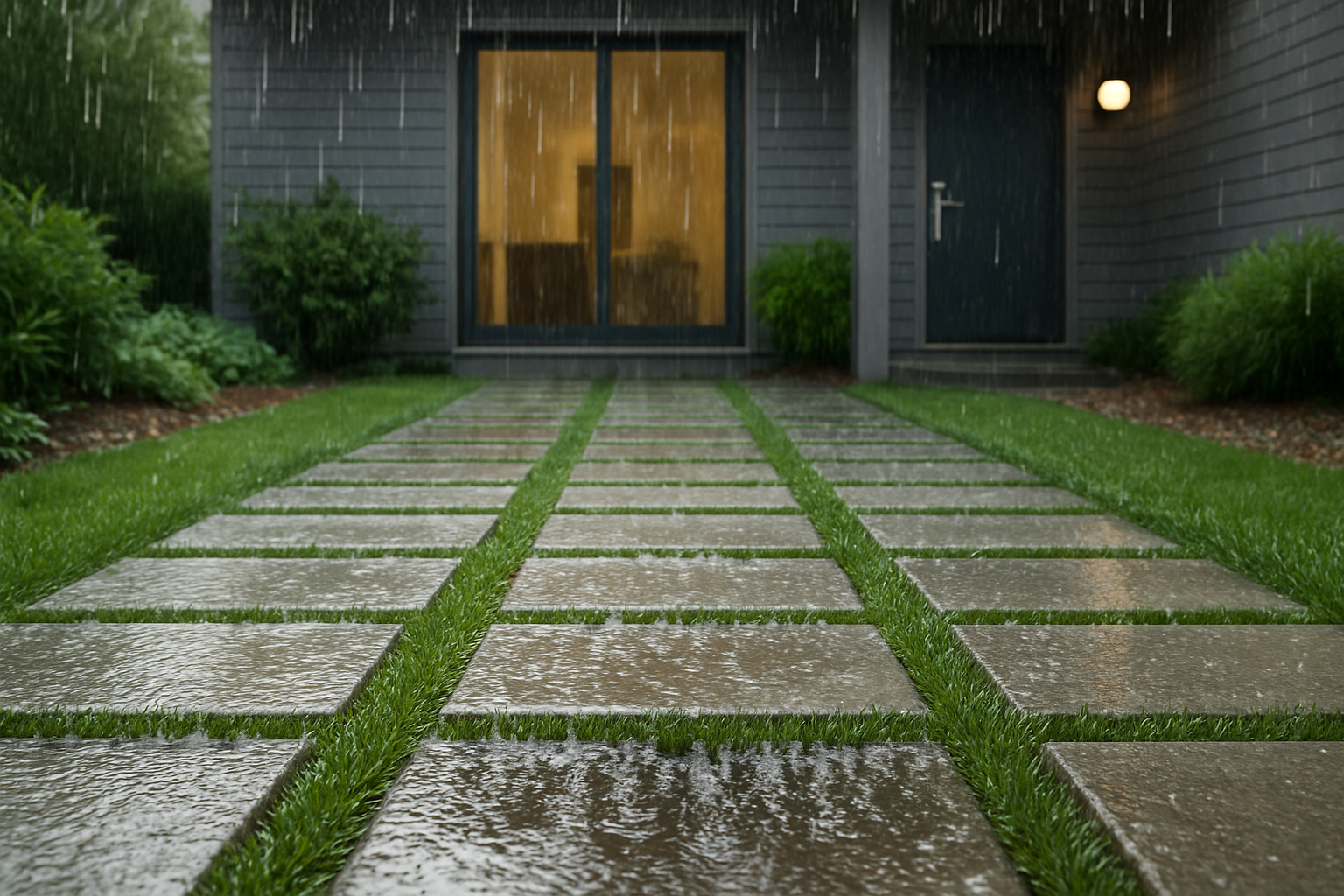
Landscape lighting is one of those installs that looks simple from the outside and gets complicated fast. Voltage drop, junction placement, fixture spacing — most homeowners who go the DIY route end up with a system that works fine for six months and then starts failing one light at a time. I’ve rewired more amateur low-voltage setups than I can count. The same thing happens with drainage and hardscape: people patch the symptom, not the problem, and that’s exactly what I see when a client calls me after years of fighting a waterlogged yard with trenches, French drains, and bags of pea gravel that never quite did the job. Permeable pavers are one of those solutions that, when installed correctly from the start, handle the drainage issue at the surface level — and after putting them in for dozens of clients, I can tell you what actually works and what’s just good marketing.
This post contains affiliate links. As an Amazon Associate, I earn from qualifying purchases.
I want to share everything I learned — from the panic of that flooded basement to the surprisingly satisfying DIY weekend project that fixed it all. If you’re dealing with drainage nightmares, stick with me. There’s a happy ending here, and it might just inspire your own backyard transformation.
When the Water Has Nowhere to Go
My backyard sits on a slight slope that funnels rainwater directly toward the house. For years I ignored it, figuring the lawn would absorb what it needed to. But after we extended our garden path with plain concrete stepping stones a few years back, we accidentally made things worse. Concrete is impervious — water can’t pass through it — so instead of soaking in, rain sheeted right off those stones and pooled against the foundation.
The $800 repair bill was a wake-up call. My neighbor, who happens to be a landscape contractor, came over to take a look and didn’t mince words: “You’ve got an impervious surface problem. You need to let the water breathe.” He mentioned permeable pavers, and I went down a rabbit hole that weekend. What I found genuinely surprised me — permeable paving systems aren’t just for municipal parking lots or fancy commercial properties. They’re totally DIY-friendly, affordable, and they work remarkably well.
What Are Permeable Pavers and How Do They Actually Work?
Permeable pavers are interlocking grid systems — usually made from recycled plastic — that allow water to pass through them and into the ground below rather than running off the surface. The open-cell or honeycomb structure holds gravel, crushed stone, or even grass in place, while rainwater filters down naturally. This mimics how undisturbed soil behaves before we cover it with concrete and asphalt.
The benefits go beyond just drainage. Permeable pavers:
- Reduce stormwater runoff and erosion
- Recharge groundwater naturally
- Stay cooler than concrete or asphalt surfaces in summer heat
- Are often eligible for municipal green infrastructure rebates
- Install without heavy equipment or professional help
- Are made largely from recycled materials, making them an eco-conscious choice
Before you install any permeable system, you’ll want to do a basic percolation test on your soil. Dig a hole about 12 inches deep, fill it with water, and see how long it takes to drain. If it drains within a couple of hours, you’ve got good percolation and permeable pavers will work beautifully. If your soil drains very slowly (clay-heavy soil is the usual culprit), you may need to amend the subbase with additional gravel to help water move through.
My Recommended Permeable Pavers Drainage Solution Products
After a lot of research and hands-on testing in my own backyard, here are the products I’d confidently recommend. There’s something here for every budget and project size.
Best Overall for Garden Paths: PebbleLock Interlocking Permeable Paver Grid
This is the system I actually used along my garden walkway, and I’m so glad I did. The PebbleLock Interlocking Permeable Paver Grid comes in a 12-pack covering 64 square feet, which was just about perfect for my path project. The heavy-duty recycled plastic panels lock together easily — no special tools required — and the interlocking design keeps everything stable underfoot. I filled mine with pea gravel for a clean, natural look that blends right into the garden. Installation took one Saturday afternoon. Genuinely one of my favorite outdoor upgrades in years.
Best for High-Traffic Areas: Vodaland Permeable HexPave System
If your drainage problem is in a high-traffic zone — a side yard people actually walk through constantly, or a parking pad — look at the Vodaland Permeable HexPave System. Made from 100% recycled PPE plastic and rated to handle an impressive 27,000 pounds, this is a serious system. The hexagonal design is also genuinely attractive — it looks more intentional than a basic grid. Each pack covers 65 square feet, and the units snap together intuitively. Works beautifully with either grass or gravel fill.
Best Heavy-Duty Option: TRUEGRID PRO LITE Permeable Pavers
For those dealing with serious load requirements — RV pads, shed bases, or vehicle parking — the TRUEGRID PRO LITE Permeable Pavers are in a league of their own. With a 120,000-pound load class rating and 72 square feet of coverage per pack of 18, this system is engineered for demanding applications. It’s a favorite among DIYers who want contractor-grade performance without the contractor price tag. If you’re building a gravel driveway section or a heavy-use pad, this is your system.
Best Budget Pick: GOOFCXO Permeable Pavers
Don’t want to spend a lot to test the concept in a smaller area first? The GOOFCXO Permeable Pavers offer 22 square feet across 12 pieces at a price that makes experimenting risk-free. Made from heavy-duty PPE plastic, they work with grass or gravel and handle lawn paths, deck borders, and shed bases well. A solid entry point if you’re just getting started with permeable surfaces.
Best for Deeper Gravel Infill: Goldshire Permeable Pavers Gravel Grid
If you’re working with larger gravel or need a deeper cell for better drainage performance, check out the Goldshire Permeable