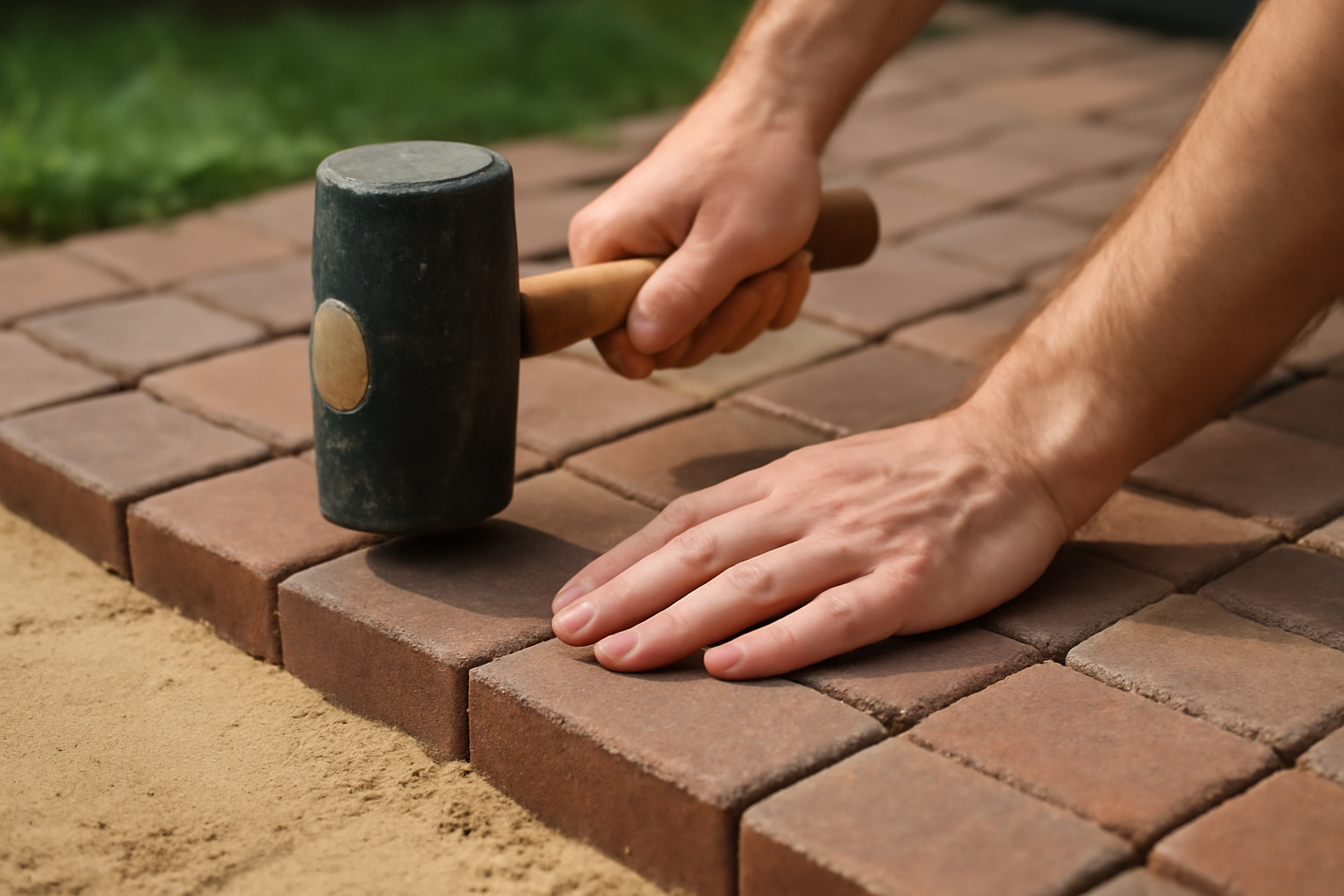
Last spring, I tackled a 320-square-foot patio extension behind my house. The project involved laying roughly 400 concrete pavers — each one needing to be seated firmly into a compacted sand base. I’d done rubber mallet paver installation dozens of times before. But this time, my old mallet finally gave up the ghost midway through day two. The head cracked clean off the wooden handle. Right there in the dirt, covered in sand, with two-thirds of the patio still unfinished.
That failure taught me something I should have learned years earlier: the tool you choose for seating pavers isn’t just about convenience. It’s about whether you’ll actually finish the job without frustration, hand fatigue, or costly delays ordering a replacement mid-project.
The Fiberglass Handle That Survived 400 Pavers Without Cracking
After my wooden-handle mallet snapped mid-project, I learned the hard way that not all mallets are built for the repetitive impact of seating pavers day after day. A quality rubber mallet with a reinforced handle isn’t just a luxury—it’s the difference between finishing your patio in a weekend and watching your tools fail when you’re halfway through.
Most DIYers don’t think much about their mallet selection. You grab whatever’s on the shelf at the big box store, use it for a few projects, and assume all rubber mallets perform the same. But seating hundreds of pavers into a sand base demands something different than casual light-duty work. Each paver needs firm, consistent strikes to settle properly into the base and align with its neighbors. That’s not a tap—it’s controlled, deliberate impact, repeated hundreds of times in succession.
Why Handle Material Actually Matters
The reason my first mallet failed wasn’t mysterious. Wooden handles, especially on budget mallets, are prone to splitting and cracking under sustained impact stress. The wood fibers compress and separate at the grain, and once that process starts, it accelerates. One crack becomes two, and suddenly the head is barely attached. Wood also absorbs moisture from sweat and humidity, which weakens it further.
A fiberglass handle operates on different physics. It flexes slightly to absorb shock rather than transmitting all that force directly into a rigid material that can splinter. The composite structure is uniform throughout—no grain direction to split along, no moisture absorption to weaken bonds. For paver work, this distinction isn’t academic. It’s the difference between a tool that fails mid-project and one that just keeps working.
What works
- Fiberglass handle absorbs shock without splintering or splitting after hundreds of strikes—I completed that final 200+ pavers without hesitation
- The 16oz head weight gives you just enough heft to seat pavers firmly into sand without requiring excessive swing force, saving your wrists on long work days
- Rubber head stays true and won’t chunk or deteriorate like older mallets, keeping your paver faces unmarked and your seating consistent
- The balance point sits closer to the head, which means less arm fatigue when you’re working repetitively for hours
What doesn’t
- At this price point, you’re investing more upfront than a cheap wooden-handle mallet, but you won’t replace it mid-project like I did
- The grip can get slippery when your hands are wet with sweat or sand dust—worth wrapping with athletic tape on hot days
- A 16oz head is lighter than some traditional stone mallets, so if you’re settling pavers into thicker or denser substrates, you may need to adjust your swing technique
Real-World Performance
I was skeptical that a $25 mallet would really outlast the cheap hardware-store version that failed me, but somewhere around paver 300, I realized I wasn’t babying my swing anymore—I was actually trusting the tool. No hesitation, no fear of the head coming loose. Just solid, predictable contact with each paver.
That shift in confidence matters more than you’d think on a long project. When you’re worried about your equipment failing, you work slower and more cautiously. When you trust your tools, you work more efficiently and with better form. Better form means fewer wrist and shoulder issues the next day.
LOZAGU 16oz Rubber Mallet Hammer, Fiberglass Handle is the one I keep reaching for now. It’s not the fanciest option out there, but for paver projects specifically—where you need consistent performance across hundreds of repetitions—it delivers without pretense.
About This Article

Written by Marcus Delvecchio. Marcus Delvecchio isn't a licensed contractor — he's a handyman and DIY outdoor landscaper who got obsessed with driveways, patios and pavers after redoing his own place badly enough to want to understand why. Twenty years later he spends his weekends on his own projects and on side jobs for neighbours and friends around the mid-Atlantic, and writes up what actually worked, mistakes included. More about this site.
Scope and limits. Marcus is a homeowner who got obsessive about driveways, not a licensed contractor. Structural repair, drainage changes, and anything requiring a permit should go to a licensed contractor.
Verify this against a primary source
Specifics change, and your situation may differ from the one described here. These are the authorities worth checking directly:
- Concrete Masonry & Hardscapes Association — segmental paver installation standards
- National Asphalt Pavement Association — asphalt placement and maintenance guidance
- Portland Cement Association — concrete durability and jointing