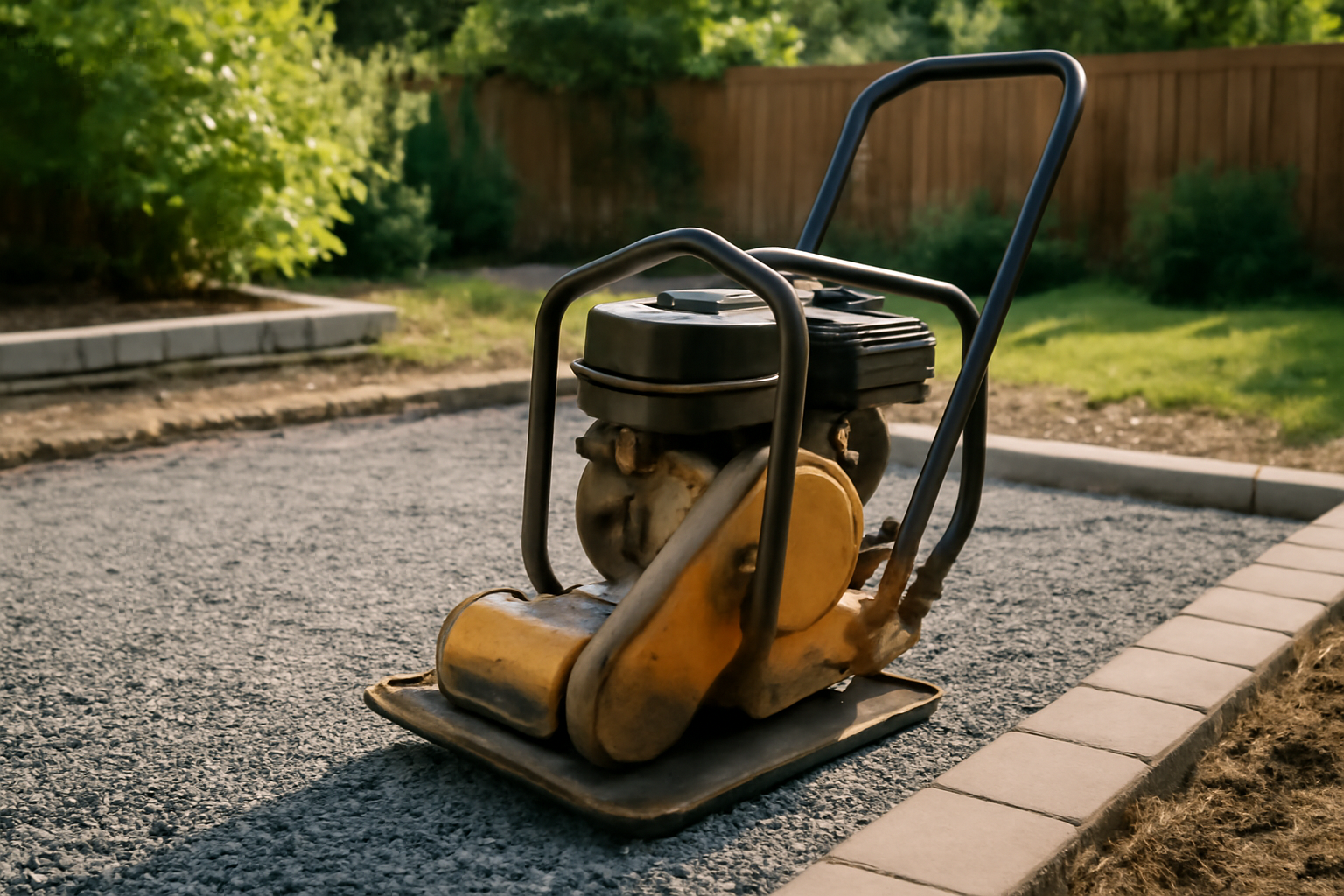
Last spring, I was 400 square feet into a paver patio installation and already exhausted. Getting a solid plate compactor paver base is the most critical step in any hardscape job. Do it wrong and your pavers shift, crack, and sink within a season. I’ve seen it happen to my own work years ago, and I swore I’d never cut corners on compaction again.
For years, I rented plate compactors from the local equipment yard. It seemed like the smart move — no storage headaches, no maintenance, no big upfront cost. Then I started crunching the numbers. Three rentals at $85 a pop adds up fast. More importantly, every rental machine I used scratched my pavers or chewed up my rubber pad mid-job.
The Real Cost of Renting vs. Owning
When you’re doing multiple hardscape projects a year, rental fees become a significant line item. I was spending $250–$350 annually just on compactor rentals, not counting fuel and travel time to the equipment yard. That doesn’t account for the frustration of showing up for a job only to find the compactor you reserved isn’t available, or arriving on site with a machine that’s in worse condition than the last one.
The bigger issue, though, wasn’t just money—it was consistency. Rental equipment gets cycled through dozens of contractors. Base plates get scarred, mounting hardware loosens, and rubber pads wear unevenly. You never know what condition you’re getting until you fire it up on the job. On a freshly-laid paver surface, an unstable compactor base will drift sideways, leaving low spots that become pooling areas or settlement problems down the line.
After my third damaged patio base and a customer call about shifting pavers six months after installation, I decided it was time to invest in my own equipment.
Choosing the Right Compactor to Own
I researched mid-range plate compactors that would handle residential and light commercial work without requiring a full construction trailer to haul. Size and weight matter—anything over 200 pounds becomes difficult to load, transport, and position on tight sites. I settled on a model that weighed around 180 pounds, had a 18-inch base plate, and came with decent warranty coverage.
The initial purchase price was roughly seven to eight rental cycles worth of cost, but the math changed immediately once I factored in longevity. A plate compactor, maintained properly, lasts 10+ years of regular use. That’s decades of jobs where you’re not at the mercy of rental fleet condition or availability.
The Base Plate Cover That Finally Stopped My Rental Compactor from Bouncing Off Pavers
After years of renting, I realized the rental fleet’s worn base plates were part of my compaction problems—they’d slip sideways on fresh pavers and leave uneven spots. A quality protective pad mount solved that in a way no rental unit ever did.
The protective pad was the game-changer I didn’t expect. Once I owned the compactor, I could add quality accessories that rental yards don’t bother with. The pad mounts securely to the base plate and protects it from direct contact with pavers, which means no scratching, no slippage, and no unpredictable drift during passes.
What Works
- Mounts securely to any standard compactor base, so you’re not fighting slippage or drift on fresh-laid pavers anymore
- Protects your investment’s base plate from the wear that makes rental units move unpredictably—your own equipment stays consistent job after job
- Clamps are quick to adjust, so you can swap it between different compactor sizes without wasting setup time on site
What Doesn’t
- Installation requires a steady hand with the clamps—misaligned mounting means the pad sits crooked and defeats the whole point
- It’s an extra part to store and maintain, which is still simpler than a full compactor, but it’s not a set-it-and-forget-it solution
Installation and Setup
The first time I mounted the protective pad, I made the mistake of rushing. I clamped it down in about three minutes, fired up the compactor, and immediately felt something wrong—the pad was sitting slightly off-center, and the machine was bouncing unevenly. I almost went back to renting after that moment.
Then I stepped back, loosened the clamps completely, and spent 10 minutes properly aligning the pad. The difference was night and day. Once seated flush against the base plate, the compactor operated smoothly with zero drift or chatter. That’s when I knew owning my own compactor—with proper protection—was worth the storage space.
Now I store the compactor in a corner of my garage with a tarp over it. Maintenance is minimal: I drain the fuel after every season, check the spark plug annually, and wipe down the base plate to prevent rust. It takes maybe 30 minutes of work a year, compared to the hourly drive time and scheduling hassles of renting.
The Verdict
Owning a plate compactor shifted my entire approach to hardscape projects. I work faster because I’m not fighting unfamiliar equipment. I deliver better results because my machine is consistent, well-maintained, and equipped with quality accessories. And I keep neighbors happy because their patios stay level and solid for years.
If you’re doing more than two or three compaction jobs per year, buying makes sense. Rent if you’re a one-off homeowner. But if this is part of your regular work, stop leaving your pavers’ fate to a worn-out rental fleet. Plate Compactor Tamper – Pad / Mat / base plate cover with mounting clamps
About This Article

Written by Marcus Delvecchio. Marcus Delvecchio isn't a licensed contractor — he's a handyman and DIY outdoor landscaper who got obsessed with driveways, patios and pavers after redoing his own place badly enough to want to understand why. Twenty years later he spends his weekends on his own projects and on side jobs for neighbours and friends around the mid-Atlantic, and writes up what actually worked, mistakes included. More about this site.
Scope and limits. Marcus is a homeowner who got obsessive about driveways, not a licensed contractor. Structural repair, drainage changes, and anything requiring a permit should go to a licensed contractor.
Verify this against a primary source
Specifics change, and your situation may differ from the one described here. These are the authorities worth checking directly:
- Concrete Masonry & Hardscapes Association — segmental paver installation standards
- National Asphalt Pavement Association — asphalt placement and maintenance guidance
- Portland Cement Association — concrete durability and jointing