Pergola vs Gazebo vs Pavilion vs Arbor: How to Choose the Right Structure

This post contains affiliate links. As an Amazon Associate I earn from qualifying purchases at no extra cost to you.

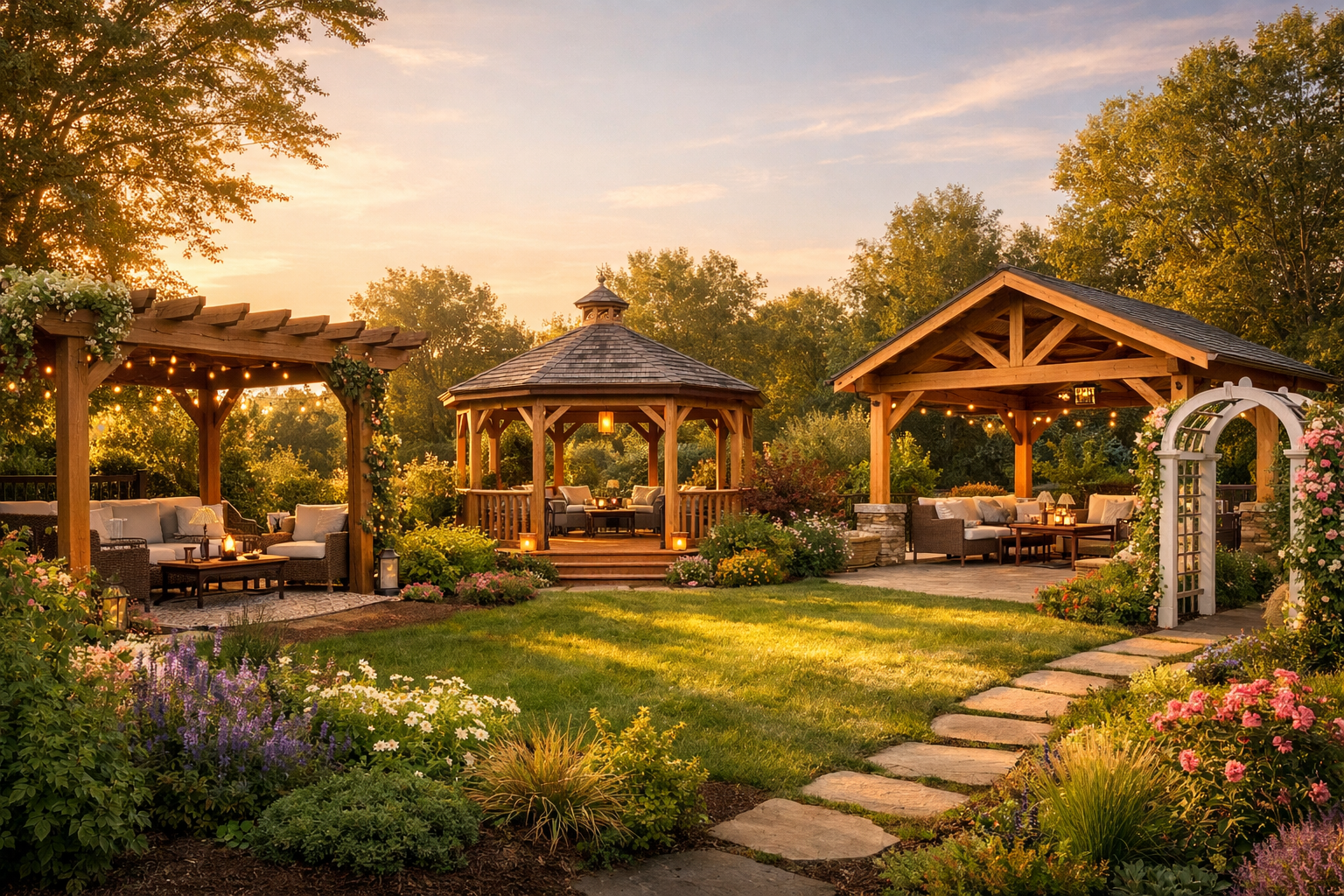
I’ve managed hundreds of outdoor living builds over the years, and the gap between what a homeowner budgets and what a project actually costs is almost never smaller than 40%. Not because contractors are gouging — because the scope always grows once you start pulling up what’s underneath. A big part of why that happens is that people come to me having already fallen in love with a structure they can’t fully define — they say “pergola” when they mean “gazebo,” or they price out an arbor thinking it’ll function like a pavilion, and by the time we sort out what they actually want, the whole project has shifted. Knowing the real difference between a pergola, gazebo, pavilion, and arbor before you talk to a contractor — or before you start shopping — will save you time, money, and a fair amount of frustration. What follows is a plain-language breakdown based on what I’ve actually built, not catalog copy.
Pergola vs Gazebo vs Pavilion vs Arbor: How to Choose the Right Structure — image 1

What Is a Pergola (And Why Everyone Gets It Wrong)

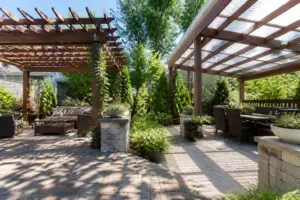
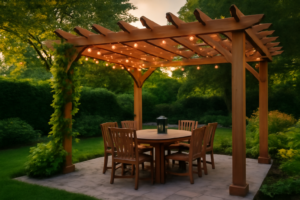
A pergola is an open-roofed structure supported by vertical posts or columns, with a series of crossbeams or rafters on top. That’s it. There’s no solid roof. There’s no enclosure. Just beams overhead that filter light, support climbing plants or shade fabric, and define a space without fully sheltering it. And yet somehow, “pergola” has become the catch-all term people use for every outdoor structure ever built.

Pergolas are genuinely one of the most versatile backyard additions you can make. They’re open enough to feel airy, but structured enough to feel intentional. They work beautifully over a patio, a deck, or even a garden path. One of my personal favorites that I’ve been eyeing is the BlueWish 10′ x 12′ Patio Pergola — it’s a cedar wood kit with a slatted trellis roof and a solid structure that looks far more expensive than it actually is. Perfect for over a grill space or a seating area.

If you want something with a little more design detail and durability, the Backyard Discovery Beaumont 12′ x 10′ Traditional Cedar Wood Pergola Kit is worth a serious look. It has a high-wind rating, a trellis roof, and even a PowerPort for outdoor electrical access — which is something I didn’t know I needed until I realized I kept running extension cords across my patio like some kind of hazard obstacle course.

For larger spaces, the MUPATER 12×24 FT Wooden Pergola is a standout option. All-cedar construction, comes with stakes, and it’s built to handle both snow and wind loads. If you have a long patio or a wide deck and you want serious coverage, this size is genuinely hard to beat.

Best for: anyone who wants a defined outdoor living area without full enclosure, loves the look of climbing plants or hanging lights, and isn’t primarily looking for rain protection.

Pergola vs Gazebo vs Pavilion vs Arbor: How to Choose the Right Structure — image 2

What Is a Gazebo (And When You Actually Need One)

Here’s where people get tripped up most often. A gazebo has a solid roof. That’s the single biggest functional difference. Where a pergola lets light and rain pass right through, a gazebo keeps you dry. Gazebos are typically freestanding, octagonal or rectangular structures with a hard roof — sometimes with open sides, sometimes with screens or curtains.

If you live somewhere that gets unpredictable weather, or you want an outdoor space you can actually use when it’s raining, a gazebo is the structure you’re really after. They tend to cost more than basic pergolas, but the shelter they provide makes them genuinely functional in a way that open-roofed structures simply aren’t.

The Aoxun 10×12 Gazebo Hardtop is one I’d point almost anyone toward. It has a double galvanized steel roof, breathable netting, and privacy curtains included — so you’re getting full weather protection plus bug resistance plus a bit of privacy, all in one package. The gray finish is clean and modern, and it sits beautifully on a patio or deck.

Now, there’s also a subcategory worth knowing about: the grill gazebo. This is a smaller, hardtop structure specifically designed to shelter your grill and grilling area. If you’re the kind of person who grills year-round (guilty) and you’ve been squinting through rain at your burger patties more times than you’d like to admit, a grill gazebo is a legitimate quality-of-life upgrade.

The DSNAPE 8′ x 6′ Grill Gazebo with Double Galvanized Steel Roof is a solid pick here — it has side shelves, a ceiling hook for tools, and a durable black finish that looks sharp against almost any outdoor setting. If you want something slightly more compact, the EBE 5’x8′ Hardtop Grill Gazebo is another great option with a built-in bottle opener (yes, really) and hooks for hanging your grill accessories.

Best for: people who want genuine weather protection, families who eat and entertain outdoors regularly, and grillers who refuse to let a little rain slow them down.

Pergola vs Gazebo vs Pavilion vs Arbor: How to Choose the Right Structure — image 3

What Is a Pavilion (And Is It Just a Fancy Pergola?)

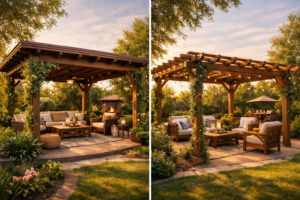
Sort of — but not really. A pavilion is essentially a larger, more permanent version of a gazebo. It has a solid roof, open sides, and typically a more substantial architectural presence. Think of it as the structure you’d build if you wanted an outdoor room that could hold a dining table for twelve people comfortably.

Pavilions tend to be rectangular (rather than the octagonal shape often associated with gazebos) and they’re frequently custom-built or constructed from heavy-duty kits. They’re built to last decades, not just seasons. The cost reflects that — a quality pavilion project often runs into the thousands, especially if you’re pouring a dedicated concrete pad and adding electrical.

Here’s the honest truth about pavilions: if your budget and your yard can accommodate one, they are arguably the most impressive and functional outdoor structure you can add to a property. They’re genuinely four-season in many climates with the right additions. But they’re not a weekend DIY project in most cases, and they’re absolutely not the right choice if you’re working with a smaller lot or a tight budget.

When would you choose a pavilion over a gazebo? When you’re entertaining larger groups regularly, when you want something architecturally significant, or when you’re specifically building an outdoor kitchen or dining room that needs permanent overhead cover. Think of a gazebo as your outdoor sitting room and a pavilion as your outdoor great room.

What Is an Arbor (It’s Simpler Than You Think)

An arbor is the smallest and most decorative of the four structures. It’s essentially an arch — a freestanding gateway structure that’s typically narrow enough to walk through. Arbors are often placed at garden entrances, along pathways, or as a focal point in a planting bed. They’re almost always intended to support climbing plants like roses, wisteria, clematis, or jasmine.

If a pergola defines a space, an arbor frames a moment. It’s the structure that makes you feel like you’re entering somewhere special. In garden design terms, it creates a threshold — a visual and physical transition from one area of the garden to another.

Arbors are also one of the most affordable structures on this list. A solid metal garden arbor can be installed in an afternoon, costs a fraction of any other structure here, and adds enormous charm to even a simple backyard.

The Metal Garden Arch Trellis at 55″ wide by 87″ tall is a lovely proportioned option — the enlarged base adds stability, and it works beautifully both as a garden feature and as a wedding or party decoration if you need dual purpose. If you want something more substantial, the Fecita Thickened Rustproof Garden Arch comes in two size configurations (up to nearly 8 feet tall) and has a thick, rust-resistant frame that will last through multiple seasons of climbing plant growth without bending or warping.

Best for: garden entranceways, pathway focal points, supporting climbing plants, or adding a romantic visual element to an outdoor space without a large investment.

Pergola vs Gazebo vs Pavilion vs Arbor: How to Choose the Right Structure — image 4

Pergola vs Gazebo vs Pavilion vs Arbor: Which One Should You Actually Buy?

Let me make this as simple as possible. Here’s a quick breakdown to help you land on the right decision for your backyard:

  • Choose a pergola if you want to define a large outdoor living area, love the look of open beam architecture, and aren’t primarily shopping for rain protection.
  • Choose a gazebo if you want a solid roof, weather protection, and a self-contained outdoor room — especially for entertaining or grilling in any weather.
  • Choose a pavilion if you’re building a long-term outdoor living space for a large family, you want something architecturally significant, and your budget supports it.
  • Choose an arbor if you want to add charm and structure to your garden pathways, support climbing plants, or create a beautiful garden entrance without spending a lot of money.

For most homeowners reading this, I’d honestly start with a pergola kit or a gazebo depending on your weather patterns. If you live somewhere dry and sunny, a pergola gives you shade and style without overbuilding. If you get regular rain and you want to actually use your outdoor space on unpredictable days, go gazebo. Either way, you’re making a genuine upgrade to how you live outside.

My personal pick for the best starting point? The BlueWish 10′ x 12′ Cedar Pergola Kit for pergola shoppers, and the Aoxun 10×12 Hardtop Gazebo for anyone who needs that solid roof. Both are well-priced, well-reviewed, and genuinely beautiful additions to a backyard.

Now stop second-guessing yourself and go build something. Your backyard has been waiting long enough.