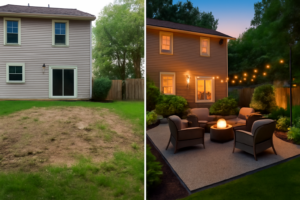
Last summer, I stood on my freshly sealed patio and realized it felt more like a staging ground than a place I actually wanted to spend time in—until I threw down a rug, hung some outdoor curtains, and suddenly my wife was asking if we could move dinner out there permanently. That transformation got me thinking about why textiles matter so much in outdoor spaces, and more importantly, why so many people get them wrong by choosing based on looks alone rather than how they’ll actually perform in their specific climate and conditions. Over the past couple of years, I’ve learned which fabrics, finishes, and placements survive the elements and which ones become expensive mistakes within a season, and I’m laying out exactly what I’ve discovered.
Why I Decided to Treat My Patio Like a Room (And Almost Lost My Mind)
It started, as most chaotic home improvement projects do, with a scroll through someone’s Instagram feed. There was this gorgeous patio — flowing curtains, a layered rug, plump throw pillows, string lights overhead — and it looked more comfortable than my actual living room. I had a perfectly fine patio that I almost never used because it felt like, well, just a slab of concrete with some furniture dumped on it. No warmth. No soul. No reason to linger.
So I made a plan. I was going to bring the inside out — textiles, layers, color, coziness. The whole thing. And honestly? Despite my curtain catastrophe and a throw pillow that blew directly into the neighbor’s yard on day two, the project turned out to be one of the most satisfying things I’ve ever done to my home. Here’s everything I learned along the way — including the parts where I had absolutely no idea what I was doing.
Start With Outdoor Curtains: They Change Everything (Measure First, I Am Begging You)
Curtains are the single fastest way to make an outdoor space feel like a real room. They define boundaries, add privacy, soften hard lines, and bring that unmistakable indoor-living energy to a patio or pergola. When they’re the right length. Which mine, initially, were not.
Here’s what I should have done from the start: measure the height from your curtain rod to the ground, then choose panels that land about half an inch above the surface — or intentionally one to two inches above if you want a cleaner, more tailored look. Puddles of fabric look romantic inside on hardwood floors. On a deck, they collect debris, get soaked in rain, and rot. Learn from me.
For most pergolas and covered patios, 84-inch panels hit the sweet spot. You’ll want curtains that are specifically rated for outdoor use — they need to handle UV exposure, moisture, and wind without fading or mildewing. I tested several and kept coming back to a few standouts.
The Curtains That Finally Made My Sealed Patio Feel Like a Room
A freshly sealed driveway and a clean patio are a great foundation, but without some softness overhead, the space still feels exposed and temporary. I realized that outdoor curtains do more than block sun and sight lines — they actually anchor a patio the way they do an interior room.
What works
- The panels hang straight and heavy enough to actually move in the wind without looking limp — I noticed the difference immediately against cheaper alternatives I’d tested first.
- They’re UV-resistant enough to hold color through a full season without fading into that washed-out gray that makes a patio look neglected, which matters when you’ve invested time in sealing everything else properly.
- Installation is straightforward enough that you can adjust height and tension as your patio settles or shifts — no need for a contractor or permanent mounting.
What doesn’t
- They need cleaning more often than you’d expect if you live near trees or have dust blowing off unsealed surfaces nearby — plan for a rinse-down every month or so.
- The rod hardware can rust if you’re not fastidious about keeping moisture off it, especially in humid climates or where water tends to splash from cleaning the patio itself.
I almost talked myself out of splurging on outdoor curtains, convinced they’d look fussy on a patio, but the moment I hung them I understood why clients kept asking about styling after the hardscape was done. RichSets Outdoor Curtains for Patio proved that the finishing layer matters as much as the foundation.
About This Article

Written by Marcus Delvecchio. Marcus Delvecchio isn't a licensed contractor — he's a handyman and DIY outdoor landscaper who got obsessed with driveways, patios and pavers after redoing his own place badly enough to want to understand why. Twenty years later he spends his weekends on his own projects and on side jobs for neighbours and friends around the mid-Atlantic, and writes up what actually worked, mistakes included. More about this site.
Scope and limits. Marcus is a homeowner who got obsessive about driveways, not a licensed contractor. Structural repair, drainage changes, and anything requiring a permit should go to a licensed contractor.
Verify this against a primary source
Specifics change, and your situation may differ from the one described here. These are the authorities worth checking directly:
- Concrete Masonry & Hardscapes Association — segmental paver installation standards
- National Asphalt Pavement Association — asphalt placement and maintenance guidance
- Portland Cement Association — concrete durability and jointing