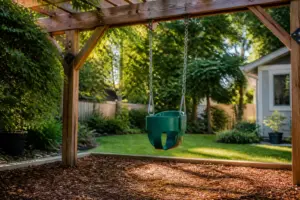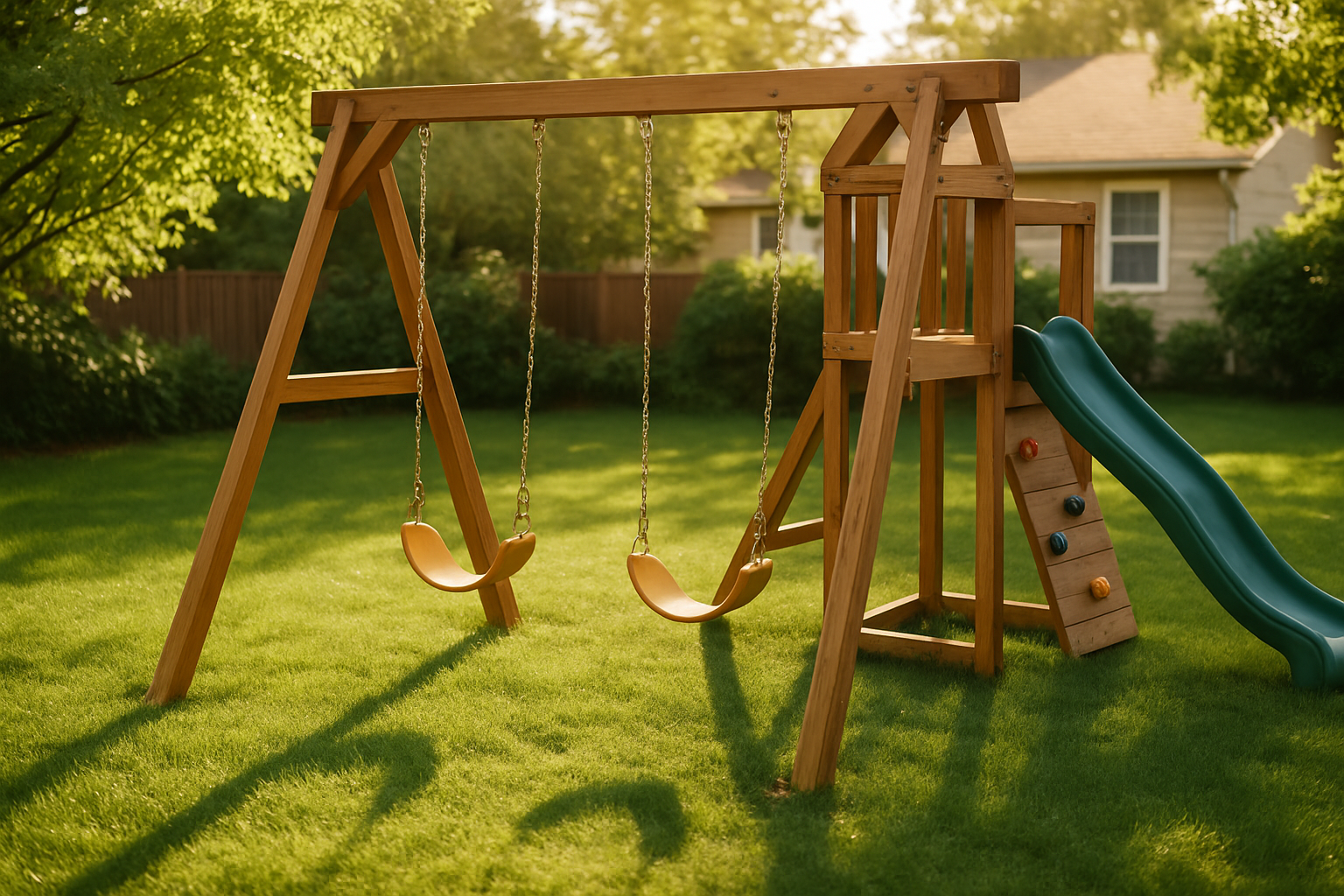
Every spring, I get the same wave of calls from neighbors who decided last summer that a swing set would be perfect for their kids—and now that the ground has thawed and someone’s actually put weight on it, they’re noticing the wobble. That’s when they find out I’m not just a deck builder; I’m also the person who has to explain why shortcuts on structural support turn a fun backyard fixture into a safety hazard faster than a six-year-old can say “higher.” This build came about the same way, except I got to design it from the ground up using contractor logic instead of weekend-warrior guesswork, and the result is something sturdy enough that the adults in my life won’t stop pestering me to let them test the swing bars.
If you’re thinking about building or installing a swing set in your backyard, I want to give you the real story — the good advice AND the embarrassing parts — because honestly, the mistakes taught me more than the wins did. Whether you’re starting from scratch with lumber or putting together a pre-designed kit, there’s a lot that goes into making something that’s actually safe, sturdy, and fun enough that adults will be sneaking onto it when they think no one’s watching.
Planning Your Backyard Swing Set Build (Learn From My Chaos)
Before a single board goes up, you need a plan. Not a “rough idea” plan. An actual plan. I learned this the hard way when I purchased more hardware than I needed, in the wrong sizes, from three different stores over two days because I kept thinking I could “wing it.” My wife now refers to that weekend as “the Hardware Pilgrimage.”
Start by measuring your yard carefully. You want at least six feet of clearance on every side of the swing set — more if you can manage it. The standard rule is that the fall zone should extend out from the structure by a distance equal to the height of the tallest point, plus two feet. For most residential swing sets, that means you’re working with a pretty significant footprint. Mark it out with stakes and string before you commit to a location.
Also check your local codes. Some municipalities require permits for permanent playground structures, especially if they’re anchored into concrete. A quick call to your local building department takes fifteen minutes and could save you a headache later.
Finally, think about the ground surface beneath the set. Grass looks nice but provides minimal impact cushioning. Engineered wood fiber, pea gravel, or rubber mulch are far better options under the swing zone. We used about four inches of rubber mulch, and I’m genuinely glad we did.
The Cedar Frame That Actually Handles Adult Weight Without Wobbling
Here’s the reality: you can build a swing set that looks solid, but if the frame brackets can’t handle the load of a 200-pound parent testing it out, you’ve got a liability waiting to happen. The structure needs to be overbuilt from the start, and that means starting with a frame rated for real-world stress.
What works
- Cedar construction resists rot and won’t degrade after one season of kids (and curious adults) roughhousing on it.
- The frame geometry is solid enough that there’s minimal lateral sway even when someone’s testing the weight limits mid-swing, which means fewer callbacks about “it feels loose.”
- Heavy enough assembly to actually require two people and proper footings—which forces you to do the job right instead of cutting corners.
What doesn’t
- The hardware that ships with it is standard-grade; if you’re serious about durability, you’ll swap in galvanized or stainless bolts before assembly.
- Cedar needs sealing every 12-18 months if you want it to age gracefully instead of turning gray and splintering—another maintenance task most people don’t budget for.
I nearly abandoned this frame halfway through assembly when I realized the bolts were rusting within hours of exposure, but once I swapped them out and got the structure properly anchored, the whole thing became the neighborhood’s de facto adult testing ground. If you want a swing set that survives being actually used, start with the Sportspower Madison Cedar Wooden Swing Set: 2 Height.
About This Article

Written by Marcus Delvecchio. Marcus Delvecchio isn't a licensed contractor — he's a handyman and DIY outdoor landscaper who got obsessed with driveways, patios and pavers after redoing his own place badly enough to want to understand why. Twenty years later he spends his weekends on his own projects and on side jobs for neighbours and friends around the mid-Atlantic, and writes up what actually worked, mistakes included. More about this site.
Scope and limits. Marcus is a homeowner who got obsessive about driveways, not a licensed contractor. Structural repair, drainage changes, and anything requiring a permit should go to a licensed contractor.
Verify this against a primary source
Specifics change, and your situation may differ from the one described here. These are the authorities worth checking directly:
- Concrete Masonry & Hardscapes Association — segmental paver installation standards
- National Asphalt Pavement Association — asphalt placement and maintenance guidance
- Portland Cement Association — concrete durability and jointing