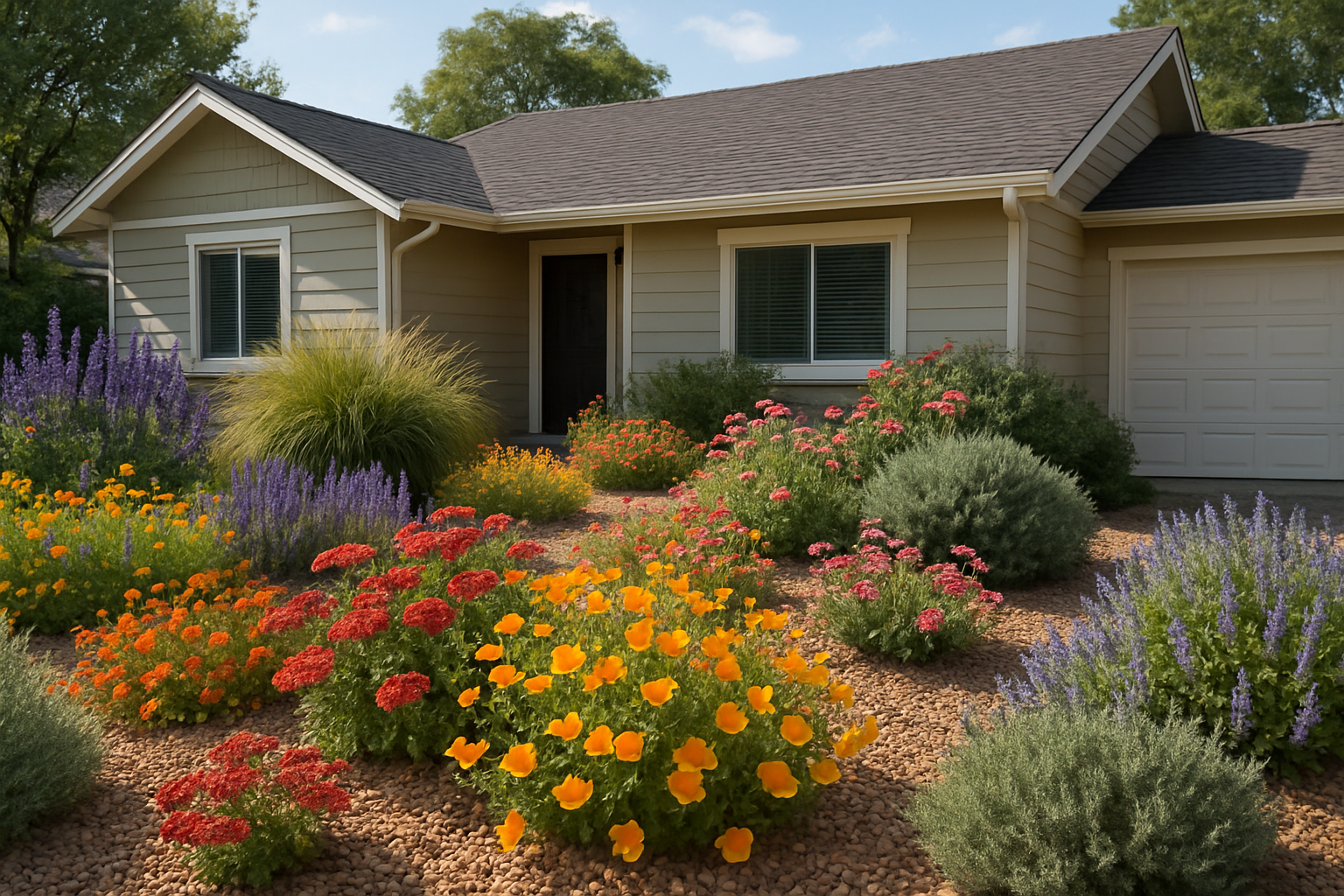
Why Native Plants Are the Smartest Landscaping Decision You’ll Make
Native plants are species that evolved naturally in your region over thousands of years. That means they’re already perfectly adapted to your local rainfall patterns, soil type, temperature swings, and pest pressures. They don’t need you to coddle them. They don’t need a weekly deep soak or a bag of synthetic fertilizer every spring. They just need a decent start — and then they largely take care of themselves.
For homeowners, this translates to real, measurable savings. The EPA estimates that landscape irrigation accounts for nearly one-third of all residential water use in the U.S., totaling nearly 9 billion gallons per day. Switching even a portion of your lawn to native plants can cut your outdoor water use by 50% or more. My water bill dropped noticeably after just one full growing season. And beyond the savings, native plantings support local pollinators — bees, butterflies, hummingbirds — in ways that a monoculture grass lawn simply cannot.
The visual payoff is real too. A well-designed native landscape looks intentional, layered, and alive in a way that a flat green lawn never quite does. It moves in the breeze, it changes color through the seasons, and it attracts wildlife that makes your outdoor space feel like a destination rather than just a chore.
Native Plants Landscaping Water Saving: How to Actually Do It Right
Here’s what I learned the hard way: native plant success starts with site prep, not seed selection. Before you scatter a single seed or plant a single plug, you need to deal with your existing turf. I skipped this step. Dave watched me learn this lesson in real time from his car window.
Step 1: Kill or Remove Existing Grass
Smother it with cardboard and a thick layer of wood chip mulch (the “lasagna method”), solarize it under clear plastic sheeting for 4–6 weeks in summer heat, or use a sod cutter to physically remove it. Bermuda grass in particular is relentless — if you don’t eliminate it first, it will win every single time. Ask me how I know.
Step 2: Loosen and Amend Your Soil Lightly
Native plants generally prefer lean, well-draining soil. Don’t go overboard with rich compost or amendments — overly fertile soil can actually cause many natives to grow weak and floppy. A light loosening with a garden fork is usually plenty.
Step 3: Choose the Right Plants for Your Region
This is where the fun starts. Native plant mixes are region-specific for a reason — what thrives in the Pacific Northwest is not what thrives in Texas or Southern California. Match your seed selection to your climate zone, and you’ll be amazed at how little maintenance the plants require once established.
Step 4: Water to Establish, Then Step Back
Most native plants need consistent moisture for the first season while their root systems develop. After that first year, many need little to no supplemental irrigation. This is the payoff moment — when you realize you haven’t dragged out the hose in three weeks and everything still looks fantastic.
Step 5: Embrace the “Messy” Season
Native gardens look different in winter. Seed heads and dried stems aren’t failures — they’re food and shelter for wildlife. Resist the urge to cut everything back in fall. Wait until early spring, and you’ll be rewarded with a garden that practically reseeds itself.
What I Used: My Recommended Products for a Native Plant Makeover
Once I finally did the site prep correctly (all of it, in the right order, like a person who reads instructions), these are the products that made my native landscape transformation actually happen.
For California and Southwest Climates
The California Wildflower Mixture — Bulk 1 Ounce Packet with Over 7,000 Native Seeds is a fantastic starting point for West Coast yards. It’s open-pollinated, non-GMO, and packed with species that are genuinely adapted to California’s dry summers and mild winters. I love that you’re getting true native seeds rather than ornamental varieties that happen to survive in California.
If you want serious coverage and variety for a larger area, the Wildflower Seeds Bulk Mix with 10,000+ Non-GMO Perennial and Annual Seeds covers Texas, California, and Florida climates beautifully. This one pulls in hummingbirds and butterflies something fierce — I’ve watched a monarch butterfly spend twenty minutes on a single cosmos bloom. Worth every penny just for that.
For Pacific Northwest Gardeners
If you’re in Washington, Oregon, or northern California, the Pacific Northwest Regional Mix — Large 1 Ounce Packet with 24,000 Flower Seeds is dialed in for your cooler, wetter climate. The species selection here is specifically curated for PNW conditions, which makes a huge difference in germination rates and long-term plant health.
Native Grasses to Anchor Your Design
Wildflowers are gorgeous, but native grasses are what give a landscape structure and year-round interest. Two of my favorites: