Water Garden Plants That Thrive in Backyard Ponds: My 3-Year Growing Journal

This post contains affiliate links. As an Amazon Associate I earn from qualifying purchases at no extra cost to you.

In landscape design, we talk about the “bones” of a property — the structural elements that everything decorative builds on. I’ve walked hundreds of backyards for initial consultations, and the number one thing homeowners get wrong isn’t the plants or the furniture. It’s whatever’s underneath them. That same principle holds true with water features: before you ever drop a single aquatic plant into a backyard pond, the decisions you make about pond liner, substrate, depth zones, and water circulation will determine whether those plants thrive or slowly die on you — and most homeowners only discover this after they’ve lost a season and a fair amount of money. What I’m sharing in this post comes from three years of hands-on observation, combined with what I’ve learned specifying and installing water garden features professionally — so you can skip the expensive trial-and-error and get straight to what actually works.

Three years later, I have a pond that genuinely stops visitors in their tracks. But I also have a graveyard of failed experiments, a notebook full of scrawled observations, and a deep, personal respect for how unforgiving aquatic gardening can be when you skip the research. This is that notebook, turned into something I hope saves you some of the grief I went through.
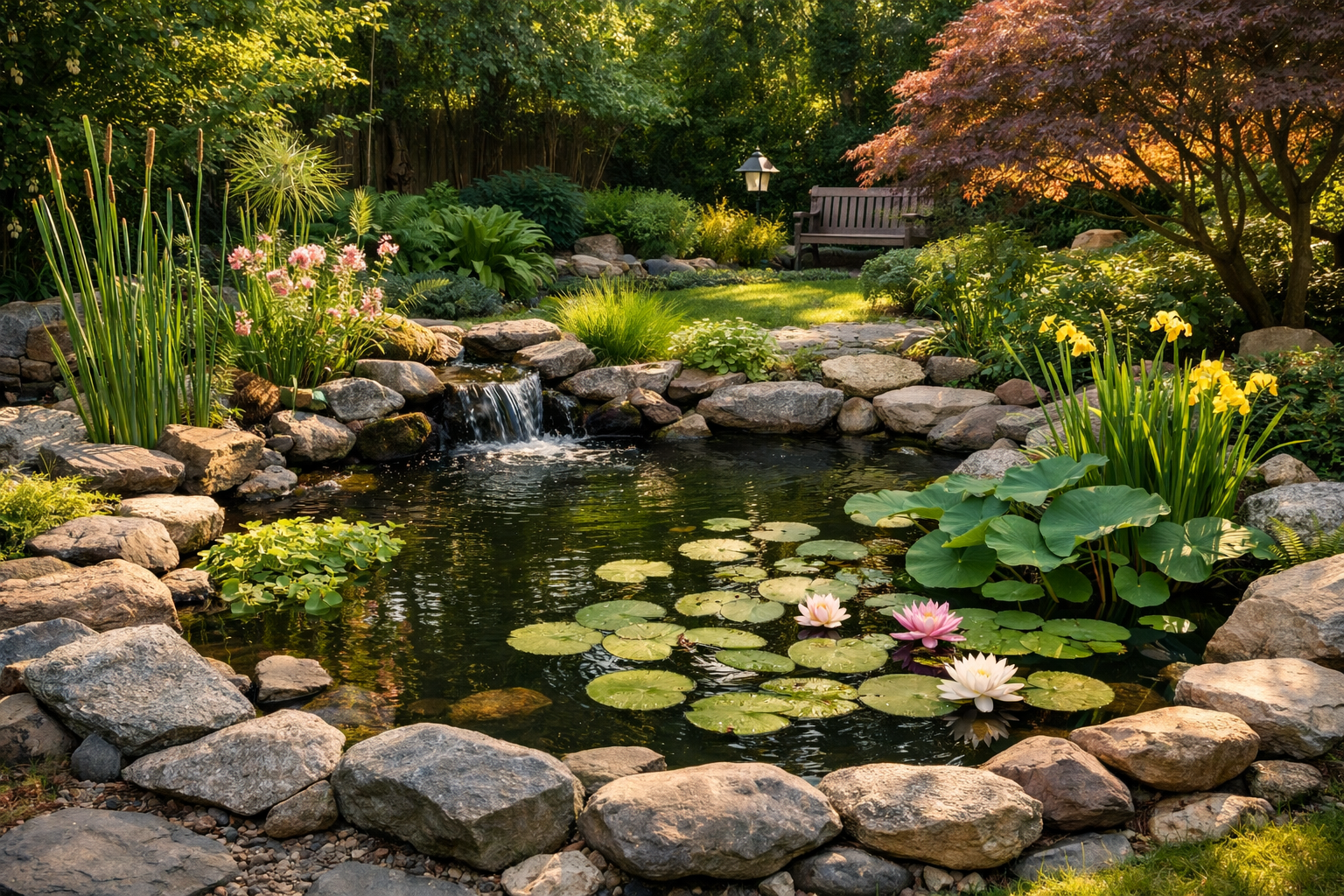
Water Garden Plants That Thrive in Backyard Ponds: My 3-Year Growing Journal — image 1

Year One: Building the Foundation (and Making Every Mistake First)

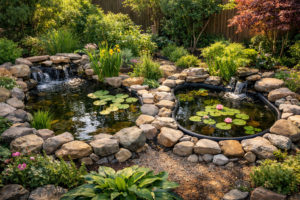
My pond started as a weekend project that stretched into most of a summer. I used the Aquascape DIY Backyard Pond Kit 8 x 11 feet, which honestly was one of the better decisions I made that year. It came with the pump, skimmer, and filter already matched to each other, which meant I wasn’t guessing at flow rates or compatibility. For a first pond, that kind of built-in ecosystem logic matters more than I realized at the time.

Once the water was circulating and the liner was settled, I did what every enthusiastic beginner does: I went to the nursery and bought too many plants at once. My haul included water hyacinth, pickerel rush, yellow flag iris, hardy water lilies in two varieties, and that ill-fated dwarf papyrus. I also grabbed some hornwort as a submerged oxygenator because the nursery staff told me it was “foolproof.”

Here is what happened. The water hyacinth exploded. I mean that almost literally — within six weeks it had covered roughly a third of the pond surface. The pickerel rush settled in beautifully at the shallow shelf and started producing those lovely violet spikes by August. The yellow flag iris did nothing that first season, then came back the following spring like it owned the place. The water lilies sulked for most of summer and put out exactly two blooms combined. And the hornwort? Thrived. Silently, invisibly, doing its job perfectly at the bottom of the pond.

The papyrus died, as I mentioned. I later learned it wanted more warmth than my zone 6b summers reliably deliver, at least not until mid-July. I had planted it in early June during a cold snap. Lesson one: know your zone, and time your planting accordingly.

The Liner Scare of Year One

Late in that first fall, I noticed my water level dropping about an inch a week. After ruling out evaporation (too fast) and the pump (intact), I found a small puncture near a rock edge. I ended up using the ToLanbbt 2PCS Pond Liner Repair Patch, which was a peel-and-stick EPDM patch that held perfectly through the winter and is still holding today. I also now keep the Pond Guy EPDM Liner Seam Kit in my garden shed as a backup, because the one thing you do not want mid-summer is a slow leak draining the ecosystem you have spent months building.

Water Garden Plants That Thrive in Backyard Ponds: My 3-Year Growing Journal — image 2

Year Two: Understanding What Actually Belongs in Your Pond

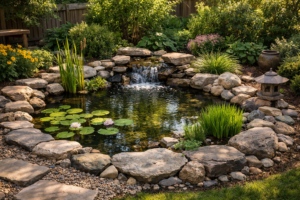
By spring of year two, I had a much clearer sense of what my pond wanted versus what I wanted for it. I pulled back the water hyacinth hard — composting bucket after bucket of it — and introduced blue pickerel rush along the opposite margin to balance the look. I also added a second, deeper shelf specifically for the water lilies, which had been struggling at an awkward depth.

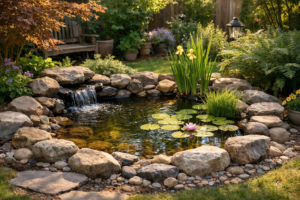
The results were dramatic. My Comanche water lily, a peachy-orange variety, produced over twenty blooms from July through September. My Chromatella, the pale yellow one, was slightly more modest but absolutely beautiful in morning light. I finally understood what people meant when they said water lilies need at least six hours of direct sun. My south-facing pond gets seven to eight, and that year I finally stopped shading part of it with a pergola umbrella that had been well-intentioned but counterproductive.

The Plants That Earned Permanent Spots

  • Hardy water lilies — Absolutely worth the patience. They get better every year as the rhizomes establish.
  • Pickerel rush — Reliable, beautiful, not aggressive. Stays in its container without drama.
  • Blue iris (Iris laevigata) — Blooms early, bridges the gap before lilies open up.
  • Hornwort — My unsung hero. Keeps algae suppressed and fish happy without any attention from me.
  • Creeping jenny — I planted this at the pond edge as a spillover plant and it has been one of the prettiest decisions I made. Softens the rock margin beautifully.

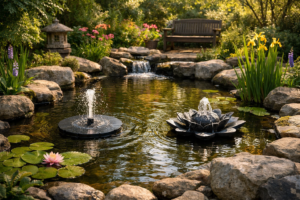
I also added a small solar fountain that first summer to create gentle surface movement in the upper corner of the pond, away from the lilies (which prefer still water). I tried the Solar Fountain Water Pump for Bird Bath and Pond and was genuinely surprised by how much movement it produced on sunny days. It also attracted more birds to the edge of the pond than I expected, which became its own quiet pleasure on weekend mornings.

Water Garden Plants That Thrive in Backyard Ponds: My 3-Year Growing Journal — image 3

Year Three: The Mistakes I Am Still Making (and the Plants I Keep Trying)

I want to be honest here, because too many pond journals only tell you the success story. Year three has had its own set of humbling moments.

I tried lotus for the first time. American lotus, specifically, planted in a wide, shallow container with heavy clay soil as directed. It leafed out magnificently. Huge, dramatic, prehistoric-looking pads. And then it never bloomed. Not a single flower. I have since learned that lotus needs warmer root temperatures than my pond provides in its shallower shelf areas, and that some growers in my zone need to wait until year two for blooms. I am in that waiting period now, trying to be patient.

I also tried water lettuce for the first time, having avoided it because I had read it could be invasive in warmer climates. In my zone it behaves more like an annual — it grows well through summer, adds lovely texture, and dies back in fall without seeding aggressively. Worth trying if you are in zone 5, 6, or 7.

What I have not yet tried, but plan to tackle next spring, is adding a small waterfall feature using the Aquascape DIY Backyard Waterfall Kit. I want to extend the pond slightly and create a second water level that feeds back into the main basin. Based on how well the original Aquascape kit has performed, I have high expectations. I have also been eyeing the Aquascape Micro Pond Kit with the LED 3-Light Kit for a small satellite feature near the patio — a simpler, self-contained water garden that could hold a single lotus or a couple of floating plants without connecting to the main pond.

For those who want a bit more surface movement without electrical wiring, I have also tested two other solar options worth mentioning. The Mademax 1W Solar Bird Bath Fountain Pump is a great low-profile option for smaller ponds, and the Biling Solar Fountain for Bird Bath and Small Pond includes four feet of tubing which gives you more flexibility in placement. Neither replaces a real pump for a full ecosystem, but for accent movement or a smaller container water garden, both punch above their price point.

Water Garden Plants That Thrive in Backyard Ponds: My 3-Year Growing Journal — image 4

What Three Years Actually Taught Me About Water Garden Plants

If I could hand a note to the person I was standing barefoot at the pond edge on that Tuesday morning, here is what it would say.

Start with fewer plants than you think you need. The pond will look sparse for about six weeks, and then it will not. Aquatic plants grow faster than almost anything else in your garden, and the ones that thrive will fill the space more completely than you planned for. Give them room to tell you what they want before you crowd them.

Keep at least thirty to forty percent of your pond surface open — meaning no plants. This is for light penetration, gas exchange, and honestly, for the visual rest your eye needs. A completely covered pond looks murky and crowded. Open water catches the sky and makes the whole thing feel alive in a different way.

Invest in your infrastructure before you invest in your plants. A well-designed water garden plants backyard pond setup — proper filtration, the right liner, a pump matched to your pond volume — will keep your plants healthy without constant intervention. Cutting corners on the ecosystem to spend more on plant variety is a trade-off that always costs more in the long run.

And be patient with the plants that take time. Water lilies, lotus, iris — they often give you very little in year one and reward you extravagantly in year two and three. The pond does not run on your timeline, and the sooner you accept that, the more you will enjoy what it is actually doing rather than mourning what it has not done yet.

If you are just getting started, my honest recommendation is to begin with the Aquascape DIY Backyard Pond Kit to get your ecosystem right from day one, add one hardy water lily, one marginal plant like pickerel rush, and a bundle of hornwort. Let those establish for a full season before adding anything else. That patience will pay off in a way that no amount of extra plant purchases in month one ever will.

Drop your questions in the comments below — I check them regularly and I am genuinely happy to help you troubleshoot. And if you have plants that thrived or spectacularly failed in your own pond, I would love to hear about them. This is still very much a learning project, and we are all figuring it out together.