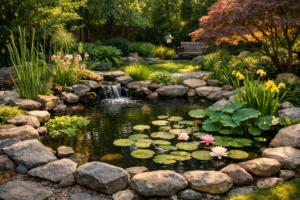
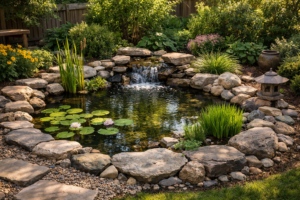
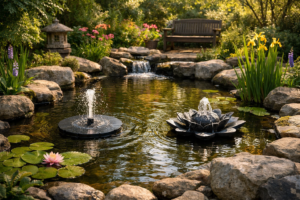
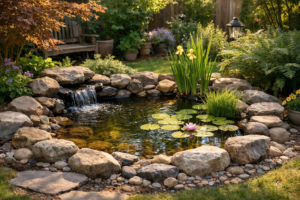
A failed pond isn’t just ugly—it’s a money pit that gets worse every season. I’ve pulled out collapsing preformed shells that cracked under frost pressure, and I’ve patched liner installations so many times the homeowner finally gave up and filled the whole thing in. The difference between a pond that thrives for a decade and one that becomes a maintenance nightmare often comes down to one decision made before you ever fill it with water, and that choice—flexible liner versus rigid shell—determines how forgiving or unforgiving your ground mistakes will be.
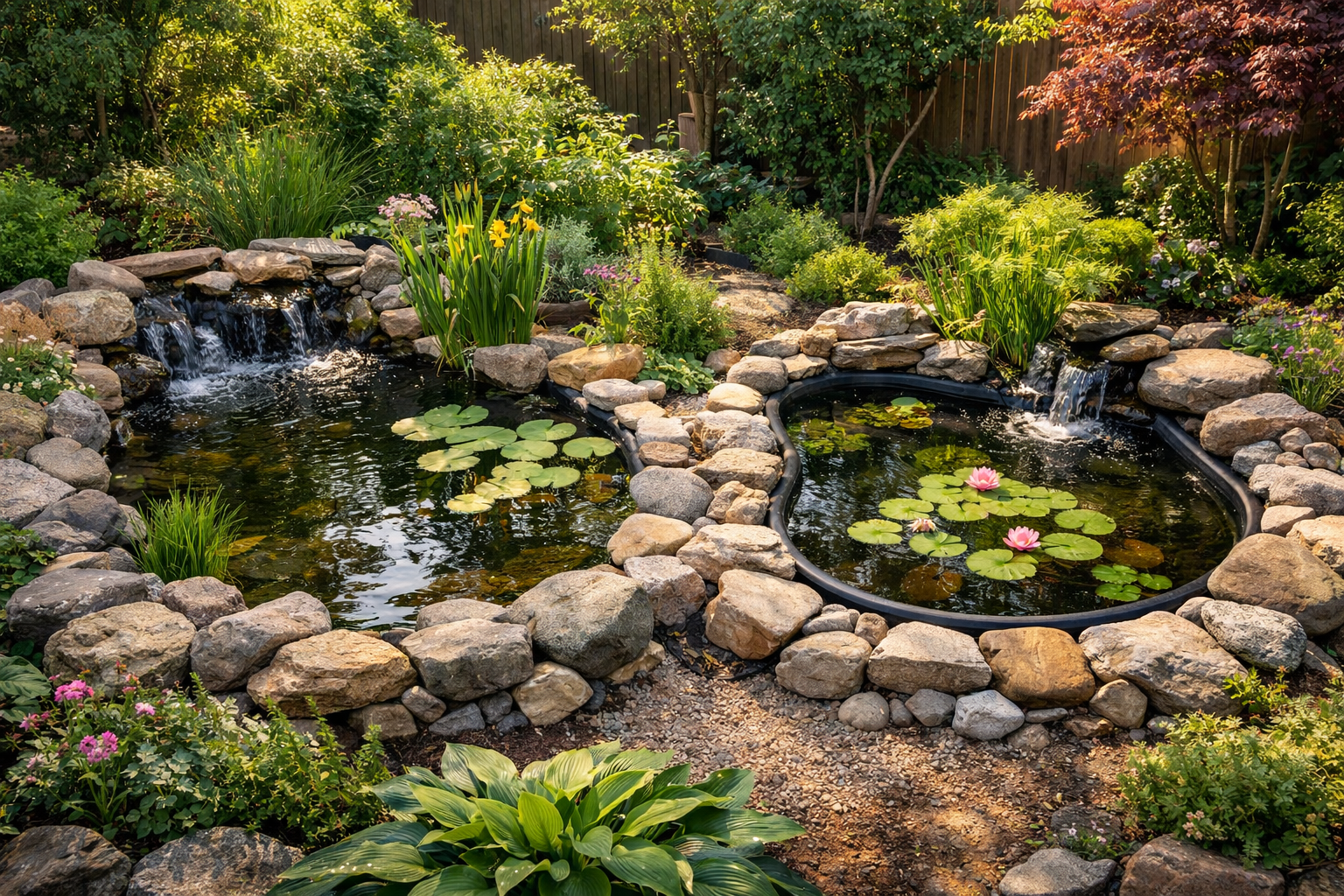
What Is the Difference Between a Pond Liner and a Preformed Pond Shell?
Before we get into the pros and cons, let me quickly break down what we are actually talking about. A pond liner is a flexible sheet — usually made from EPDM rubber or PVC — that you lay into a hand-dug hole of whatever shape and size you want. You fold it, tuck it, and anchor the edges, and the water does the rest of the work holding it in place. A preformed pond shell, on the other hand, is a rigid plastic or fiberglass basin that already has a fixed shape. You dig a hole to match its contours, set it in, level it, and fill it up. Simple in theory. Occasionally maddening in practice.
Both options are genuinely DIY-friendly, and both can produce a beautiful, long-lasting water feature. The right choice depends on your yard, your budget, your timeline, and honestly, how patient you are on a warm weekend afternoon.
The Kit That Forced Me to Stop Cutting Corners on Pond Base Work
If you’re torn between liner and preformed, the Aquascape kit bridges that gap by giving you a contained system where you can’t hide sloppy preparation. You get structure, but you still have to do the invisible 70% right — and the kit makes it obvious when you haven’t.
What works
- The included basin forces you to build a proper base — no leveling shortcuts survive a rigid shell, so you learn the discipline that transfers to every other outdoor project.
- Sized at 8 x 11 feet, it’s large enough to actually hold fish and plants without looking like a decorative puddle, but small enough to fail cheaply if your first attempt goes sideways.
- The kit includes everything — pump, filter, plumbing — so you’re not guessing at compatibility or making a dozen Amazon orders when the water starts turning green.
What doesn’t
- Once you pour the concrete pad and set that shell, changing your mind costs real money and real labor — you lose the flexibility that a liner gives you to adjust depth or reshape mid-project.
- Eight by eleven sounds spacious until you’re trying to net leaves or reach the center for cleaning; preformed ponds trap you in whatever footprint the manufacturer decided.
I remember standing over my first kit install, water seeping through a soft spot in the base I’d rushed, and realizing I’d just learned the hardest way possible why that invisible 70% matters. That failure taught me more than a hundred YouTube videos. Get the right foundation in, and Aquascape DIY Backyard Pond Kit 8 x 11 feet will reward that effort.
About This Article

Written by Marcus Delvecchio. Marcus Delvecchio isn't a licensed contractor — he's a handyman and DIY outdoor landscaper who got obsessed with driveways, patios and pavers after redoing his own place badly enough to want to understand why. Twenty years later he spends his weekends on his own projects and on side jobs for neighbours and friends around the mid-Atlantic, and writes up what actually worked, mistakes included. More about this site.
Scope and limits. Marcus is a homeowner who got obsessive about driveways, not a licensed contractor. Structural repair, drainage changes, and anything requiring a permit should go to a licensed contractor.
Verify this against a primary source
Specifics change, and your situation may differ from the one described here. These are the authorities worth checking directly:
- Concrete Masonry & Hardscapes Association — segmental paver installation standards
- National Asphalt Pavement Association — asphalt placement and maintenance guidance
- Portland Cement Association — concrete durability and jointing