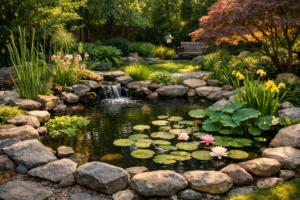
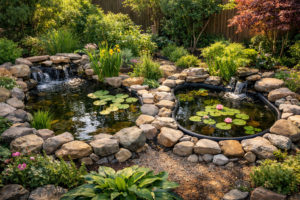
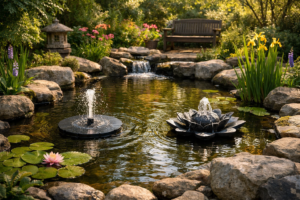
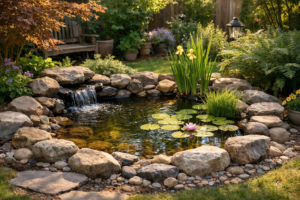
In 2011, I helped a neighbor drain his pond for the third time in two years—each time because something we’d cut corners on during installation had finally failed. That afternoon, watching him bail murky water while I mentally tallied what a proper build would have cost upfront, I realized I’d been teaching the wrong lesson: that pond projects were forgiving if you stayed flexible. They’re not. They’re unforgiving in exactly the ways that matter, and the difference between a pond that thrives for a decade and one that becomes a costly headache comes down to decisions made before you ever touch a shovel. I’ve built enough of them since to know exactly which calls you have to get right, and which shortcuts will haunt you.
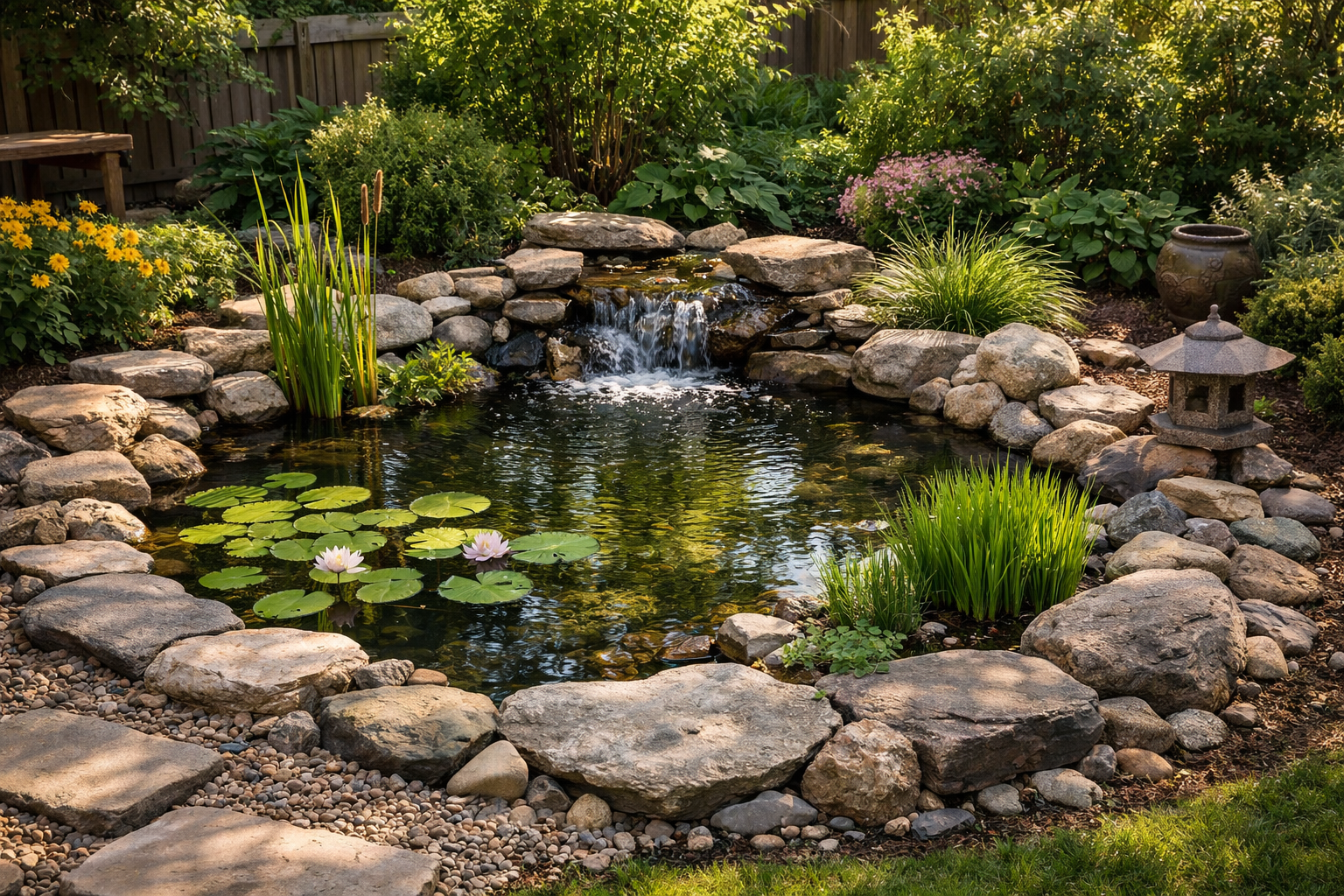
The Kit That Kept Me From Digging Twice: Why a Complete System Beats Sourcing Parts Separately
Building a pond from scratch means making decisions about liner depth, pump capacity, and edge finishing all at once — and if those pieces don’t work together, you’ll be standing in a half-finished hole wondering what went wrong. A matched kit removes that guesswork and ensures every component is sized for the same footprint.
What works
- All components are pre-sized to work together — the liner, pump, and spillway are matched to the same basin dimensions, so you’re not oversizing or undersizing any single piece.
- Instructions account for grading and drainage from the start, not as an afterthought; the included materials guide you toward proper slope so water doesn’t pool outside the liner.
- Troubleshooting becomes faster because you know every part came from the same system — when a leak happens, you’re not chasing phantom incompatibilities between random brands.
What doesn’t
- You pay a premium for convenience; sourcing a liner, pump, and seals individually might save 15–20% if you’re willing to spend two weeks cross-referencing compatibility specs.
- The kit’s footprint is fixed at 8 x 11 feet — if your space or vision doesn’t match that exact rectangle, you’re either compromising the design or buying components à la carte anyway.
What the Dig Actually Involves
An 8-by-11 kit means an 8-by-11 hole plus room to work around it, and it is deeper than most people picture. Plan on a shallow marginal shelf around the perimeter about 9 to 12 inches down for planting baskets, then the main basin below that. On the pond I helped with, the shelf was the part we got wrong first time and had to cut back in afterwards.
Two things to settle before you break ground: where the excavated soil is going, and whether the site holds water from elsewhere. A pond sited at the low point of a garden collects runoff every time it rains, which pushes silt and lawn chemicals straight into it.
Levelling matters more than depth
The rim has to be level all the way round or you will see liner on the high side forever. Set a straight board across the excavation with a spirit level on it and check across several axes, not just one. Getting this right at the digging stage takes twenty minutes; fixing it afterwards means draining and relining.
What I’d Do Differently
- Underlay the liner properly. Sand alone is not enough over stony ground — use a proper underlay fabric or old carpet.
- Oversize the pump rather than matching it exactly. Head height from the pump to the top of a waterfall eats capacity fast.
- Run the electrics before the stone goes down, and use an outdoor-rated GFCI outlet.
- Fill it and let it run for a week before planting anything. Chlorine needs to gas off and you want to see where the leaks are while the stone is still easy to lift.
Why the Complete Kit Won Out
I almost pieced together a budget version from three different suppliers. The argument that changed my mind was the same one that applies to base prep on a driveway: the saving is real but small, and the cost of a mismatch is that you take it apart and start again. A kit means the pump, liner, filter and fittings are sized to each other, which is exactly the part a first-time build is worst at judging.
I almost pieced together a budget version from three different suppliers until a neighbour who has been laying stone for thirty years reminded me that the last time I saved money upfront on pavement prep, I spent three times as much fixing subsurface drainage failures. That conversation stuck with me. Get the Aquascape DIY Backyard Pond Kit 8 x 11 feet and know from day one that your liner, pump, and basin work as one system.
About This Article

Written by Marcus Delvecchio. Marcus Delvecchio isn't a licensed contractor — he's a handyman and DIY outdoor landscaper who got obsessed with driveways, patios and pavers after redoing his own place badly enough to want to understand why. Twenty years later he spends his weekends on his own projects and on side jobs for neighbours and friends around the mid-Atlantic, and writes up what actually worked, mistakes included. More about this site.
Scope and limits. Marcus is a homeowner who got obsessive about driveways, not a licensed contractor. Structural repair, drainage changes, and anything requiring a permit should go to a licensed contractor.
Verify this against a primary source
Specifics change, and your situation may differ from the one described here. These are the authorities worth checking directly:
- Concrete Masonry & Hardscapes Association — segmental paver installation standards
- National Asphalt Pavement Association — asphalt placement and maintenance guidance
- Portland Cement Association — concrete durability and jointing