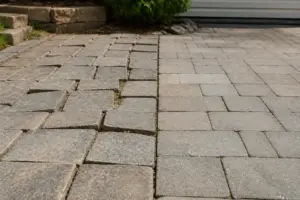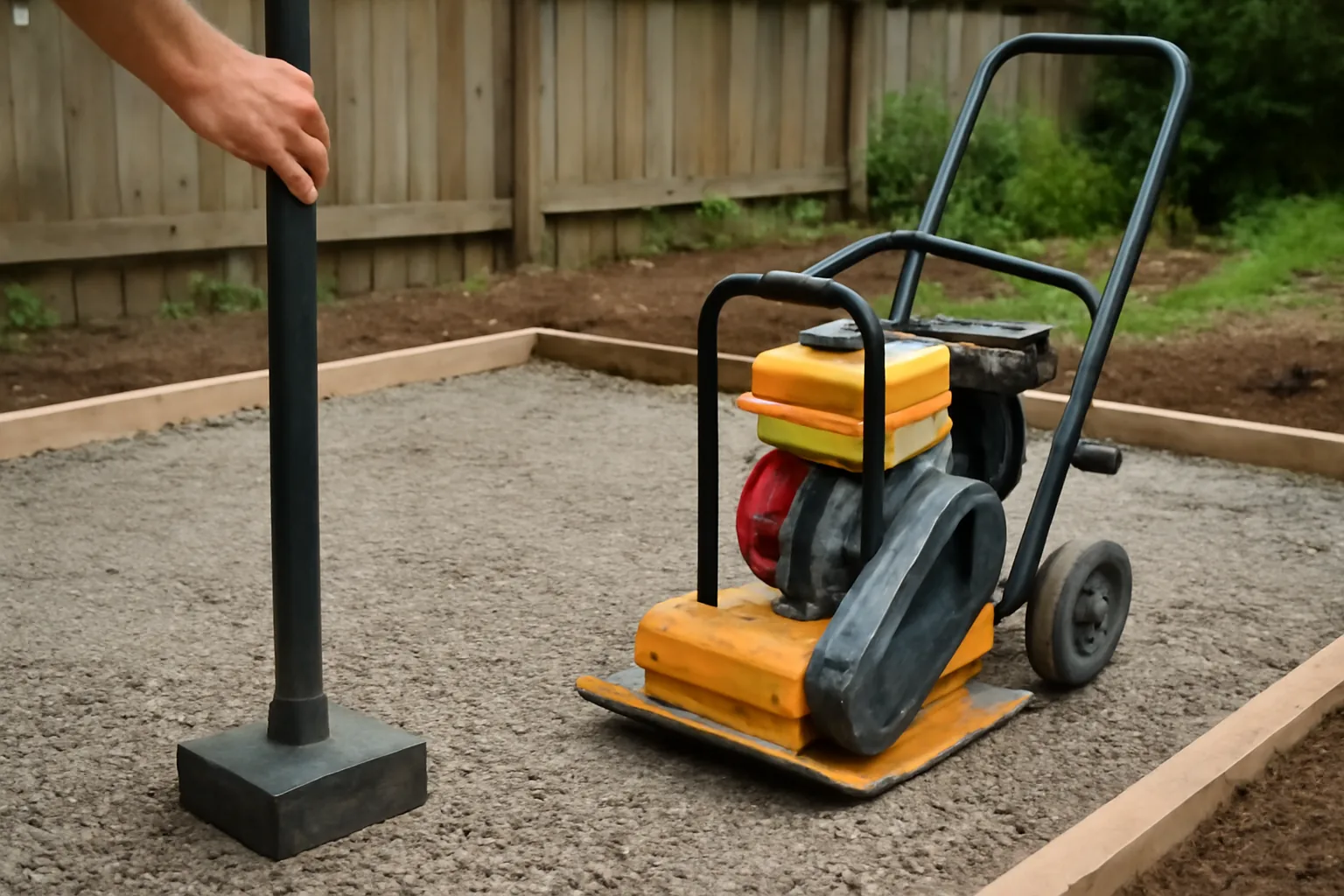
Last spring, I tore up about 180 square feet of sunken patio pavers behind my garage. The base had shifted badly over two winters. Every time I walked across it, something wobbled. I knew I needed to repack the gravel and sand before relaying anything. That’s when the hand tamper vs plate compactor pavers debate hit me square in the face — and I had to make a real decision fast.
Renting a plate compactor costs around $80 to $120 per day in my area. For a repair job under 200 square feet, that felt excessive. I needed something I could use in tight spots along the garage wall and garden border. A hand tamper suddenly made a lot more sense.
The Hand Tamper That Actually Paid for Itself on My First Patio Job
When you’re staring down 180 square feet of sunken pavers and a plate compactor rental bill, a quality hand tamper becomes your best argument for skipping the equipment fee altogether. For jobs this size, the right tamper gives you control, precision, and honest savings—if you pick one built to handle the real work.
What works
- The 8″x8″ footprint sits perfectly between speed and control—wide enough to compact gravel and sand in fewer passes than a smaller head, but still maneuverable in tight corners where my patio ran up against the garage foundation.
- The 48″ handle kept my lower back from taking a beating during the three hours of tamping; I wasn’t hunched over like I would’ve been with a shorter tool, and the leverage actually made the repetitive motion less exhausting than I expected.
- Steel construction meant I could really lean into each strike without worrying about the head flexing or warping—critical when you’re trying to get consistent base density before laying pavers back down.
What doesn’t
- You will feel every single impact in your shoulders and arms by hour two; this is arm and core work, and there’s no getting around the fatigue if you’ve got more than 150 square feet to do.
- Compaction depth is limited compared to a plate compactor—you’re getting excellent results for the top 4–6 inches of base material, but if your subgrade is seriously unstable, you might still need mechanical equipment to go deeper.
Halfway through my patio, I worried I wasn’t hitting consistent density and almost called to rent that plate compactor anyway. But I switched to a grid pattern—working every other section twice—and the results were solid enough that I never made that call. If you’re on the fence about hand tamping versus rental costs, grab a BlumeTrec 8″x8″ Steel Tamper with 48″ Handle, Heavy Duty Hand Compactor Tool for Leveling Soil, Gravel, Sand, Asphalt, Ground, Paver, Driveway, Garden, Yard and Blacktop Repair and test it on your first 50 square feet.
About This Article

Written by Marcus Delvecchio. Marcus Delvecchio isn't a licensed contractor — he's a handyman and DIY outdoor landscaper who got obsessed with driveways, patios and pavers after redoing his own place badly enough to want to understand why. Twenty years later he spends his weekends on his own projects and on side jobs for neighbours and friends around the mid-Atlantic, and writes up what actually worked, mistakes included. More about this site.
Scope and limits. Marcus is a homeowner who got obsessive about driveways, not a licensed contractor. Structural repair, drainage changes, and anything requiring a permit should go to a licensed contractor.
Verify this against a primary source
Specifics change, and your situation may differ from the one described here. These are the authorities worth checking directly:
- Concrete Masonry & Hardscapes Association — segmental paver installation standards
- National Asphalt Pavement Association — asphalt placement and maintenance guidance
- Portland Cement Association — concrete durability and jointing