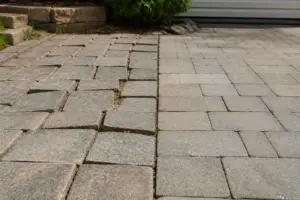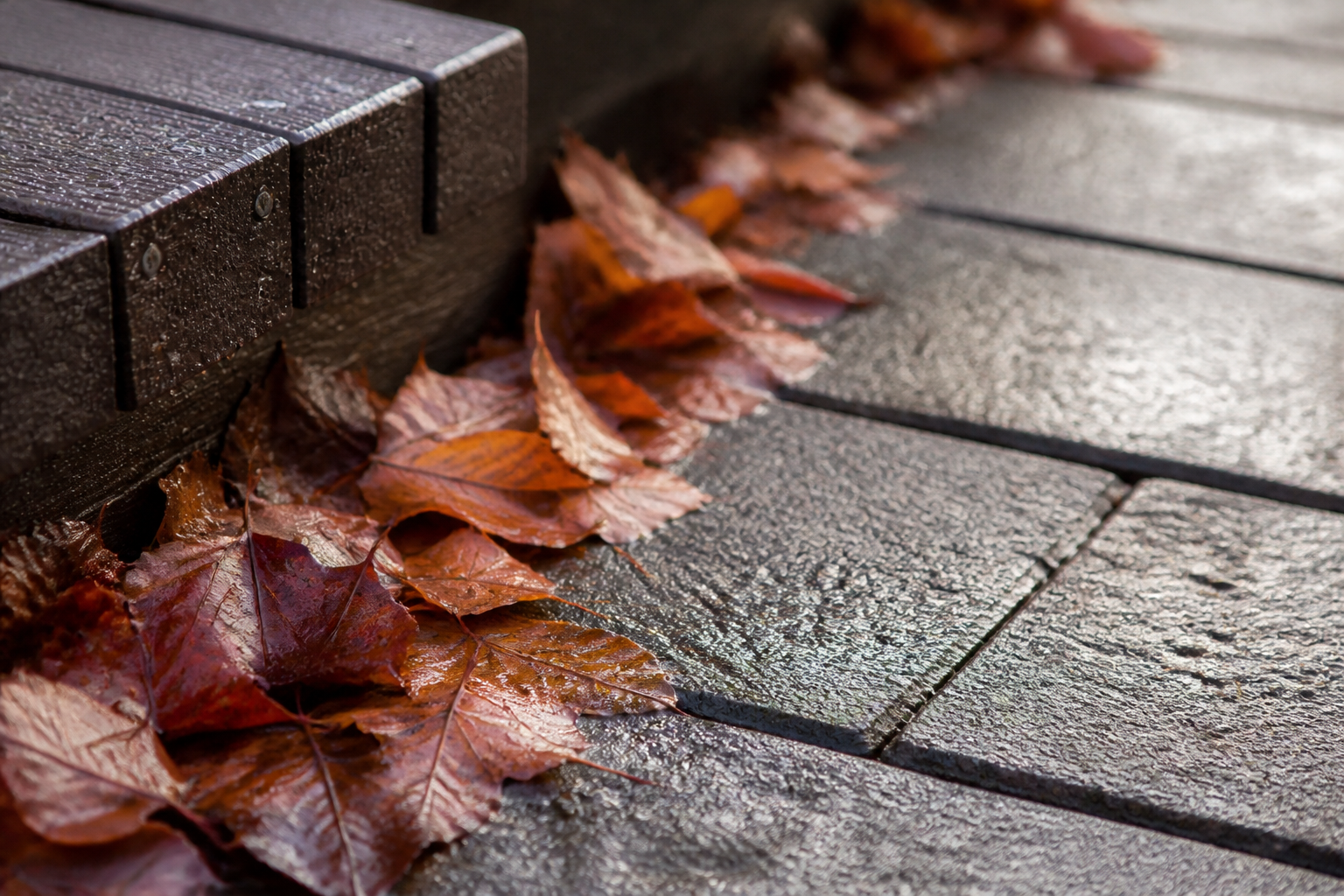
Leaves don’t just look messy on your patio or driveway—they’re actively damaging it. When leaves pile up against pavers, deck boards, or stone surfaces, they trap moisture that accelerates decay, promotes mold and algae growth, and sets up ice dam formation when temperatures drop. Most people don’t connect autumn leaf litter to spring repairs, but the connection is direct and preventable.
Why Leaves Under Hardscaping Become a Problem
Leaves are organic material, and organic material plus moisture equals an environment where decay happens fast. Here’s what’s actually occurring:
Moisture retention. Leaves mat down and create a barrier that keeps water pressed against your hardscape surface. That moisture doesn’t evaporate—it stays in contact with pavers, stone, or wood, prolonging the wet cycle that promotes frost damage, efflorescence (white mineral blooming on pavers), and staining.
Mold and algae growth. Damp leaf debris is ideal habitat for mold, algae, and moss. These aren’t just cosmetic problems. Algae and moss retain even more moisture, accelerate surface deterioration, and make surfaces slippery and unsafe when wet or frozen.
Ice dam formation. In winter, leaves trapped under or against hardscaping create pockets where water collects and refreezes. These ice dams push on pavers, trap more moisture, and can contribute to shifting or cracking over freeze-thaw cycles.
Joint and edge degradation. Leaves accumulate in joints between pavers, under edging, and along drainage lines. As they decompose, they create acidic conditions and block the drainage channels that are supposed to move water away from your hardscape. Blocked drainage means standing water and accelerated damage.
Staining and discoloration. Leaf tannins and decomposition byproducts stain stone and pavers, often permanently. These aren’t surface stains—they penetrate the material itself and resist cleaning.
The Critical Window: October and November
Fall cleanup isn’t about aesthetics; it’s about timing. The risk period is roughly October through November, when leaves are falling heavily but temperatures haven’t yet dropped below freezing consistently.
During this window, leaves are wet from rain and morning dew, they’re falling daily in large quantities, and the ground is still warm enough that decomposition accelerates. If you wait until December to clean up, you’re already weeks into the damage cycle.
Early autumn (September to early October) is a good time to inspect your hardscape and check your drainage lines. Peak leaf season (mid-October through November) demands regular clearing, especially after heavy rain or wind events.
How to Prevent Damage: Low-Effort Strategies
Regular Removal
The simplest approach is also the most effective: clear leaves from hardscaping surfaces and drainage areas on a weekly schedule during peak fall season.
- Use a leaf blower or handheld vacuum to clear leaves from pavers and stone. This is faster than raking and less likely to damage edge restraints.
- Pay special attention to drainage trenches, gutter lines, and the perimeter where your hardscape meets landscape beds.
- Don’t simply blow leaves into the garden bed directly against your hardscape—they’ll migrate back onto the surface. Blow them well away or bag them.
For deck boards or composite surfaces, a stiff brush after leaf removal helps clear trapped particles from textured surfaces.
Maintain Drainage
Proper drainage is your hardscape’s first line of defense. Leaves shouldn’t block it.
- Clear perimeter drainage trenches and French drains weekly during peak season.
- If your patio or driveway has a slight slope for drainage (as it should), test that water actually flows downhill. Leaves often create barriers that redirect water back toward the hardscape.
- Check ground-level drainage grates or catches. Leaves clog these quickly.
Consider Temporary Barriers
In areas with heavy leaf fall, a temporary leaf barrier can reduce cleanup labor. Laying landscape fabric or netting over planting beds adjacent to your hardscape prevents leaves from being blown directly onto the surface. Remove these barriers after leaf fall ends to allow proper drainage and air circulation over winter.
Don’t use permanent barriers—they trap moisture and prevent drainage.
Timing After Rain and Wind
Heavy rain and wind events dump leaves onto your hardscape all at once. Clearing within 24 hours of these events prevents leaves from compacting and starting the moisture-trapping cycle.
Don’t wait for a calm day or a weekend. A quick pass with a leaf blower after a storm takes 15 minutes and prevents weeks of moisture damage.
What NOT to Do
Don’t let leaves decompose on your hardscape intentionally. Some people assume fall leaves are harmless or that they’ll eventually blow away. They won’t—they mat down, trap moisture, and start degrading your surface. Leaf litter is not mulch when it’s on your patio.
Don’t pressure-wash frozen debris. If leaves freeze solid against your hardscape, high-pressure water can force moisture into paver joints and stone cracks, where it will freeze and cause spalling (surface flaking). Wait for a thaw, or use a stiff brush and low pressure.
Don’t ignore drainage issues during leaf season. If water is pooling on your hardscape during or after rain, that’s a sign drainage is blocked—usually by leaves. Clear the obstruction immediately rather than assuming the pooling is temporary.
Preventive Maintenance That Lasts
Once leaves are cleared, a few additional steps extend the protective benefit:
- Seal paver joints if you haven’t already. This makes debris removal easier and reduces water penetration into joints.
- Check grading and slope around your hardscape. Leaves accumulate in low spots—if they’re collecting in one area consistently, the underlying slope may need adjustment by someone qualified to do hardscape grading.
- Trim overhanging branches. If trees above your patio or driveway are dropping leaves directly onto the surface, reducing the canopy’s overhang cuts the problem in half.
The Payoff
Investing 30 minutes per week in fall leaf removal prevents damage that costs hundreds or thousands to repair in spring. Staining, cracking, shifting, and mold growth aren’t cosmetic complaints—they degrade the structure of your hardscape and shorten its lifespan.
Fall leaf cleanup isn’t optional maintenance. It’s the difference between a hardscape that lasts decades and one that deteriorates in half that time. Start clearing now, while leaves are falling and the season is right.
About This Article

Written by Marcus Delvecchio. Marcus Delvecchio isn't a licensed contractor — he's a handyman and DIY outdoor landscaper who got obsessed with driveways, patios and pavers after redoing his own place badly enough to want to understand why. Twenty years later he spends his weekends on his own projects and on side jobs for neighbours and friends around the mid-Atlantic, and writes up what actually worked, mistakes included. More about this site.
Scope and limits. Marcus is a homeowner who got obsessive about driveways, not a licensed contractor. Structural repair, drainage changes, and anything requiring a permit should go to a licensed contractor.
Verify this against a primary source
Specifics change, and your situation may differ from the one described here. These are the authorities worth checking directly:
- Concrete Masonry & Hardscapes Association — segmental paver installation standards
- National Asphalt Pavement Association — asphalt placement and maintenance guidance
- Portland Cement Association — concrete durability and jointing