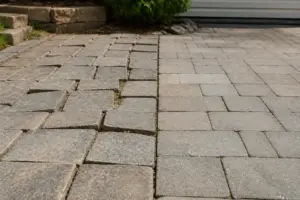
Three years ago, I finished what I thought was a perfect 220-square-foot paver patio off my back deck. Solid base, proper slope, tight joints — I was proud of it. By the following spring, the edges had crept nearly two inches into the lawn. Without a reliable paver edge restraint system, all that work slowly unravels. Pavers migrate. Gaps open up. Sand washes out. I learned that the hard way, and I’m not doing it again.
I’ve been doing hardscaping projects for over 15 years. Patios, walkways, dry-laid pathways, retaining walls — I’ve built plenty and wrecked a few in the process. The edge containment problem is one I’ve battled on multiple projects. Rigid plastic edging cracks in cold winters. Steel edging is overkill for most residential work and costs a fortune. I needed something flexible, durable, and fast to install.
The Flexible Edging That Finally Stopped My Pavers From Wandering
After that two-inch creep disaster, I realized rigid plastic edging wasn’t holding up to ground shift and frost heave. I needed something flexible enough to move with the seasons but stiff enough to actually restrain the edge course.
What works
- The flex rating lets it conform to curves and uneven ground without cracking or separating from the paver edge—I’ve run it around my patio corners without any gaps opening up.
- At 60 feet per roll, it covers most residential jobs in one purchase, and the black finish blends into the lawn edge rather than standing out like a bright plastic barrier.
- The snip-to-flex design means I can cut it to length on-site without needing a miter saw, and installation takes half the time of rigid metal edging.
What doesn’t
- It’s not invisible—if you’re finishing at grade level with grass right up to it, you’ll see the black edge line, which some people find too obvious compared to a proper permeable basecloth transition.
- The landscape fabric stakes that come separately can pull loose after a few freeze-thaw cycles, so I end up adding my own galvanized spikes every couple of seasons for peace of mind.
Installing It Properly
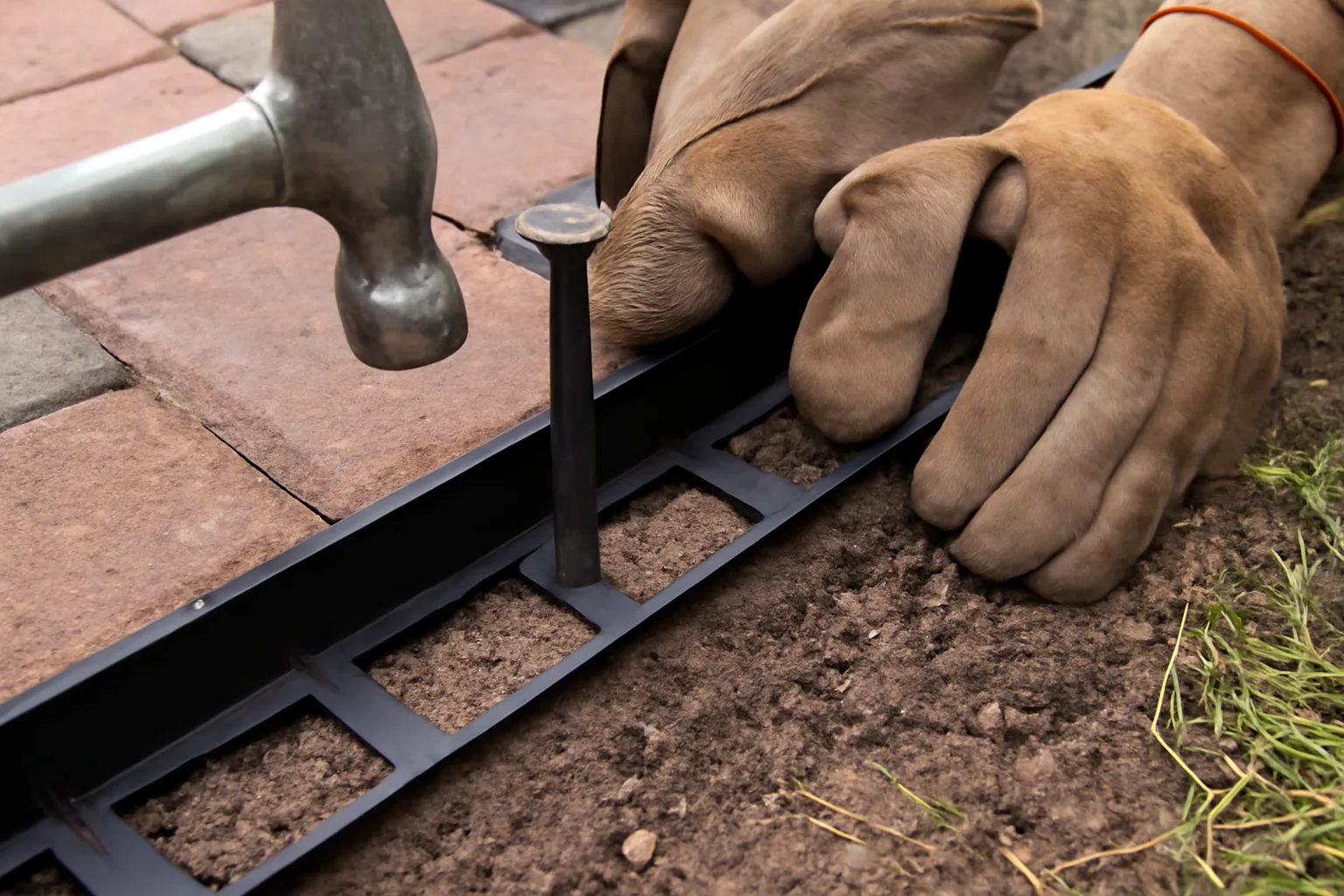
The spikes are what hold, and they only hold in compacted base — not in the soil beside it. That means your base needs to extend at least 6 inches beyond the last paver so there is something solid to drive into. Where mine had failed, the base stopped at the paver edge and the edging was effectively pinned into lawn.
On my 220-square-foot patio I ran the edging tight against the paver face, spiked every 12 inches on the straights and every 6 through the curves, and drove each spike at a slight inward angle so it pulls the restraint toward the pavers rather than letting it lean out.
Cutting the curves
The snip-to-flex design is genuinely the point — you cut the connecting webs on the outside of a curve to open it up, or on the inside to tighten it. Cut one web at a time and offer it up as you go. I over-snipped my first curve and ended up with a section that would not hold its line.
What I’d Do Differently
- Backfill and tamp the soil against the outside of the restraint before you consider the job done. Unsupported edging flexes outward under load.
- Use longer spikes anywhere the ground stays wet. The standard ones lifted slightly over one winter in my downspout corner.
- Overlap the joins by a full connector rather than butting sections together.
- Do it before the joint sand goes in, not after. I did it the wrong way round and had to re-sand a strip.
Whether It Will Stop Existing Creep
Only if you reset the pavers first. Edging holds a sound patio in place; it will not pull wandering pavers back into line. On mine I lifted the outer two courses, re-screeded the base, reset them tight, then installed the restraint against the corrected edge. Skipping that step just locks the creep in where it is.
I’ll admit I was skeptical the first time I installed this instead of going with metal—I worried the flexibility would mean the edge would still want to bow outward. But three seasons in, with zero paver migration on my back patio, I’m a believer. If you’re fighting the same edge-creep problem I was, grab the EasyFlex Heavy Duty No-Dig Edging Kit – 100ft., Black.
About This Article

Written by Marcus Delvecchio. Marcus Delvecchio isn't a licensed contractor — he's a handyman and DIY outdoor landscaper who got obsessed with driveways, patios and pavers after redoing his own place badly enough to want to understand why. Twenty years later he spends his weekends on his own projects and on side jobs for neighbours and friends around the mid-Atlantic, and writes up what actually worked, mistakes included. More about this site.
Scope and limits. Marcus is a homeowner who got obsessive about driveways, not a licensed contractor. Structural repair, drainage changes, and anything requiring a permit should go to a licensed contractor.
Verify this against a primary source
Specifics change, and your situation may differ from the one described here. These are the authorities worth checking directly:
- Concrete Masonry & Hardscapes Association — segmental paver installation standards
- National Asphalt Pavement Association — asphalt placement and maintenance guidance
- Portland Cement Association — concrete durability and jointing