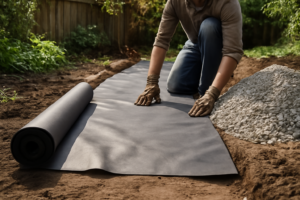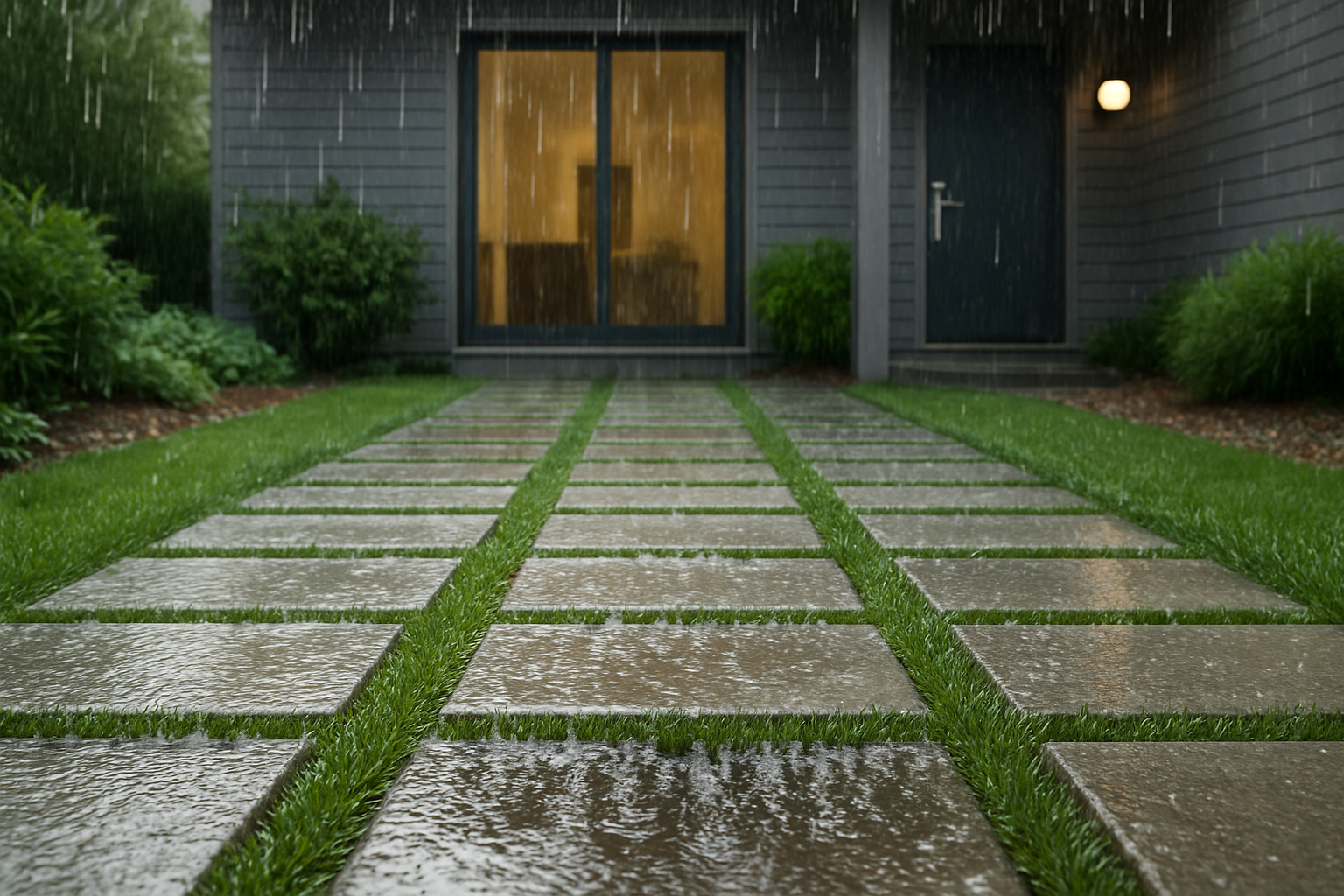
You can either spend years chasing water problems with band-aid fixes—French drains that clog, gravel that migrates, gutters that overflow—or you can address what’s actually happening at ground level where the water lands in the first place. I learned this the hard way after watching my own backyard stay perpetually soggy despite countless attempts at trenching and regrading, until I finally installed permeable pavers and saw the difference in real time. The contrast between those two approaches is stark: one keeps you trapped in a cycle of seasonal repairs, while the other lets your yard breathe and handle rainfall the way it should from day one.
I want to share everything I learned — from the panic of that flooded basement to the surprisingly satisfying DIY weekend project that fixed it all. If you’re dealing with drainage nightmares, stick with me. There’s a happy ending here, and it might just inspire your own backyard transformation.
When the Water Has Nowhere to Go
My backyard sits on a slight slope that funnels rainwater directly toward the house. For years I ignored it, figuring the lawn would absorb what it needed to. But after we extended our garden path with plain concrete stepping stones a few years back, we accidentally made things worse. Concrete is impervious — water can’t pass through it — so instead of soaking in, rain sheeted right off those stones and pooled against the foundation.
The $800 repair bill was a wake-up call. My neighbor, who happens to be a landscape contractor, came over to take a look and didn’t mince words: “You’ve got an impervious surface problem. You need to let the water breathe.” He mentioned permeable pavers, and I went down a rabbit hole that weekend. What I found genuinely surprised me — permeable paving systems aren’t just for municipal parking lots or fancy commercial properties. They’re totally DIY-friendly, affordable, and they work remarkably well.
What Are Permeable Pavers and How Do They Actually Work?
Permeable pavers are interlocking grid systems — usually made from recycled plastic — that allow water to pass through them and into the ground below rather than running off the surface. The open-cell or honeycomb structure holds gravel, crushed stone, or even grass in place, while rainwater filters down naturally. This mimics how undisturbed soil behaves before we cover it with concrete and asphalt.
The benefits go beyond just drainage. Permeable pavers:
- Reduce stormwater runoff and erosion
- Recharge groundwater naturally
- Stay cooler than concrete or asphalt surfaces in summer heat
- Are often eligible for municipal green infrastructure rebates
- Install without heavy equipment or professional help
- Are made largely from recycled materials, making them an eco-conscious choice
Before you install any permeable system, you’ll want to do a basic percolation test on your soil. Dig a hole about 12 inches deep, fill it with water, and see how long it takes to drain. If it drains within a couple of hours, you’ve got good percolation and permeable pavers will work beautifully. If your soil drains very slowly (clay-heavy soil is the usual culprit), you may need to amend the subbase with additional gravel to help water move through.
My Recommended Permeable Pavers Drainage Solution Products
After a lot of research and hands-on testing in my own backyard, here are the products I’d confidently recommend. There’s something here for every budget and project size.
The Grid System That Finally Let Water Through Instead of Pooling
After years of watching standing water wreck my backyard after every heavy rain, I realized solid pavers were part of the problem—not the solution. The PebbleLock system solved what patching and resloping couldn’t: it actually moves water down and away instead of trapping it on the surface.
What works
- Water drains through the grid immediately during installation—no guessing about subsurface prep or hoping your slope is perfect.
- The interlocking design stays stable underfoot even when saturated, which matters more than most people realize when you’re walking on wet pavers.
- Fills with gravel or permeable fill without needing a separate edging system, so you’re not fighting containment issues the way you do with loose base.
What doesn’t
- Installation takes longer than laying solid pavers if you’re used to speed—the grid alignment and fill material application add real time.
- You have to commit to the subsurface preparation; cutting corners on compaction and base layer defeats the entire point of going permeable.
I had one moment halfway through where I second-guessed whether the grid would hold under load without concrete, but after the first season of heavy rain and foot traffic, the skepticism vanished. If you’re serious about fixing drainage instead of hiding it, grab the PebbleLock Interlocking Permeable Paver Grid and do the base work right.
About This Article

Written by Marcus Delvecchio. Marcus Delvecchio isn't a licensed contractor — he's a handyman and DIY outdoor landscaper who got obsessed with driveways, patios and pavers after redoing his own place badly enough to want to understand why. Twenty years later he spends his weekends on his own projects and on side jobs for neighbours and friends around the mid-Atlantic, and writes up what actually worked, mistakes included. More about this site.
Scope and limits. Marcus is a homeowner who got obsessive about driveways, not a licensed contractor. Structural repair, drainage changes, and anything requiring a permit should go to a licensed contractor.
Verify this against a primary source
Specifics change, and your situation may differ from the one described here. These are the authorities worth checking directly:
- Concrete Masonry & Hardscapes Association — segmental paver installation standards
- National Asphalt Pavement Association — asphalt placement and maintenance guidance
- Portland Cement Association — concrete durability and jointing