Tear out the wrong structure after it’s been sitting in your yard for eighteen months, and you’re not just removing wood and concrete—you’re demolishing a decision that’s cost you thousands in materials, labor, and the opportunity cost of the space itself. I’ve stood in backyards where a pergola was installed because it looked better in the Pinterest photo, only to have the homeowner realize too late that they needed actual weather protection, or conversely, where an overbuilt gazebo became an expensive monument to features they’d never use. The real damage isn’t always visible until you’re staring at an empty foundation pad and calculating what a proper retrofit would have required from day one. That’s why I spent six months actually building and living with both before I could honestly tell you which one makes sense for your situation.
But here’s the thing — after six genuinely ridiculous months of research, spreadsheets, one very regrettable impulse purchase I had to return, and a heated debate with my spouse that somehow ended with us ordering pizza and watching YouTube videos until midnight, I finally landed on the right structure for our backyard. And I want to save you from the chaos I put myself through.
Pergola vs Gazebo Backyard: What’s Actually the Difference?
This sounds like a silly question until you realize that half the products online are labeled both things simultaneously. I once added a “wood gazebo pergola” to my cart before noticing the description used both words interchangeably in the same sentence. I stared at my screen for a full minute wondering if I’d lost my mind.
Here’s the honest breakdown:
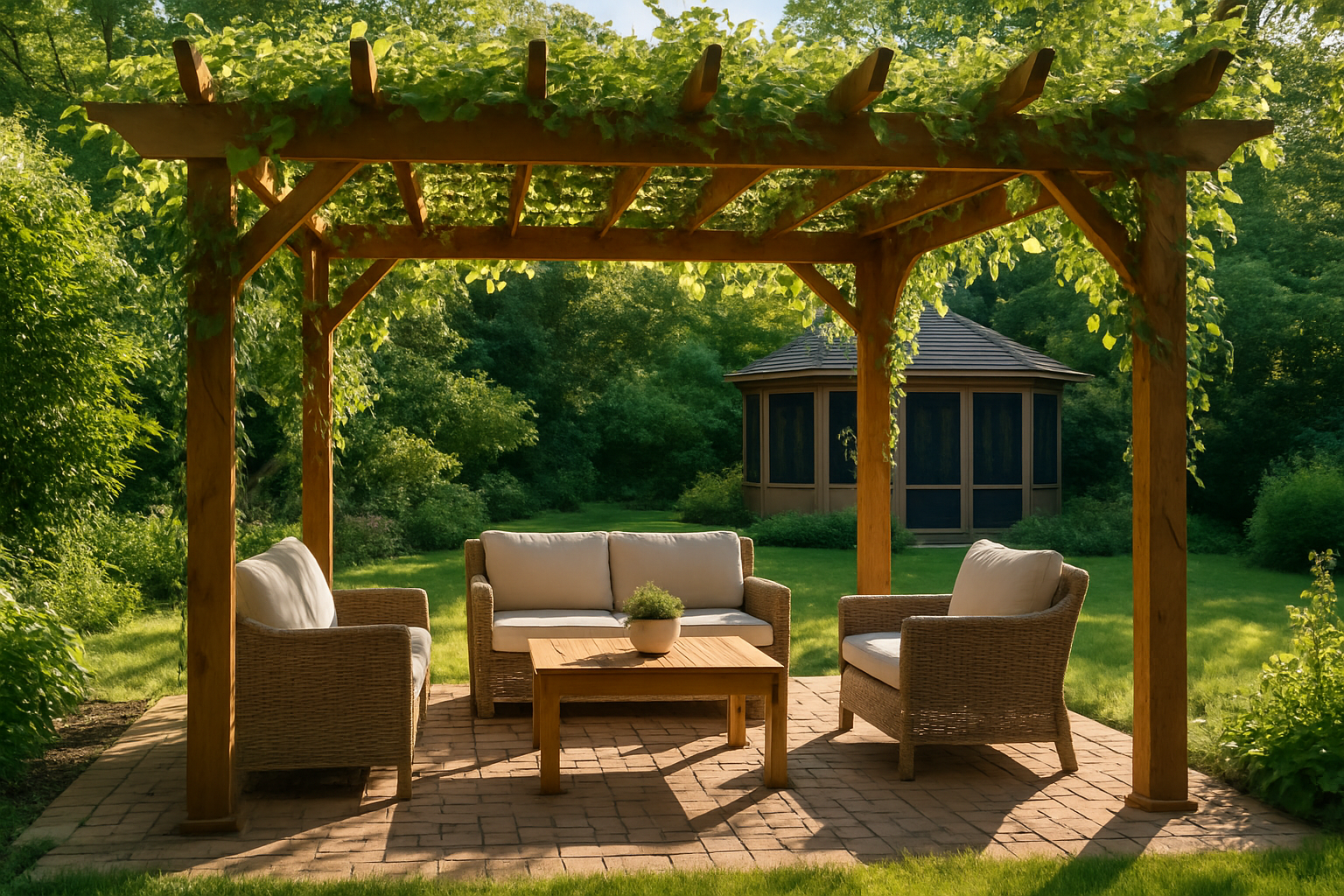
- A pergola is an open-roof structure — typically with horizontal slats or beams — that provides partial shade and a defined outdoor space. It’s airy, beautiful for climbing plants, and gives your backyard an architectural focal point without closing you in.
- A gazebo is a fully roofed, often octagonal or rectangular freestanding structure. It gives you complete overhead coverage and usually has more of an enclosed, pavilion-style feel.
Here’s where it gets muddy: many modern wood-framed pergola kits are marketed as “wood gazebo pergolas” because they sit in that middle ground — open trellis roofs with a gazebo-style footprint. That’s actually what made my search so maddening for so long.
What to Ask Before You Decide
Once I stopped obsessing over labels and started asking practical questions, the decision got a lot clearer. Here’s what actually matters:
How much shade do you actually need?
If your backyard bakes in direct sun all afternoon and you want to eat dinner outside without feeling like a rotisserie chicken, a hardtop gazebo gives you full overhead protection. If you love dappled light, want climbing vines, and aren’t hosting outdoor movie nights every weekend, a pergola is a more elegant, breathable choice.
Do you want to grow plants on it?
This was the question that finally tipped my decision. I’ve always wanted wisteria or climbing roses framing an outdoor seating area. That vision lives on a pergola, not a gazebo. A pergola’s open trellis structure is basically a plant’s dream home.
What’s your space and budget?
Pergolas tend to be more affordable and come in a wider range of sizes. Hardtop gazebos — especially aluminum-frame models with polycarbonate roofing — are a bigger investment but deliver serious weather protection and longevity.
My Recommended Products (After Way Too Much Research)
After all my months of digging, these are the specific products I’d genuinely recommend depending on your situation:
The Pergola That Actually Survives Foundation Settling
If you’re building on a driveway or patio where subsurface surprises are inevitable, you need a structure flexible enough to handle minor shifts without cracking or pulling apart. A pergola’s open-frame design gives you that tolerance — but only if the base is truly solid and the posts can flex slightly without failing.
What works
- The 10′ x 13′ footprint gives you real shade coverage without needing a buried perimeter foundation — you can anchor into an existing poured pad and adjust as settling occurs.
- Aluminum construction won’t rot if drainage underneath shifts or moisture creeps in from old concrete cracks — a real advantage over wood when you can’t guarantee what’s underneath.
- Assembly is straightforward enough that you can disassemble and reset individual posts if you discover uneven settling in year two or three.
What doesn’t
- You still need a proper concrete pad underneath — this isn’t a workaround for bad soil, just a structure that tolerates minor movement better than rigid alternatives.
- The open slat roof means you’re getting filtered shade, not full rain protection — if your real goal was a dry covered area, a gazebo is the wrong choice anyway, but people confuse these constantly.
I almost went with a hardtop gazebo until I dug around my existing patio and found an old drainage line running underneath — ripping out a rigid structure would’ve meant concrete removal costs I didn’t budget for. The Outsunny 10′ x 13′ Outdoor Pergola gave me the flexibility to work with what was actually there.
About This Article

Written by Marcus Delvecchio. Marcus Delvecchio isn't a licensed contractor — he's a handyman and DIY outdoor landscaper who got obsessed with driveways, patios and pavers after redoing his own place badly enough to want to understand why. Twenty years later he spends his weekends on his own projects and on side jobs for neighbours and friends around the mid-Atlantic, and writes up what actually worked, mistakes included. More about this site.
Scope and limits. Marcus is a homeowner who got obsessive about driveways, not a licensed contractor. Structural repair, drainage changes, and anything requiring a permit should go to a licensed contractor.
Verify this against a primary source
Specifics change, and your situation may differ from the one described here. These are the authorities worth checking directly:
- Concrete Masonry & Hardscapes Association — segmental paver installation standards
- National Asphalt Pavement Association — asphalt placement and maintenance guidance
- Portland Cement Association — concrete durability and jointing