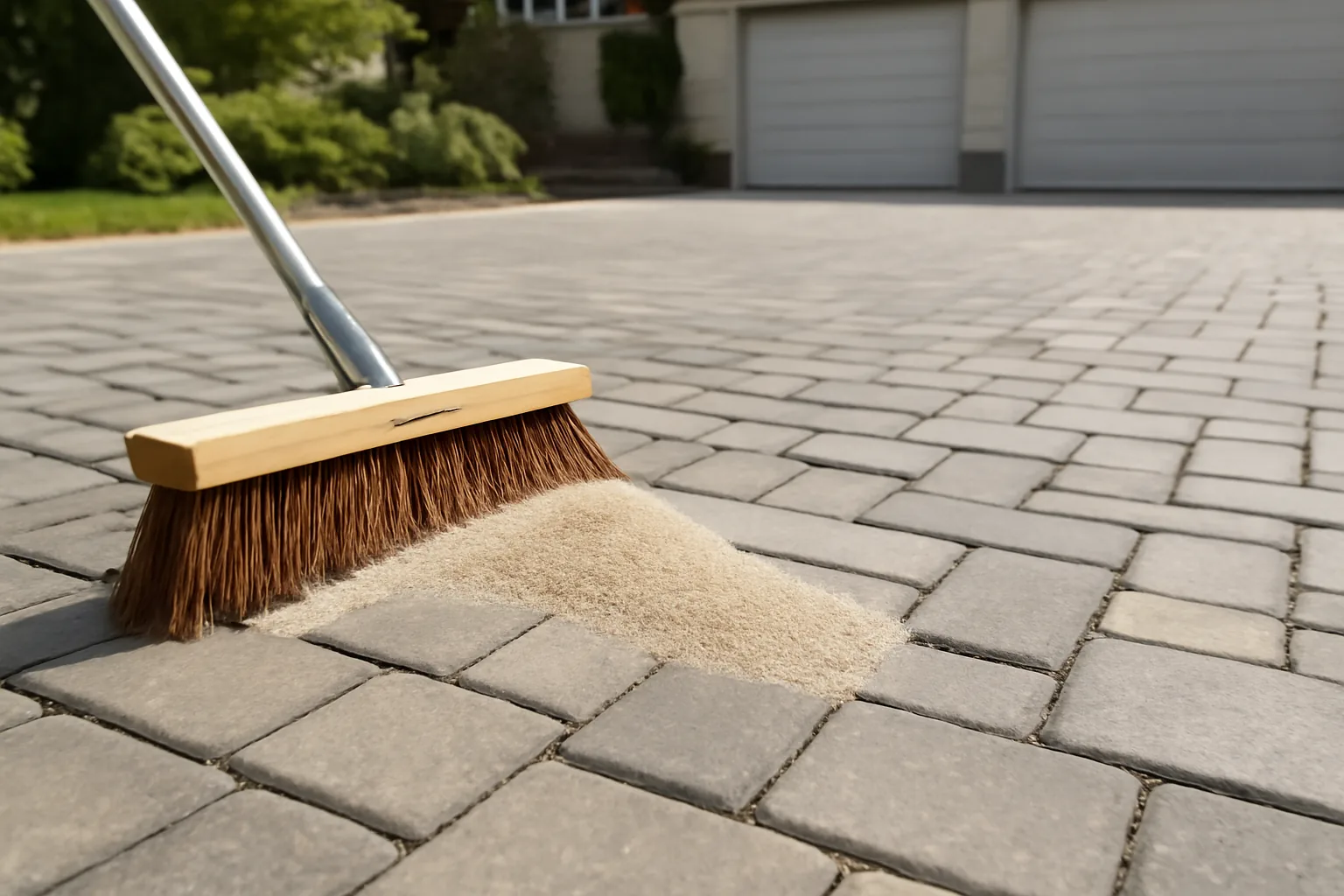
Last spring, I finally tackled the driveway project I’d been putting off for three years. My 480-square-foot concrete paver driveway had become an embarrassment. Weeds were pushing through every joint. Ants had colonized the sand beneath the border edging. After one heavy rainstorm, I watched joint sand literally wash down the storm drain. I needed a real fix — and this Alliance Gator Maxx G2 polymeric sand review is the honest account of what happened when I finally found one.
I’d used basic polymeric sand before on a backyard patio project back in 2019. That experience was a mixed bag. The sand set unevenly, I got haze on three pavers I couldn’t fully remove, and within 18 months, weeds were back. So when I committed to redoing the driveway, I wasn’t going to cut corners on the jointing material again.
The Polymeric Sand That Finally Stopped My Joint Erosion Problem
Standard sand washes away. I learned that the hard way watching my driveway joints disappear after one storm. Alliance Gator G2 Maxx changed that equation—it’s a polymeric sand engineered to bind, not scatter.
What works
- Stays locked in joints even after heavy rain—I watched a downpour hit my test section and the sand didn’t budge, while the untreated joints beside it began eroding within minutes
- Dramatically reduces weed germination because the polymer activates into a solid barrier that blocks soil exposure and cuts off water penetration to the joint base
- Prevents ant and pest colonization under the joints by eliminating the dry, loose sand environment they need to tunnel—I stopped finding ant hills along my border within two weeks
What doesn’t
- It requires near-perfect application and watering technique—activate too much at once and you’ll seal off air pockets; too little and you’ll have soft spots that fail under foot traffic
- Costs roughly 3x the price of regular polymeric sand, and a 480-square-foot driveway ate through nine 50 lb bags faster than I expected
How I Actually Installed It
Nine 50 lb bags covered my 480 square feet, which works out to roughly one bag per 55 square feet at a 1-inch joint depth. If your joints are wider or deeper — and on a driveway with a herringbone pattern they usually are — budget an extra bag or two rather than stopping mid-job to go back to the store.
The sequence that worked: sweep the sand in diagonally across the pattern so it drops into the joints rather than skating over them, then vibrate it down. I used a plate compactor with a rubber mat, but on a small patio a rubber mallet and patience does the same job. Top the joints back up, sweep again, and only then blow the surface completely clean. Any dust left on the pavers is what turns into haze.
The watering step is where most people fail
Read the bag, then read it again. The instruction that matters is to water in short bursts with a shower setting, letting each pass soak in before the next. A hose on full will float the polymer straight out of the joint and leave you with soft spots. I did three light passes about five minutes apart and stopped the moment water started pooling on the surface.
What I’d Do Differently
- Start on the section furthest from the hose bib. I worked toward my water source and ended up dragging a charged hose back across joints that had just been activated.
- Do a 20-square-foot test patch first, especially with the slate grey. Colour reads darker wet, and you want to know that before you commit nine bags.
- Check the forecast for 24 hours, not 12. We got an unexpected overnight shower on my neighbour’s driveway when I did his the following month, and the top 2 mm of one joint line washed loose.
- Keep a dry bag back for touch-ups. Joints settle over the first winter and you will want to top up a few in spring.
When This Is Overkill
For a small patio that stays dry and sees foot traffic only, standard polymeric sand at a third of the price will do fine. This grade earns its money where water moves — driveways, slopes, anything below a downspout, and anywhere a plough or heavy tyres load the joints. That is exactly where the cheap stuff fails and you end up doing the job twice.
I had one terrifying moment during activation when I thought I’d over-watered a section and created a concrete-like crust that would trap moisture—but patient waiting and letting it cure fully solved it. If you’re dealing with chronic washout and weed problems like I was, the Alliance Gator G2 Maxx Polymeric Sand Slate Gray 50 lb is worth every penny.
About This Article

Written by Marcus Delvecchio. Marcus Delvecchio isn't a licensed contractor — he's a handyman and DIY outdoor landscaper who got obsessed with driveways, patios and pavers after redoing his own place badly enough to want to understand why. Twenty years later he spends his weekends on his own projects and on side jobs for neighbours and friends around the mid-Atlantic, and writes up what actually worked, mistakes included. More about this site.
Scope and limits. Marcus is a homeowner who got obsessive about driveways, not a licensed contractor. Structural repair, drainage changes, and anything requiring a permit should go to a licensed contractor.
Verify this against a primary source
Specifics change, and your situation may differ from the one described here. These are the authorities worth checking directly:
- Concrete Masonry & Hardscapes Association — segmental paver installation standards
- National Asphalt Pavement Association — asphalt placement and maintenance guidance
- Portland Cement Association — concrete durability and jointing